

WATCH NOW
Watch on the app











World Cup players with surprising birthplaces and the stories behind their national teams
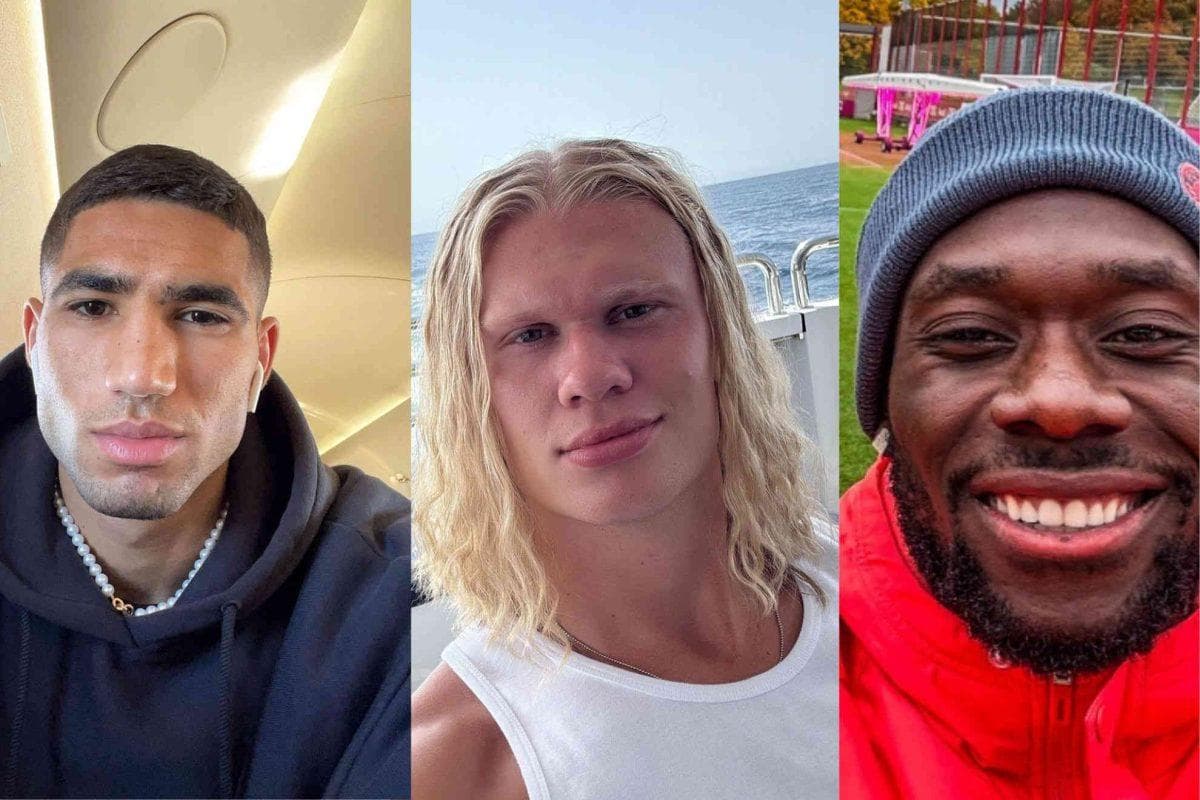
- Up to 287 soccer players compete under flags different from their birthplace, reflecting a world where soccer and migration are inseparable.
- Stories like those of Achraf Hakimi or Alphonso Davies demonstrate that a sense of belonging goes far beyond mere geography.
- The diversity in modern national teams enriches the World Cup level and connects players with their deep ancestral roots.
The 2026 World Cup serves as a reminder that soccer is a universal language, as it remains surprising to see hundreds of players defending colors that represent their roots or personal identity, even when their birthplace lies elsewhere due to migration. This global trend, where 287 athletes represent a nation other than the one where they were born, tells us fascinating stories of resilience and cultural connection that humanize the stars we watch shine on the pitch. From figures who grew up in European cities while maintaining an indestructible link to their ancestors, to refugees who found a definitive home under a new flag, the current tournament acts as a living map of the migration and modern identity that defines our time.
Stories that cross borders and hearts
It remains impossible not to feel moved by the path taken by players like Alphonso Davies, who was born in a refugee camp in Ghana after his parents fled the Liberian civil war, only to become a leader for the Canadian National Team after integrating into a new society as a young child. Similarly, the case of Achraf Hakimi resonates with the global community because, despite growing up in Madrid, his heart always belonged to Morocco, showing that dual nationality acts as a bridge to honor the cultural heritage passed down by our parents. These athletes do more than just play the game; they carry the stories of thousands who seek a space to showcase their talent while keeping the flame of their deepest family origins alive.
The impact of a personal choice
Beyond federative disputes, such as those involving Aymeric Laporte or the firm decision of Hakan Çalhanoglu to represent Turkey despite being born in Germany, we truly witness the freedom to choose who we are and whom we want to represent. Even elite goal-scorers like Erling Haaland, born in England while his father played professionally there, chose the path of their ancestors in Norway with total clarity, validating that modern soccer allows for such a plurality of identities. Ultimately, every player who steps onto the FIFA World Cup pitch embodies a unique blend of life experiences, reminding us that the exact spot on the map where we start matters less than the passion and the flag we decide to defend with our souls before millions of spectators.
Here is the list of mentioned players and their backstories:
- Achraf Hakimi: Born in Madrid, he represents Morocco due to his family heritage.
- Aymeric Laporte: French by birth, he chose Spanish nationality after years in La Liga.
- Alphonso Davies: A refugee born in Ghana who shines for the Canadian National Team.
- Hakan Çalhanoglu: German by birth, he never doubted his choice to represent Turkey.
Ver esta publicación en Instagram
- Kalidou Koulibaly: Born in France, he serves as a fundamental pillar for the Senegalese National Team.
- Erling Haaland: Born in England, he chose to represent Norway because of his paternal lineage.
Ver esta publicación en Instagram
