

WATCH NOW
Watch on the app











Florida’s property tax cuts spark fears over who will pay to keep flooding at bay
-
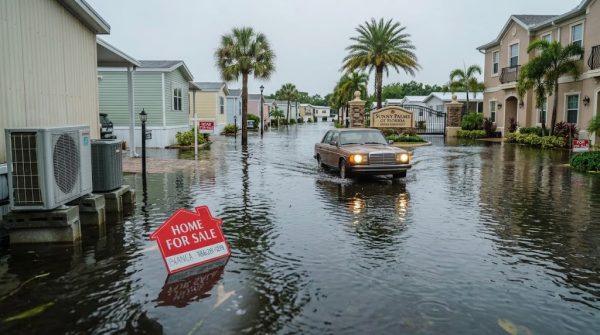
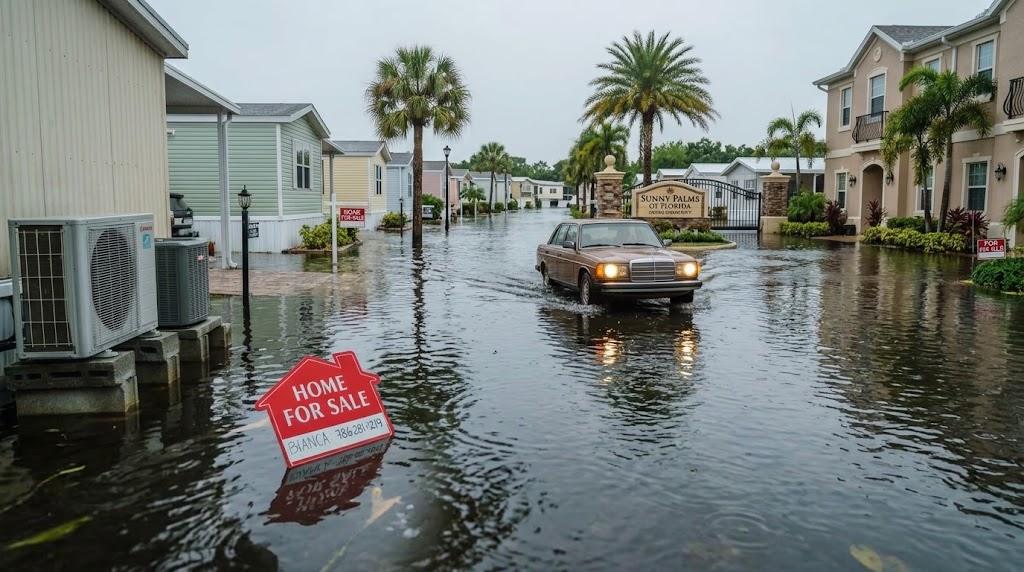
Voters approved Amendment 3 by 62% to expand property tax exemptions while coastal cities struggle to keep flooding at bay across vulnerable neighborhoods.
-
The constitutional tax relief measure will eliminate hundreds of millions of dollars from municipal budgets that fund crucial drainage infrastructure.
-
Local officials warn that shrinking revenues jeopardize federal matching grants needed to modernize aging regional water management systems.
Voters across the state overwhelmingly approved Amendment 3 with 62% support to expand homestead exemptions from $50K to $250K by 2028; furthermore, municipal reporting from the Southeast Florida Climate Compact confirms that regional leaders gathered at their annual summit expressed deep concern over municipal budget shortfalls triggered by these Florida property tax cuts, which directly threaten vital stormwater infrastructure needed to maintain regional drainage systems.
Broward County Commissioner Steve Geller warned summit attendees that severe revenue losses will degrade municipal services while leaving coastal communities exposed to severe climate risks; additionally, financial projections by flood consulting firm Brizaga show that Broward faces a $333M budget deficit by 2028, while Miami-Dade County Commissioner Raquel Regalado offered a more moderate perspective, downplaying catastrophic predictions even though county budget analysts estimate a $700M annual loss representing 20% of total property tax collections needed to keep regional flooding at bay.
Large-scale stormwater projects require heavy capital outlays that cities struggle to finance through local tax bases alone; likewise, officials warn that shielding emergency services forces a 50% funding reduction across public parks, road maintenance and critical flood mitigation programs.
Florida property tax cuts reshape local infrastructure financing
Municipal leaders and environmental agencies navigate severe fiscal constraints while attempting to preserve essential drainage investments:
-
Broward County revenue shortfall: Independent fiscal projections from consulting firm Brizaga estimate a $333M budget loss for county operations by 2028.
-
Miami-Dade property tax impact: Revenue reductions will eliminate $700M annually, cutting 20% of the property tax funds collected by the county.
-
South Florida Water Management District gap: State assessments indicate the agency faces an $110M budget hole by 2031 under new tax rules.
-
Monroe County flood project cuts: Local officials anticipate a $10M fiscal loss, derailing $4.7M road-raising plans across vulnerable coastal keys.
-
Statewide resilience grant programs: Governor Ron DeSantis spearheaded over $1B in state grants to support local stormwater projects.
-
Long-term revenue elimination risks: Legislative mandates require studying full elimination of non-homestead taxes, complicating efforts to keep flooding at bay through Florida property tax cuts.
The South Florida Water Management District relies heavily on property tax revenue to operate a 70-year-old drainage network serving 9 million residents across southern counties; certainly, former governing board member Irela Bagué emphasized that shrinking local tax receipts jeopardize required 50/50 matching funds needed to secure federal dollars for Everglades restoration projects. On the other hand, municipal leaders in Monroe County attempted to offset projected shortfalls by levying special homeowner assessments after state lawmakers rejected local tourist sales tax hikes, illustrating how these tax shifts force local communities to reconsider funding mechanisms designed to keep coastal flooding at bay.
Operational perspective and resistance challenges
State legislators prepare to convene next fiscal year to establish long-term implementation guidelines for property tax reductions across all counties; indeed, municipal finance officers are analyzing alternative revenue models to preserve capital project pipelines following approval of Amendment 3, while state environmental agencies monitor potential impacts on regional infrastructure networks.
Sustained population growth alongside rising sea levels demands continuous investment in high-capacity pumps and elevated roadway systems; consequently, local governments must navigate expanding fiscal deficits while securing state grant funds to maintain public safety and infrastructure resilience despite structural challenges, working continuously to secure necessary resources for the Florida property tax cuts.
