

WATCH NOW
Watch on the app






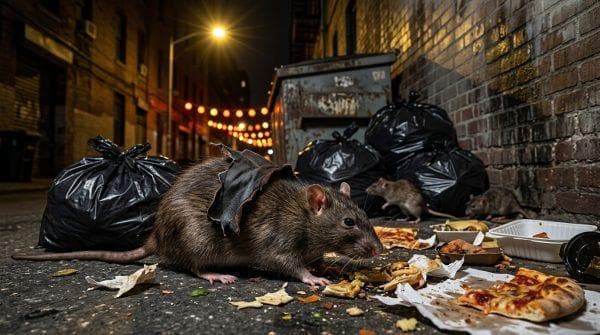








New York’s most unwelcome residents have earned the city another national distinction
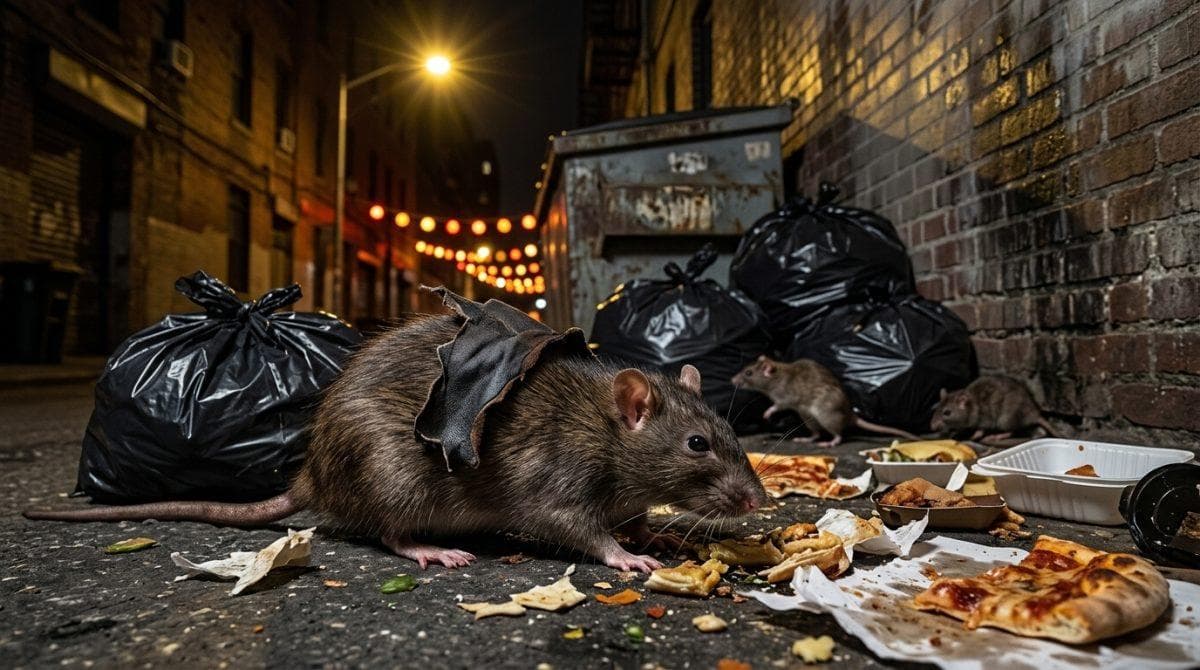
-
City national distinction remains a central topic as unwanted residents of New York maintain a persistent urban presence, prompting municipal authorities to evaluate sanitation updates and pest control methods across the metropolitan area.
-
Recent pest management data highlights how municipal services attempt to control urban rodent and mouse populations while sanitation protocols face ongoing public scrutiny.
-
Local agencies continue executing strategic urban sanitation initiatives to address persistent rat concentrations in densely populated residential districts.
Unwanted residents of New York secure the city another national distinction as Terminix rodent control data places the metropolis at the top of nationwide infestation rankings for a 2nd consecutive year, fueled by dense urban layouts and abundant organic waste, while pest management reports released by the corporation indicate that municipal residential districts experience high concentrations of rats despite ongoing sanitation measures and specialized extermination protocols.
Meanwhile, municipal administrators navigate fluctuating community complaint numbers as several boroughs register localized increases in rodent and mouse sightings, whereas broader city metrics demonstrate a general downward trend in pest reports across multiple community boards, prompting sanitation departments to enforce strict waste containerization mandates across high density neighborhoods to eliminate accessible food sources while housing officials urge property managers to seal building entry points and maintain rigorous cleanliness standards.
Urban density factors driving unwanted residents of New York
Urban density parameters establish ideal conditions for unwanted residents of New York through structural characteristics such as aging infrastructure, underground utility networks and extensive commercial dining districts that supply continuous organic waste to the rat population, with environmental temperatures heavily influencing rodent behavior by driving mice inward during seasonal climate shifts and increasing the frequency of residential property incursions across metropolitan neighborhoods while adding to the broader discussion on city national distinction in urban management.
In addition, municipal sanitation departments implement large scale waste containerization mandates to restrict surface food availability for rats, although multi family residential buildings exceeding specific unit thresholds remain temporarily exempt from immediate compliance rules, while pest control specialists emphasize that comprehensive urban management requires coordinated efforts between private property owners and public agencies to eliminate subterranean nesting sites and reduce overall rodent population density.
Key locations tracking city national distinction in pest management
Pest control specialists and municipal sanitation reports identify specific zones where urban rat and rodent activity remains exceptionally concentrated across the metropolitan area, guiding targeted extermination efforts:
-
East Village residential blocks record notable concentrations of rat activity near busy commercial corridors where unwanted residents of New York find open sidewalk waste storage zones, reinforcing a troubling city national distinction.
-
Lower Manhattan community boards experience high rodent sighting frequencies around aging multi family apartment buildings lacking modern waste containers.
-
Commercial zones near major transportation hubs exhibit elevated mouse presence due to continuous foot traffic and restaurant refuse generation.
-
Residential basements and hidden structural voids provide critical shelter and breeding grounds for rat populations throughout the 5 boroughs.
Leading cities in the national infestation report
The annual report from Terminix, a subsidiary of Rentokil based in Memphis, Tennessee, analyzes pest control service contract frequencies across more than 300 company owned branches to evaluate rodent presence nationwide:
-
New York: Tops the national list for a 2nd consecutive year due to its urban density, keeping unwanted residents of New York at the forefront of nationwide pest challenges and cementing this city national distinction.
-
Los Angeles: Holds 2nd place due to extensive commercial centers and urban shelters in warm climate zones.
-
Philadelphia: Secures 3rd place by recording high extermination demand in historic structures and residential areas.
-
San Francisco: Follows in 4th place displaying high concentrations of rodent activity along urban corridors.
-
Houston: Enters the top 5 for the 1st time driven by rapid urban expansion and thermal variations.
Secondary positions and emerging cities in the rankings
The national ranking completes its top 10 slots and extends its evaluation to other key metropolises facing pest pressures, illustrating how pest challenges affect metrics connected to city national distinction:
-
Chicago: Occupies 6th position due to extreme climate swings and high residential density in central districts.
-
Washington D.C.: Registers 7th place with constant activity in underground infrastructure and historic neighborhoods.
-
Boston: Ranks 8th facing ongoing challenges in historic zones and high density residential structures.
-
Dallas: Takes 9th place showing increased demand for commercial pest control services.
-
Detroit: Enters the top 10 after holding 11th place last year, a shift linked by City Council President Mary Sheffield to abandoned building demolitions creating pest shelters for unwanted residents of New York counterparts while highlighting another unwanted city national distinction, a problem residents raised in community meetings since 2023.
-
Additional cities ranking 11th through 15th: Hartford, Atlanta, Baltimore, Tampa, and Sacramento complete the next key positions on the list.
Official statistics and municipal management leadership
Vincent Gragnani, spokesperson for the New York City Department of Sanitation (DSNY), explains that 70% of city waste must already go into sealed containers, projecting full waste containerization by 2031, whereas Manhattan’s East Village neighborhood recorded a 37.6% increase in complaints between January and July 2026, rising from 218 to 300 reports on the NYC 311 portal, with issues concentrated along Second Avenue, East Fifth Street, and Broome Street, the latter experiencing a 400% surge compared to 2025 while impacting rankings related to city national distinction.
At the same time, this area forms part of Community Board 3, a zone officially designated as a rat mitigation area in 2022 that encompasses the geographic boundaries of the Lower East Side, Two Bridges and sections of Chinatown, although localized neighborhood figures contrast with a broader 23% citywide drop in sightings, where complaints fell from 12,017 to 9,023, progress that Terminix entomologist Chad Gore describes as clear proof that proper waste management remains essential to controlling pest populations.
Ver esta publicación en Instagram
Prevention and administrative shifts for unwanted residents of New York
The municipal landscape reflects notable policy updates, as Mayor Zohran Mamdani refrained from appointing a new rat czar following Kathleen Corradi’s departure and revoked the dedicated pest agency created by former Mayor Eric Adams, given that 49 out of 58 community boards recorded declines in sightings, led by Manhattan’s Community Board 6 in Gramercy Park and Murray Hill with a 54.75% drop that challenges the negative perception of this city national distinction, leading property managers and building superintendents to execute rigorous structural maintenance protocols to prevent unwanted residents of New York from infiltrating residential interiors, starting with sealing foundation cracks to block rodents and mice.
To that end, management teams advise residents to store all food items in heavy duty airtight containers while swiftly clearing organic waste to deny food sources to foraging rats, ensuring that early detection of rodent presence relies on identifying clear warning signs like scattered droppings, wires gnawed by mice, packaging chewed by rats and unusual scratching sounds inside walls or storage areas, so that proactive property care alongside strict compliance with municipal sanitation rules shields urban housing structures against severe infestations caused by unwanted residents of New York.
Ver esta publicación en Instagram
