

WATCH NOW
Watch on the app



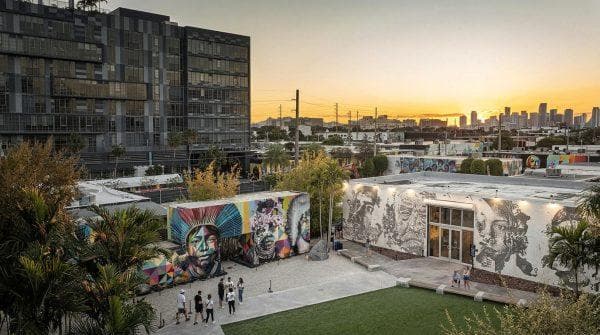











Miami’s Wynwood is getting a major university campus but the neighborhood faces a costly dilemma
-
A costly neighborhood dilemma unfolds across southern Florida as urban transformation advances with the official announcement of a historic donation positioning the Miami Wynwood university campus at the center of intense community debate over regional gentrification.
-
Diverse urban planners emphasize that the arrival of prestigious academic institutions profoundly alters commercial dynamics and residential costs across metropolitan districts, requiring proactive municipal strategies to balance technological growth with community preservation.
-
Community leaders and municipal officials actively evaluate infrastructure policies to ensure upcoming educational expansions harmonize with local socioeconomic needs while preventing the displacement of longtime residents amidst rapidly shifting property values.
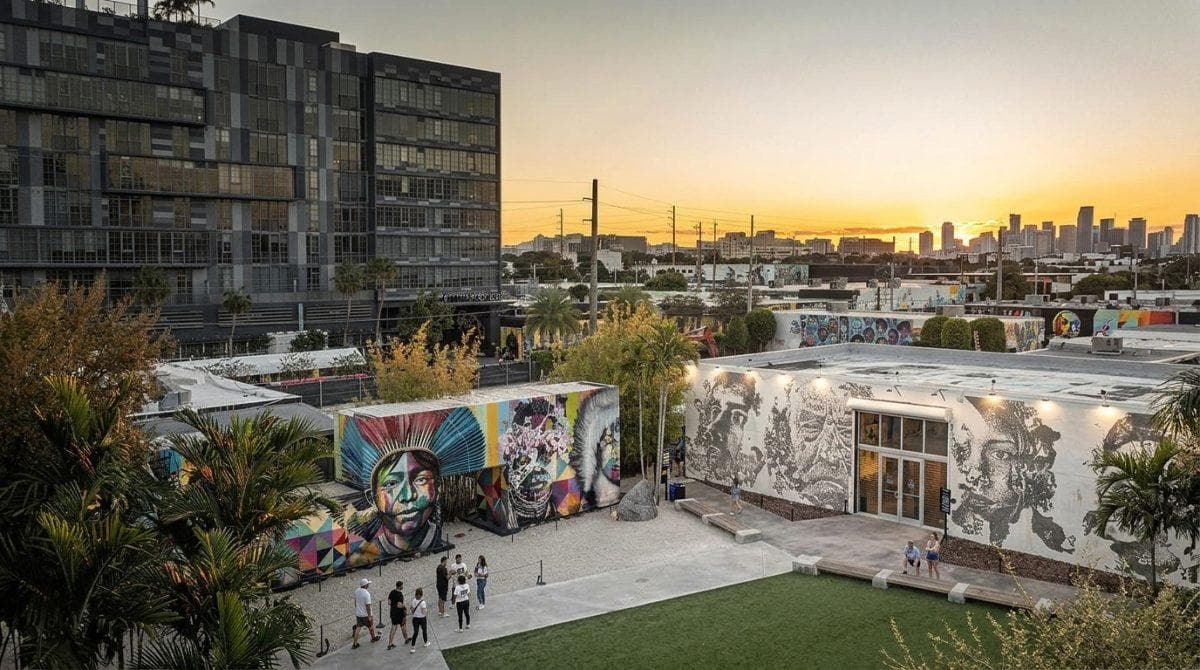
Southern Florida urban transformation accelerates as financier Ken Griffin commits a historic $3,000M donation to establish the Miami Wynwood university campus, allocating $2,000M for this 35 acre complex upon grounds formerly housing the Mana Wynwood event space, acquired by Griffin for $1,100M, while directing the remaining $1,000M toward the principal Carnegie Mellon University campus in Pittsburgh as the largest personal contribution ever delivered to a university globally.
Furthermore, administrators schedule construction for this technological headquarters to commence next year with expectations to welcome inaugural students by 2028, precipitating a costly neighborhood dilemma by intensifying gentrification and driving rental rates far above metropolitan averages, directly clashing with the historical scarcity of affordable housing within the zone; whereas billionaire entrepreneur Moishe Mana, whose fortune reaches an estimated $57.1B and who sold the complex grounds hosting festivals like III Points, assures reporters that the neighborhood remains in superior hands under Griffin’s vision and nevertheless, this construction boom deepens the vulnerability of working class families fearing displacement from escalating commercial and residential costs, consequently prompting local authorities and urban development experts to debate the absolute urgency of deploying inclusive housing policies safeguarding social fabric against uncontrolled growth.
Navigating a costly neighborhood dilemma through real estate impact and architectural perspectives
Architects and urban planners anticipate a comprehensive remodeling of the local architectural landscape, highlighting that commercial offices, private laboratories and novel commercial spaces will surround the district; prominent regional design figures like architect Kobi Karp affirm this expansion represents a fundamental milestone to inaugurate a fresh chapter for the city, attract elite talent and hire young professionals graduating directly from the institution.
Additionally, specialists highlight diverse key factors concerning projected district transformations, noting how a costly neighborhood dilemma manifests across residential markets through various strategic initiatives:
-
Analysts project a massive surge in condominium and multifamily complex construction to satisfy incoming student community demand generated directly by the Miami Wynwood university campus.
-
Urbanism experts emphasize that managing a costly neighborhood dilemma requires urgent housing solutions preventing lifelong resident displacement.
-
Real estate developers drive complementary projects like Rainbow Village, led by Matthew Rieger along Northwest 22nd Street, offering market rate apartments alongside workforce housing units.
-
Local builders maintain active negotiations with municipal authorities regulating incoming construction impact upon existing commercial infrastructure.
Tackling a costly neighborhood dilemma
The massive influx exceeding 4,000 students, faculty members and staff notably intensifies pressure upon existing transportation networks, exposing severe deficiencies in sector connectivity lacking direct access to Metrorail, Metromover or Brightline; subsequently, urbanist Ned Murray warns about the imperative necessity of learning from previous experiences across large scale academic centers like Boston University or Columbia University, Manhattan campus, where inadequate comprehensive planning accentuated territorial tensions prior to the official inauguration slated for 2028.
Simultaneously, land use attorneys like Steve Wernick, who directly participated in the major neighborhood zoning overhaul executed over a decade ago, anticipate exponential growth within development requests and similarly, real estate developers like Ryan Shear, managing partner at PMG, concur that real estate appreciation remains inevitable, affirming property values have indisputably risen, while Kobi Karp proposes implementing private transportation systems, such as shuttle buses operated directly by institutions to mitigate traffic congestion, in this context, rental digital platforms like RentCafe report average monthly rates hitting $3,468 inside the neighborhood versus $2,761 across the general city average, recalling that a costly neighborhood dilemma threatens transforming the district into an exclusive enclave.
Cultural sustainability and district future
Community organizations intensify dialogue efforts with private investors safeguarding independent cultural spaces and festivals granting international fame to the neighborhood and consequently, citizen reactions reflected within social media publications express profound concerns regarding local identity loss and surging traffic, while civic leaders continue evaluating innovative financial mechanisms consolidating balanced growth.
Furthermore, current stakeholders actively forge equitable partnerships ensuring the final integration of the Miami Wynwood university campus prospers harmoniously alongside community identity, thereby redefining modern urban education corridors while definitively overcoming a costly neighborhood dilemma through multisectoral cooperation.
