

WATCH NOW
Watch on the app













Elon Musk built SpaceX to reach the stars but AI is making more money than rockets
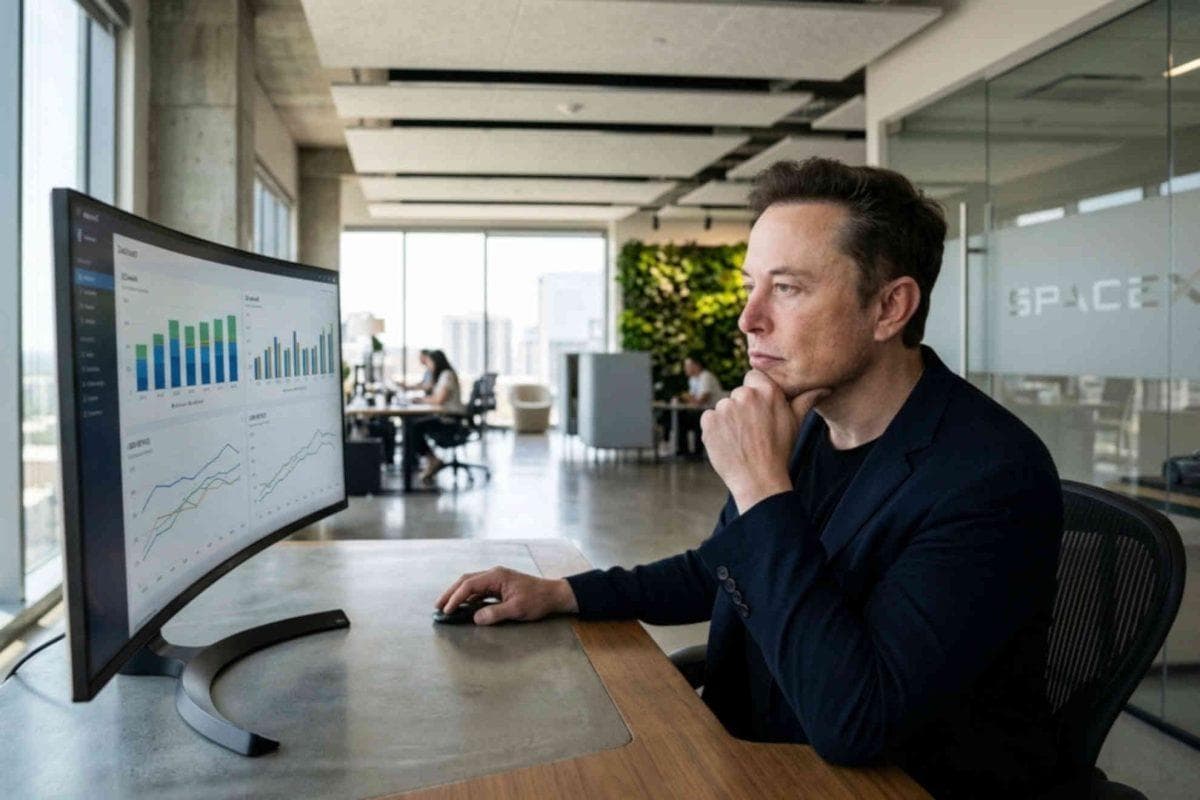
- The division dubbed Super Intelligence leads the economic results of Elon Musk’s space company SpaceX, representing fifty-two percent of its total revenue turnover.
- Renting data center capacity to tech giants like Google transforms Elon Musk’s company into a key provider of digital infrastructure for artificial intelligence.
- Despite the heavy investment required to scale up computing power, financial forecasts anticipate unprecedented growth for the business.
The unexpected commercial pivot turning tech infrastructure into the economic powerhouse of the space age
Radically transforming the financial model of the modern aerospace industry, the iconic company founded by Elon Musk surprised Wall Street by reporting that its division focused on artificial intelligence far surpasses the turnover revenue generated by rocket launches. During the third fiscal quarter, the firm reached a record figure of fourteen billion six hundred million dollars in total revenue, impressively highlighted by seven billion six hundred million brought in exclusively by its area known as Super Intelligence, which grew by leaps and bounds compared to the previous year.
In this way, the company proves that its true immediate economic strength lies not only in cosmic exploration, but in positioning the powerful infrastructure of SpaceX as an indispensable pillar for the massive data processing demanded by artificial intelligence, ensuring that Elon Musk’s leadership consolidates a business that generates more revenue than traditional rockets manufacturing.
Cloud services and strategic alliances with tech giants to answer an insatiable market demand
In this sense, when analyzing the origin of these huge revenue profits within the contemporary tech sector, Super Intelligence’s financial growth stems not primarily from developing in-house models, but from intensively leasing data center capacity to giants like Anthropic and Google. This operational strategy transforms the corporation into a high-performance cloud provider of sorts, where power and cooling demands far exceed the supply currently available in the market. As the mogul himself detailed to investors, the firm holds a unique competitive edge to build this infrastructure faster than its rivals thanks to its advanced engineering and metal-casting capabilities, guaranteeing that SpaceX’s commercial ecosystem absorbs the global artificial intelligence needs driving Elon Musk’s vision, easily surpassing the usual margins left by rockets transport.
Multibillion-dollar investments and astronomical forecasts amid the digital market transformation
Even though capital expenditure has tripled due to the acquisition of the Cursor platform and massive purchases of computing hardware, financial executives project that these multibillion-dollar investments pay for themselves in less than a year. With forecasts pointing toward astronomical revenue by the end of the decade and even rumors regarding potential corporate mergers within the mogul’s conglomerate, the performance of this Super Intelligence division serves as a crucial barometer to measure the overall health of the entire industry. Therefore, SpaceX’s astonishing performance reshapes global market expectations by proving that computational capabilities dedicated to artificial intelligence far exceed the historical revenue of its spacecraft and rockets, consolidating Elon Musk ‘s bold, diversified strategy to generate revenue.
Ver esta publicación en Instagram
Key details from the third-quarter financial report
- Historic revenue records broken: The company recorded $14.6 billion in total revenue, marking a 161% increase compared to the previous year.
- Dominance of the technology division: The Super Intelligence division contributed $7.6 billion, accounting for 52% of total revenue.
- Starlink network performance: The satellite internet service generated $5.2 billion with an active subscriber base of 13.6 million.
