

WATCH NOW
Watch on the app












Lost underwater ‘city’ discovered in India could confirm we are not who we think we are
-
Ancient submerged ruins India revealed through marine exploration projects off the western coast could fundamentally rewrite the origins of modern human civilization.
-
Oceanographers at the National Institute of Ocean Technology identified complex geometric patterns using high resolution sidescan sonar technology.
-
Researchers at the University of Helsinki and the British Museum actively debate the exact timeline of artifacts discovered 120 feet below sea level.
A groundbreaking oceanographic survey off the western coast revealed remnants of a Lost underwater city India stretching over 5 miles long and 2 miles wide at a depth of 120 feet in the Gulf of Khambhat Cultural Complex (historically known as the Gulf of Cambay), an unexpected discovery that occurred during routine marine pollution surveys conducted by the National Institute of Ocean Technology in December 2000; consequently, Science and Technology Minister Murli Manohar Joshi announced in May 2001 that the submerged structures predated the ancient Indus Valley civilization, which flourished between 7k BCE and 600 BCE across the subcontinent.
Furthermore, Minister Joshi emphasized that the site challenged the 5.5k-year timeline of human civilization, asserting that organized societies existed in the Gulf of Khambhat long before early Egyptian and Mesopotamian metropolises, while chief team geologist Badrinaryan Badrinaryan claimed that the Harappan people descended from an advanced Ice Age mother culture that rising ocean levels eventually submerged; in doing so, Badrinaryan dismissed conservative critics who initially labeled the sidescan sonar images as computer software magic according to records maintained by the Archaeological Survey of India.
Scientific evidence regarding lost underwater city India cases and complex structures
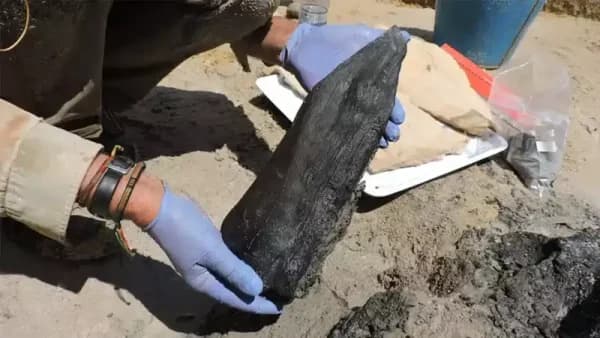
In addition to initial acoustic surveys, marine geologists from the institute retrieved hundreds of artifacts directly from the seabed at the Gulf of Khambhat Cultural Complex while investigating these Ancient submerged ruins India, collecting pottery shards, beads, sculptures, wall sections, and human bones alongside teeth; as a result, carbon testing dated a recovered wood piece to 9.5k years old, establishing a controversial milestone that led University of Helsinki specialist Asko Parpola to question whether heavy tidal action and shifting sands naturally eroded the seabed stones instead.
On the other hand, Indian ancient script expert Iravatham Mahadevan acknowledged that sonar scans revealed man-made grid layouts across thousands of square feet, pointing to square foundation alignments and a long rectangular building with descending steps; nevertheless, British Museum archaeologist Justin Morris highlighted the fallibility of C14 carbon dating in underwater contexts, whereas author Graham Hancock argued that this discovery forces scientists to rebuild historical origins from scratch within records archived by UNESCO.

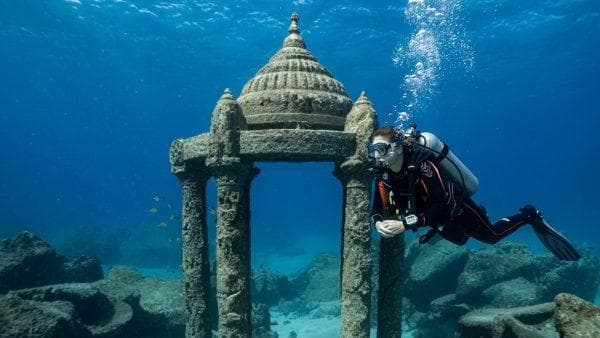
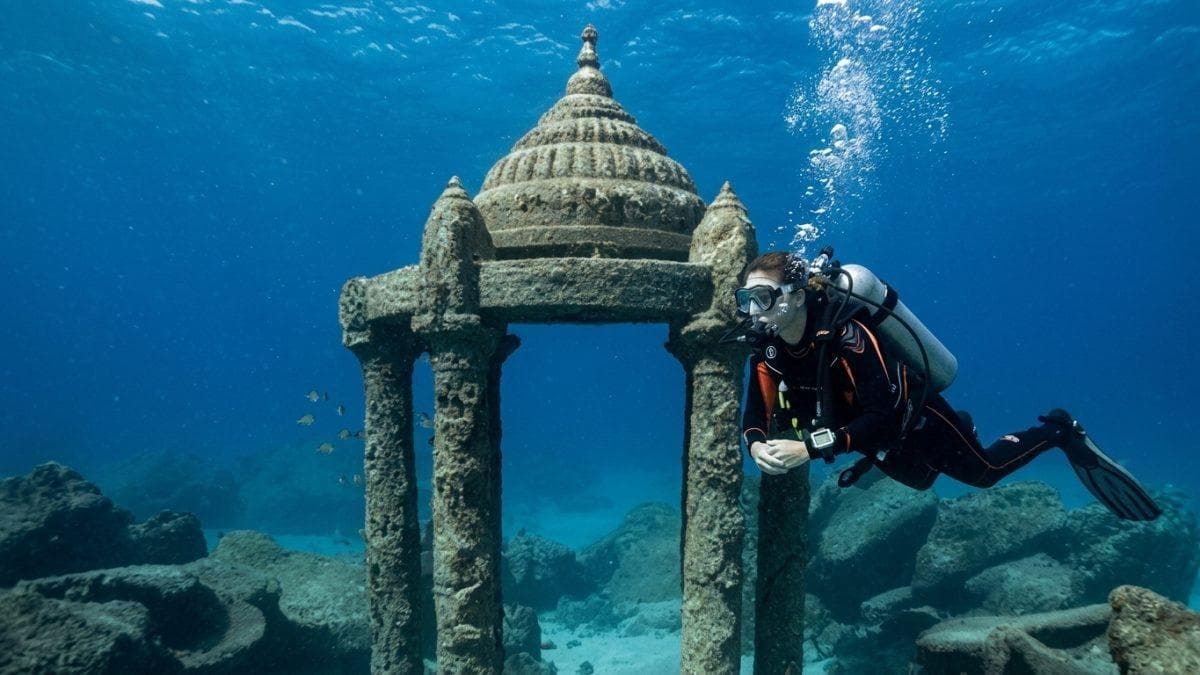
An exploratory underwater shot revealing mysterious rock structures and submerged formations associated with a Lost underwater city India discovery.
Comparative breakdown of research findings in the Gulf of Khambhat
-
Acoustic mapping data gathered by research vessels enabled marine geologists to generate detailed three-dimensional models of the submerged seabed.
-
Massive urban scale: The complex covers an area of 5 miles by 2 miles, far exceeding the physical footprint of early Mesopotamian settlements.
-
Radiocarbon dating analysis: Carbon dating of organic samples reached 9.5k years old, pushing past the traditional 5.5k-year civilization milestone.
-
Sidescan sonar mapping: Exploration equipment recorded grid-like urban layouts belonging to Ancient submerged ruins India 120 feet beneath the surface of the sea.
-
International scholarly debate: Researchers evaluate sand erosion impact through data registered in U.S. government scientific databases.
Technical challenges and future research on Ancient submerged ruins India
Looking ahead, marine researchers and international academic institutions face severe logistical hurdles when sending divers to inspect Ancient submerged ruins India, primarily because treacherous tides and near-zero underwater visibility block human exploration; for this reason, scientific teams plan to deploy autonomous underwater vehicles equipped with photogrammetric sensors to collect geological samples without disturbing the sea floor through official maritime safety standards.
Moving forward into future marine expeditions, cutting edge analytical tools will unveil how this ancient culture vanished, resolving Minister Joshi’s historic questions while protecting marine heritage during the scientific exploration of this lost underwater city India.
