

WATCH NOW
Watch on the app













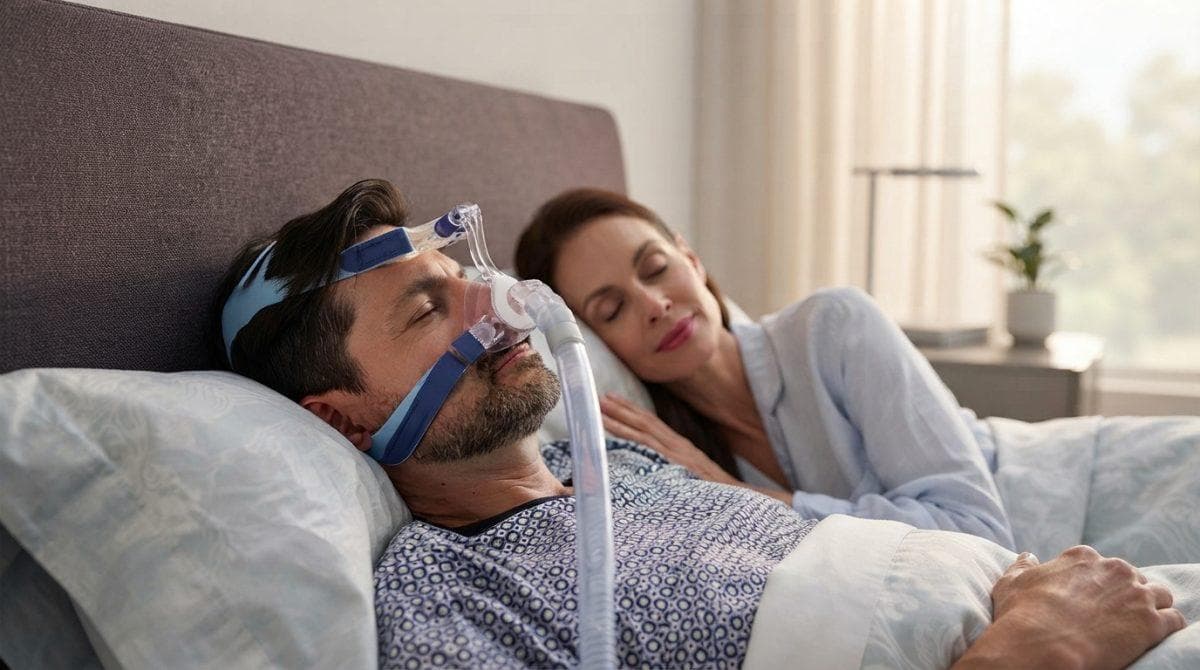
NYC sleep apnea patients struggling with CPAP now have another option
-
Nocturnal breathing disorder deeply affects New York residents suffering from severe airway obstructions who fail to adapt to traditional therapies.
-
NYC Health + Hospitals/Kings County began implementing the Genio system during September 2026, establishing itself as the first public facility in the city to offer this surgical hypoglossal nerve stimulation implant.
-
The New York hospital expanded its medical offerings to care for individuals enduring chronic respiratory interruptions, integrating innovative outpatient procedures that allow patients to return home the very same day of the intervention.
Sleep apnea positions itself as a critical clinical challenge in New York, where the NYC Health + Hospitals/Kings County system started utilizing the Genio system, an advanced surgical implant stimulating the hypoglossal nerve to keep airways open during nocturnal rest without automatically replacing traditional equipment like the CPAP; consequently, the Brooklyn hospital emerges as the pioneer of the public network by offering this innovative treatment authorized by the Food and Drug Administration in August 2025.
Specialists detailed that this technological advancement approved by the FDA is engineered for adults aged 22 or older facing moderate to severe conditions defined by an apnea hypopnea index between 15 and 65 episodes per hour; additionally, health authorities emphasize that each candidate must undergo a comprehensive evaluation via medication-induced sleep endoscopy to guarantee implant viability according to guidelines from the American Academy of Sleep Medicine.
Ver esta publicación en Instagram
Surgical innovation and functionality of the disorder
The Genio system acts directly upon the hypoglossal nerve through a component implanted beneath the chin via a single incision, avoiding bulky internal batteries and activating through an external patch worn by the patient while sleeping; similarly, nocturnal breathing disorder outlines how the device assists in moving the tongue forward during rest to drastically reduce upper airway obstruction.
The surgical intervention occurs under general anesthesia and may extend across several hours according to reports featured by Reuters Health, allowing individuals to recover respiratory stability and leave the facilities the exact same day; hence, following a follow-up consultation scheduled one week later, device activation takes place roughly two months afterward via an activation chip and an optional mobile application supported by MedTech Insight.
Clinical criteria and alternatives for those intolerant to CPAP
-
FDA protocols mandate documenting prior failures involving CPAP, BiPAP, oral appliances, lifestyle changes, or specific pharmacological treatments linked to nocturnal breathing disorder.
-
Doctor Rahul Gulati, director of Microvascular Reconstruction at Kings County, affirms that this technology delivers effective care centered on properly selected patients, as highlighted in clinical reviews by the National Institutes of Health.
-
Doctor Mahmoud I. Awad, chief of Otolaryngology, maintains that incorporating the procedure allows the center to treat a broader group of residents throughout Brooklyn.
-
Patients abandoning traditional mask usage discover within this surgical alternative a viable medical solution centered on their long-term well-being supported by the American Medical Association.
Anatomy and essential functions of the hypoglossal nerve
The hypoglossal nerve, also recognized as the twelfth cranial nerve, corresponds to a pure motor nerve whose Greek derived name signifies beneath the tongue; consequently, nocturnal breathing disorder exemplifies how its primary function consists of innervating intrinsic and extrinsic lingual muscles to facilitate clear articulation when speaking, proper chewing and efficient food swallowing as detailed by Healthline.
This nerve bundle originates specifically within the brainstem’s lower medulla oblongata, exits the skull through the hypoglossal canal and descends toward the neck until reaching the muscular structure; in consequence, any injury or damage along its pathway provokes unilateral weakness or paralysis, causing the tongue to deviate when attempting extension outward.
Associated risks and warning signs in a nocturnal breathing disorder
Repeated nighttime breathing interruptions extend beyond loud snoring or poor rest, directly triggering excessive daytime sleepiness and severely damaging general cardiovascular health according to updates from the American Heart Association; on another front, nocturnal breathing disorder demands that specialists urge prompt evaluation for any persistent awakenings featuring choking sensations and evident breathing pauses.
The arrival of this procedure at Kings County broadens choices within the public New York hospital system, continually requiring individualized medical assessment to ensure every beneficiary fulfills established clinical standards for treating sleep apnea.
