

WATCH NOW
Watch on the app









Gustavo Dudamel takes on a bigger mission in New York beyond leading its famous Philharmonic
-
Dudamel takes on a project in NY to expand free music education through community initiatives designed to empower underserved youth across local neighborhoods.
-
The renowned Venezuelan conductor assumes leadership at the New York Philharmonic while championing an inclusive pedagogical model that removes socioeconomic barriers.
-
This milestone tenure strengthens youth development in overlooked areas through continuous instrumental training and paid career opportunities.
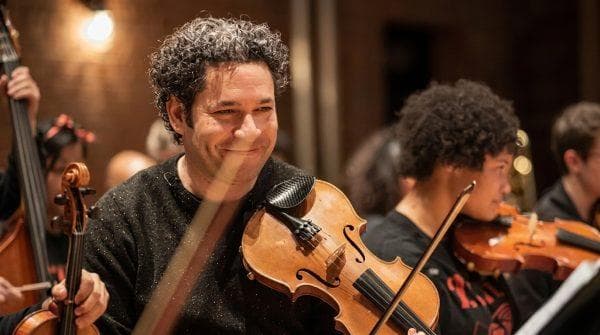
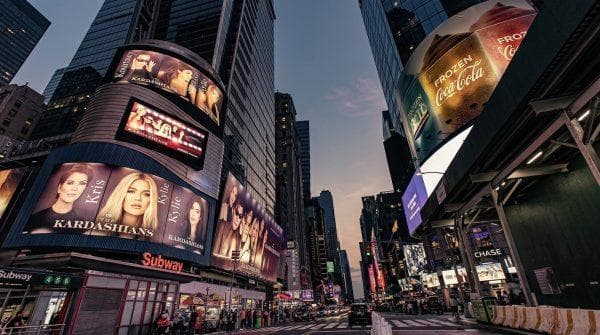
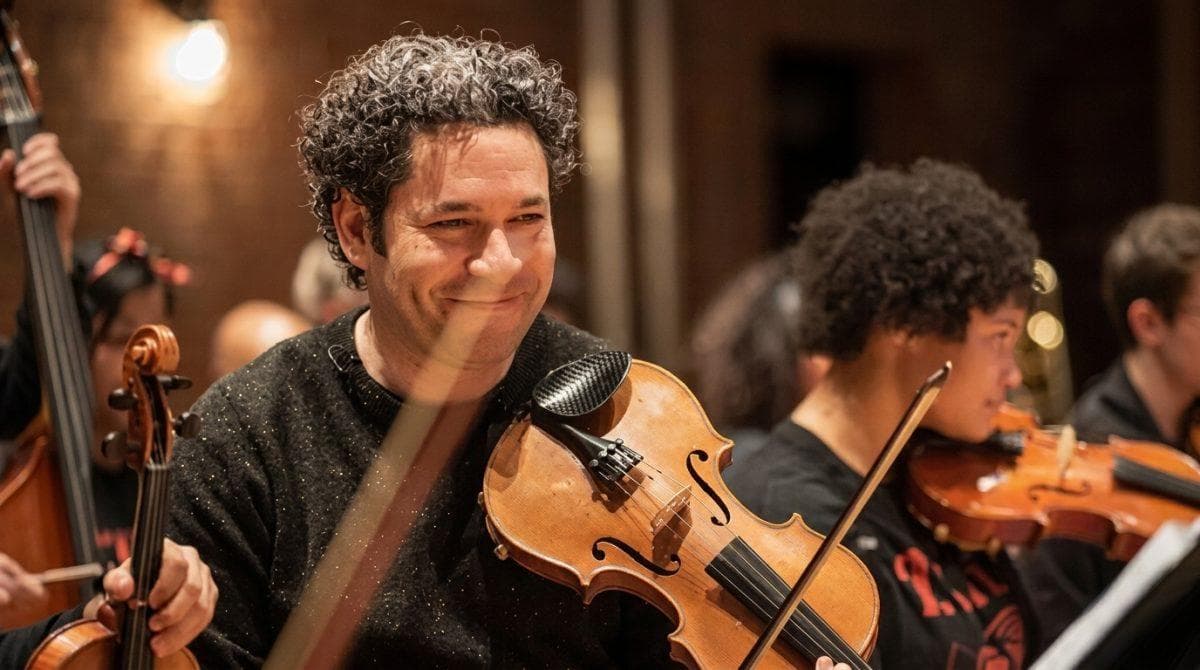
At 45 years old, Gustavo Dudamel officially launched his highly anticipated tenure as music and artistic director of the famed New York Philharmonic on September 10 with a massive concert at Radio City Music Hall, opening a defining chapter focused on bringing classical music to neighborhoods considered artistic deserts across the Empire State. This historic arrival not only cements his leadership across the world’s most influential cultural institutions but also elevates community-driven social initiatives like UpBeat NYC in the South Bronx, demonstrating that his mission in the Big Apple extends far beyond formal concert halls.
Consequently, the Latin American maestro’s presence revitalizes educational models that draw inspiration from Venezuela’s National System of Youth and Children’s Orchestras, as the New York program founded in 2009 offers instrumental training to over 230 children and young adults without requiring auditions or charging tuition fees. Coordinated by musician Carlos Sánchez, the initiative combines intensive technical instruction with direct family support services, establishing a framework where collective music-making serves as a direct vehicle for social inclusion, creative growth and safe community spaces across the borough.
How Dudamel takes on a project in NY to expand youth music education
The learning methodology behind this social program follows structured progressive stages tailored to different age groups, starting at age 5 with the Paper Orchestra where children learn foundational rhythmic skills using handcrafted paper instruments. By age 6, students transition into direct instrumental instruction through individual and group sessions with professional faculty, ensuring personalized guidance that advances toward complex ensemble playing without requiring families to purchase violins, cellos or woodwinds independently.
In addition, the organization provides all instruments on free loan while offering paid employment opportunities as assistant instructors or instrument repair apprentices for students older than 14, strengthening intergenerational commitment throughout the neighborhood. This combination of top tier music instruction, direct food assistance and youth employment options transforms orchestral training into a sustainable career pathway, protecting young people in vulnerable urban environments through consistent technical work and daily orchestral discipline led by Gustavo Dudamel.
Symphonic music education in vulnerable communities
-
Young participants enter the Paper Orchestra stage starting at ages 5 to 6, building essential ear training and rhythmic fundamentals using symbolic instruments.
-
Mentors guide students over age 6 through direct instrumental instruction by supplying free professional gear alongside dedicated faculty support under the visionary leadership of Gustavo Dudamel.
-
Advanced ensembles welcome musicians aged 8 to 21, while older participants access paid positions in teaching and instrument repair.
Ver esta publicación en Instagram
Cultural impact and community outreach
Moreover, the institutional vision driving this new orchestral era aims to expand symphonic music into urban areas considered artistic deserts, highlighting neighborhoods such as Washington Heights, Corona, Canarsie and the South Bronx. The New York Philharmonic pairs this local outreach with a top-tier international presence, embarking on a major European tour across cultural capitals to present this refreshed artistic identity to audiences in Paris, Barcelona, Madrid, Berlin, Hamburg, and Vienna.
Ultimately, the Venezuelan maestro reaffirms that art represents a fundamental human right designed to uplift the spirit and foster social equity across every level of global society, building a lasting educational legacy beyond traditional concert venues. This inclusive philosophy redefines the social role of modern cultural institutions, ensuring that Gustavo Dudamel leaves an indelible mark on future generations of musicians.
Artistic trajectory and musical leadership in the United States of Gustavo Dudamel
Conversely, the conductor’s distinguished career in the United States spans 17 landmark seasons leading the Los Angeles Philharmonic, a fruitful period where he transformed the global symphonic landscape while expanding the cultural footprint of the iconic Hollywood Bowl and Walt Disney Concert Hall. His deep educational legacy on the West Coast included founding Youth Orchestra Los Angeles (YOLA), earning multiple Grammy Awards for orchestral performances and directing acclaimed operatic productions alongside innovative international film projects.
Therefore, transitioning from the West Coast to the Empire State caps a remarkable career dedicated to bridging classical tradition with contemporary popular culture, taking his baton from massive events like the Super Bowl to major cinematic film scores. This extensive orchestral leadership experience backs his broader vision as Gustavo Dudamel brings symphonic art to new audiences, proving that musical excellence and deep social commitment flourish together across the world’s leading cultural centers through continuous visionary artistic guidance.
Ver esta publicación en Instagram
