

WATCH NOW
Watch on the app













Wyoming spent decades bringing an animal back from extinction only to watch it vanish again
-
Extinction animal recovery programs face severe setbacks in the American West as black-footed ferret populations vanish.
-
Wildlife biologists completed extensive night surveys in Meeteetse without detecting a single wild specimen.
-
Sylvatic plague outbreaks and a severe Bighorn Basin drought destroyed prairie dog colonies, eliminating the species’ food supply.
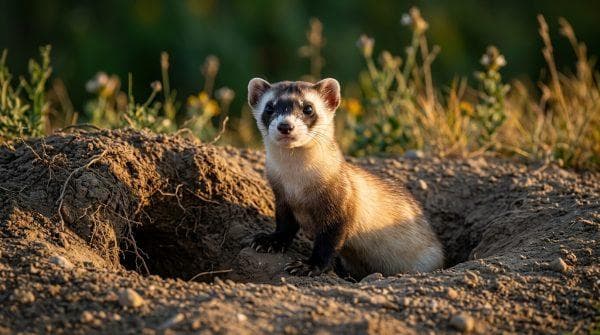
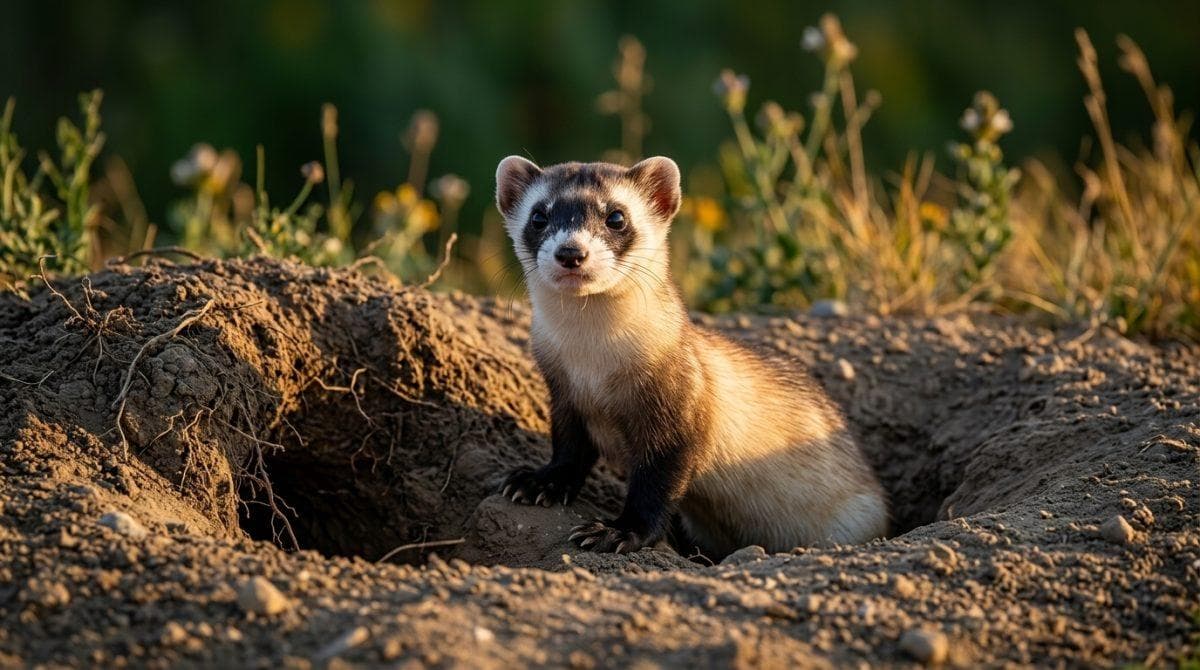
State wildlife managers from the Wyoming Game and Fish Department confirmed that recent field surveys in the Absaroka Range foothills failed to detect a single black-footed ferret (Mustela nigripes), a slender carnivore with yellowish fur, a dark mask and black feet that inhabits exclusively the Western Plains of the United States. Field crews conducted exhaustive searches across the hills outside Meeteetse, an iconic location in Wyoming where scientists invested 40 years of continuous conservation work to rescue this mammal after declaring it extinct in 1979.
Furthermore, a resurgence of sylvatic plague caused by the Yersinia pestis bacterium wiped out local rodent populations, heightening the risk that this iconic extinction animal faces a permanent population collapse. According to official reports, the drought in the Bighorn Basin severely depleted available prey, dismantling decades of recovery efforts and leaving the small carnivore without the habitat it depends on almost entirely for food, shelter and breeding.
The Wyoming conservation efforts and black-footed ferret recovery
Initial application forms and field reports submitted by wildlife managers confirm that disease outbreaks devastated the habitat between 2018 and 2023, shrinking active rodent colonies from 2.4 thousand to 1.5 thousand hectares and eliminating the primary food source for predators that rely on them for over 90% of their diet. During late-August inspections, small-carnivore biologist Andy Gygli led nocturnal spotlight surveys to detect eye shine across 1.6k to 2k hectares of land, logging hundreds of effort hours without sighting a single ferret.
Additionally, Phoenix Zoo conservation director Tara Harris explained that carnivores inevitably collapse when prey populations fail to recover from infectious disease outbreaks, while Gygli expressed disappointment after finding no animals despite the massive deployment. Consequently, state wildlife officials suspended releases of 10 captive-bred ferrets and redirected them to Shirley Basin, prioritizing habitat stabilization in Meeteetse where counts plummeted from 18 animals in 2022 down to 1 in 2025 and zero this summer, creating a challenging climate for any extinction animal trying to adapt.
Biological details and extinction animal preservation in the wild
-
Targeted insecticide treatments applied by field technicians directly into burrows to eliminate plague-carrying fleas across Wyoming.
-
Historic 1981 discovery triggered when a farm dog killed a ferret in Meeteetse, prompting officials to capture the last 18 wild survivors for captive breeding.
-
Redirection of captive-bred stock to Shirley Basin to safeguard declining rodent populations while local habitats recover.
-
Technical viability assessments led by non-game supervisor Bob Oakleaf to evaluate whether Meeteetse can support a self-sustaining population of this extinction animal.
-
Cautious optimism from local ranchers voiced by Allen Hogg, son of John Hogg, who noted that a lack of sightings does not mean the complete loss of the species.
Ver esta publicación en Instagram
“It’s about preserving an essential link in the North American prairie ecosystem,” states Tara Harris, conservation director at the Phoenix Zoo.
Four decades of genetic rescue and future ecosystem perspectives
Despite heartbreaking field setbacks, federal recovery initiatives led by the U.S. Fish and Wildlife Service mark 40 years of genetic preservation work alongside biotechnology partners like Revive & Restore. Furthermore, the recent birth of 4 cloned ferret litters at the Smithsonian National Zoo offers fresh hope for expanding genetic diversity before planning future wild reintroductions, proving that advanced science can change the trajectory of an extinction animal facing habitat degradation.
On a decisive note, conservation teams keep their focus on 2027, when scientists estimate prairie dog colonies might recover sufficiently to support new wild ferret releases. Wildlife crews continue monitoring the scrublands, determined to prevent infectious diseases from erasing four decades of dedicated work to save this resilient species in Wyoming.
