

WATCH NOW
Watch on the app















Don’t pack these foods if you’re traveling from Mexico to the US
-
Travelers crossing the border must report all non-permitted goods at the Mexico-US border to authorities to prevent the spread of pests.
-
Current regulations limit the entry of certain fruits and animal-derived items to safeguard the national ecosystem.
-
The official USDA database allows travelers to verify the admissibility of items before beginning any international journey.
U.S. Customs and Border Protection implements strict controls throughout 2026 to regulate forbidden foods Mexico-US that passengers attempt to bring into American territory; this coordinated effort with federal agencies protects the stability of the agricultural sector against biological threats through the mandatory inspection of luggage containing vegetable or animal products.
In this regard, travelers must understand that neglecting these regulations triggers severe penalties or immediate seizure of belongings, as authorities prioritize preventing harmful organisms from crossing borders; this prohibited travel food includes specific categories like fresh fruits, meats and plants, all of which require a detailed review by specialists stationed at every official port of entry.
Regulations regarding forbidden
Current protocols establish clear conditions to ensure external resources do not compromise the country’s sanitary balance, so passengers must report everything from seeds to processed plant products to officers present at airports; likewise, agencies like the APHIS and the FDA constantly supervise the entry of supplies to rule out the presence of dangerous fungi or insects that threaten local food production.
-
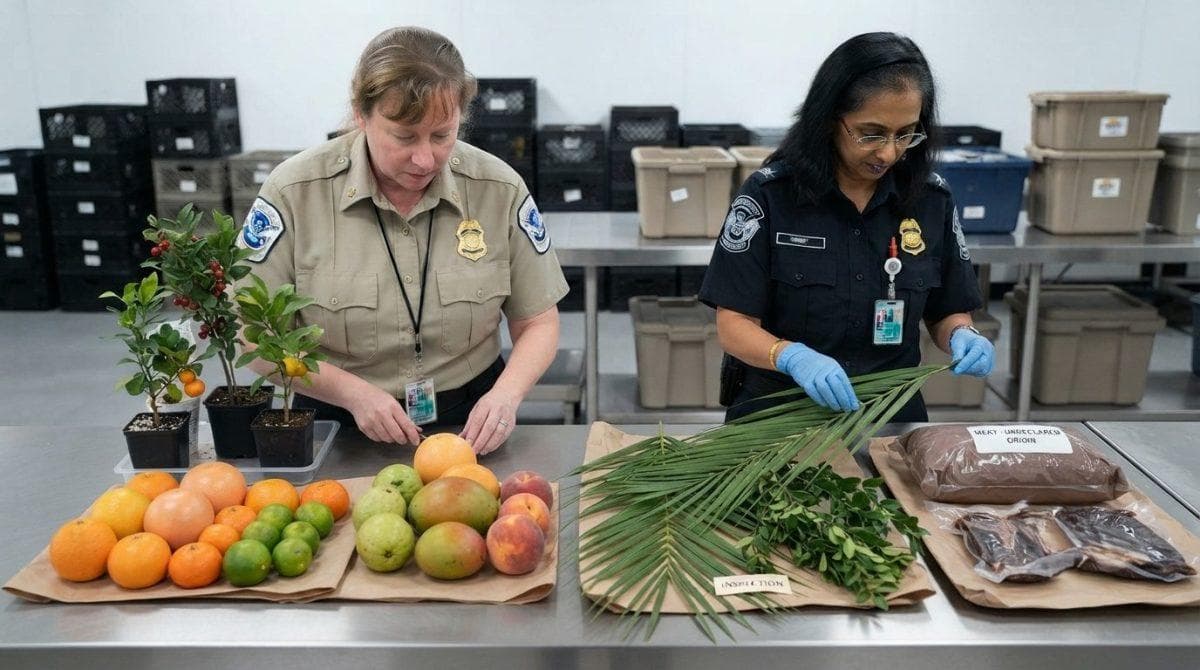
Citrus fruits like oranges, grapefruits, tangerines and sweet limes.
-
Tropical fruits including guavas, mangoes and peaches.
-
Plants linked to citrus or those with attached berries.
-
Palm fronds and myrtle branches subject to inspection.
-
Meat and meat products of undeclared origin.
Equally, the list of admissible items includes bread, crackers, cereals, candy, chocolate and cured cheeses, provided the traveler notifies customs personnel of their possession; although these products seem harmless, officers validate through physical inspection that they contain no ingredients classified as prohibited travel food, which creates a streamlined entry process for those who respect current safety guidelines.
Risk management for prohibited travel food
The Department of Agriculture provides digital tools like the ACIR database so users can verify specific requirements for each product before embarking on their trip; this platform drastically reduces the chances of facing seizures or administrative fines, as it acts as an indispensable resource for travelers who want to transport permitted items without committing errors that complicate their entry into the country.
Subsequently, agricultural officers apply rigorous selection criteria based on the international sanitary situation, given that any disease outbreak in the country of origin instantly alters the list of products authorized for personal import; this dynamism requires travelers to stay constantly updated regarding regulations, as the person transporting the merchandise bears the responsibility for declaring every element of prohibited travel food.
Meanwhile, a culture of prevention at ports of entry maintains high security levels for the national economy; active collaboration between citizens and federal agents facilitates the effective control of high-risk supplies, thereby shielding American fields through the strict surveillance of forbidden foods Mexico US.
