

WATCH NOW
Watch on the app













AI massive electricity appetite is becoming impossible to ignore
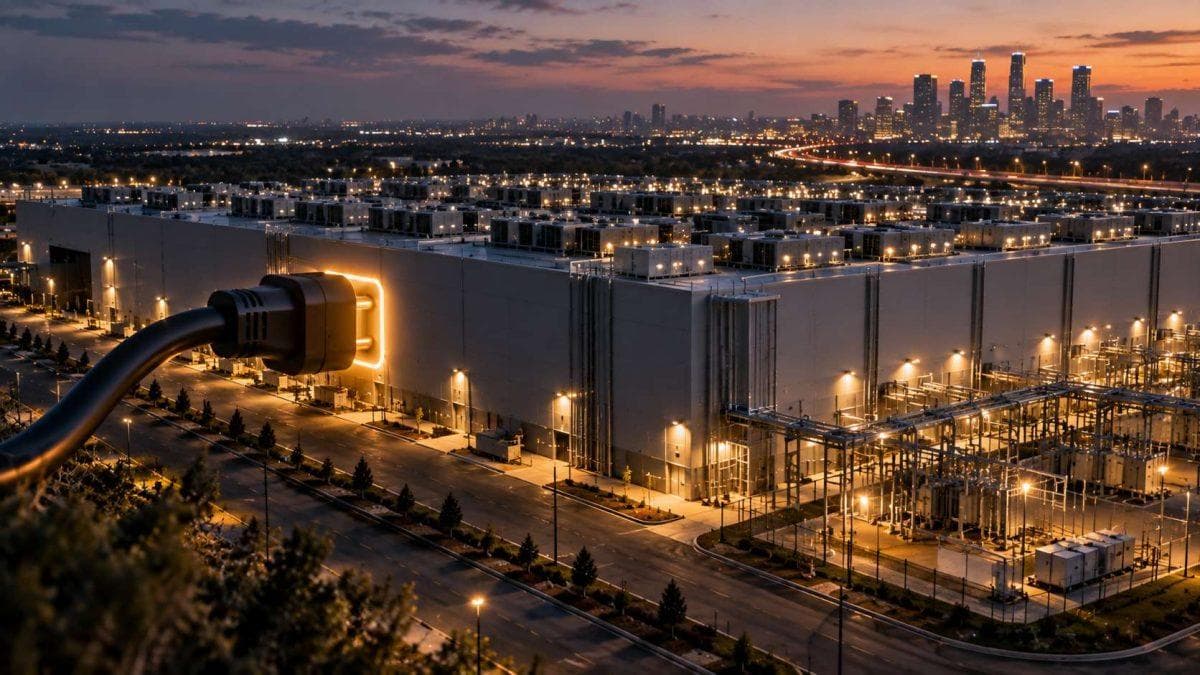
Every AI prompt, generated image and chatbot answer has a physical cost somewhere. Behind the screens are enormous data centers packed with servers running around the clock, and new estimates show just how extraordinary their appetite for electricity has become. Colossus 2 near Memphis, Tennessee, is estimated to have about 946 megawatts of current IT power, more than the average electricity demand of some major American cities.
One facility can consume electricity on the scale of Houston
Climate Crisis 247 compared the power requirements of some of America’s largest AI facilities with household electricity consumption in major cities. Its analysis puts Colossus 2 at roughly the scale of Houston, while Amazon and Anthropic’s New Carlisle facility in Indiana, estimated at 910 MW, also lands around Houston’s scale. Microsoft’s Fairwater Atlanta facility is estimated at 636 MW, comparable in the analysis to Philadelphia.
And those numbers describe facilities that already exist, not simply distant proposals. Epoch AI currently ranks Colossus 2 as the largest tracked operational AI data center by estimated IT power. For another comparison, it notes that San Diego averages roughly 800 MW of electricity demand, meaning a single AI complex can already require power on the scale of an entire major city.
The electricity demand is growing mostly out of sight
The individual buildings may attract little attention from Americans living hundreds of miles away, but collectively their impact is becoming difficult to overlook. U.S. grid power supplied to hyperscale, leased and crypto-mining data centers reached about 64.4 GW in 2025, nearly triple the level in 2020, according to S&P Global. The Department of Energy’s Lawrence Berkeley National Laboratory now estimates data centers could consume 9.5% to 15.3% of all U.S. electricity by 2030, depending on how quickly the industry expands.
Could households eventually feel it?
That’s the question moving the issue from technology into Americans’ monthly budgets. Data centers aren’t automatically responsible for a particular household’s higher bill, and their impact differs substantially by region and utility. But rapidly adding huge new loads can require more generation, transmission and grid infrastructure. In PJM, America’s largest power market, Reuters reported this summer that data centers contributed $3.8 billion to a sharp increase in operating costs, intensifying debate over who should ultimately pay for expansion of the grid.
The scale is only expected to grow. The EIA says data centers are already helping drive a resurgence in U.S. electricity demand after years of relatively flat consumption. What feels like an invisible digital service on a phone increasingly depends on very visible infrastructure somewhere else: massive buildings consuming electricity at a scale once associated with entire cities.
