

WATCH NOW
Watch on the app











Young Coast Guard rescuer jumped into the dark Pacific and spent two hours fighting to save 16 strangers
-
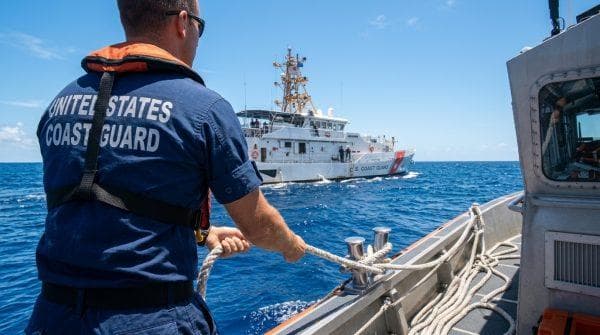
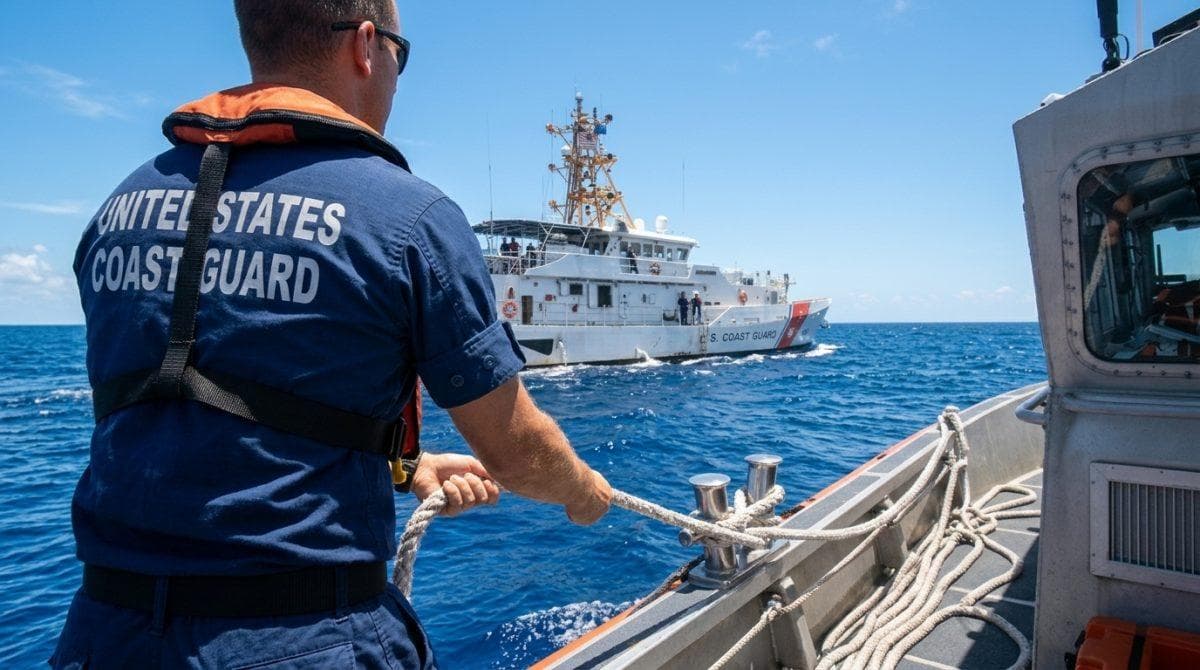
Baja California shipwreck response operations in open ocean waters challenge teams as a US Coast Guard rescuer swims through dangerous waves to save stranded victims.
-
High ocean swells and severe fatigue test emergency crews during a critical maritime operation off the Mexican coast.
-
Federal authorities investigate vessel origins while international border teams coordinate ongoing survivor medical treatment.
A 24 year old US Coast Guard rescuer named Josh Law jumped into total darkness during a midnight emergency off the Mexican coast around 1:00 AM on October 16, spending nearly 2 hours alone in the freezing Pacific Ocean fighting rough seas to save 16 strangers from a Baja California shipwreck that carried up to 27 people and left 11 missing passengers approximately 140 mi west of Ensenada, according to report details from The Associated Press.
Additionally, emergency flight crews mobilized within minutes under Lieutenant Miyako Miller at the Coast Guard air station in Ventura to launch the intense maritime operation, charting a southward flight path past the border where pilot teams located scattered debris and personal items across open ocean waters with no trace of the original vessel.
Ver esta publicación en Instagram
How a US Coast Guard rescuer braved hostile open Pacific waters
In light of these events, severe oceanic turmoil during a devastating Baja California shipwreck created immediate obstacles as Law descended from the aircraft into total darkness, where massive ocean waves between 6 and 8 ft battered the rescuer while helicopter rotor wash generated noise and blinding water spray that obscured visibility across the primary search zone.
“I couldn’t hear anything over the noise or see anything in the dark.”
— Josh Law
Meanwhile, Miller spotted emergency lights attached to life jackets scattered across frigid waters, where some victims clung to each other, buoys or wreckage pieces, prompting Law to utilize buddy tow swimming techniques to haul exhausted survivors toward the lowering hoist basket 1 individual at a time while following the helicopter searchlight.
“With one hand I was holding the survivor. With the other, I was signaling the helicopter and operating the device.”
— Josh Law
Ver esta publicación en Instagram
Physical exhaustion tests emergency crews during critical operation
For this reason, water breached Law’s dry suit down to his knees during consecutive rescue runs following a sudden Baja California shipwreck, adding heavy weight to every movement while severe fatigue threatened to disrupt ongoing hoist operations before completing the survivor retrieval process:
-
Dedicated US Coast Guard rescuer secures ocean survivors: Emergency protocols required Law to physically turn each victim onto their back while swimming them toward the flight mechanic’s rescue basket near the dangerous Baja California shipwreck site.
-
Flight crews monitor critical fuel levels: Helicopter pilots balanced a full cabin against decreasing fuel reserves to ensure safe transit toward awaiting ground ambulances in San Diego.
-
Immediate field medicine controls severe bleeding: Medical crews delivered urgent trauma care during transit as Law treated 3 patients with severe bleeding, addressing deep wounds compatible with shark bites.
-
Emergency responders coordinate hospital transport: City spokesperson Matt Hoffman confirmed 2 patients remained in critical condition, while 3 survivors entered Scripps Mercy Hospital and 3 others received evaluation at Scripps Memorial Hospital La Jolla before quick discharge.
In the pitch-black predawn hours of October 16, 2026, US Coast Guard rescue swimmer Josh Law was lowered from a helicopter into 6 to 8 foot waves about 140 miles off Mexico’s Baja California coast.
A boat had capsized and scattered more than two dozen people in the cold, dark water. Guided only by the aircraft’s searchlight amid the roar of the rotors, Law, the sole rescuer in the water, spent nearly two hours swimming from survivor to survivor.
He used the buddy-tow technique to flip them onto their backs, tow them through the swells, and place them one by one into the rescue basket, personally saving 16 lives (while 11 others were never found).
Exhausted and with little sleep, his dry suit filling with water, he later told the AP, “What I was experiencing was nothing compared to what they were at that point… I just had to keep that in mind.”
Even on the flight to San Diego, he treated three survivors for serious wounds consistent with shark bites near Guadalupe Island. True heroism from the Coast Guard team out of Air Station Ventura.
— Special Ops Magazine (@specialopsmag) October 25, 2026
Federal agencies launch official Baja California shipwreck investigation
As a result, a complex investigation following this tragic Baja California shipwreck began as the Mexican Consulate in San Diego provided consular assistance to all 16 survivors who held Mexican citizenship, prompting U.S. Customs and Border Protection officers to process them at local hospitals, where federal officials confirmed nearly half returned to Mexico while launching formal inquiries into vessel origins, destinations and human smuggling activity along routes frequented by fishermen, recreational boats and smugglers.
“The sea is unforgiving in that area.”
— Santiago Tamburini
In fact, joint search teams from the U.S. Coast Guard, U.S. Navy and Mexican Navy suspended active recovery efforts on Sunday after 3 days of searching across 2.4K sq mi over 89 hours, federal authorities maintain formal maritime inquiries to determine whether the unidentified vessel suffered mechanical failure, lost its way or drifted into open sea while evaluating the heroic response of every US Coast Guard rescuer involved in the mission.
