

WATCH NOW
Watch on the app









Texas streets become a battleground as Cybercab, Zoox and Waymo fight for space in Austin
-
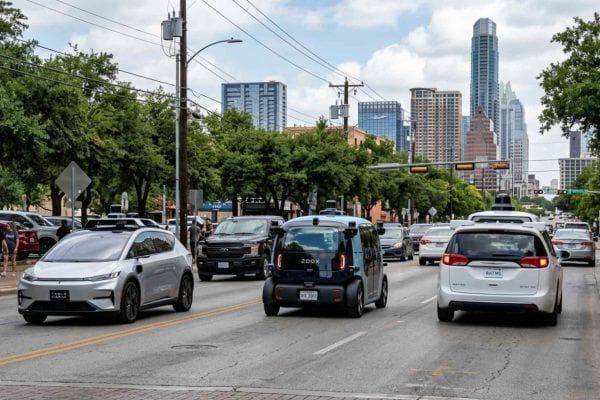
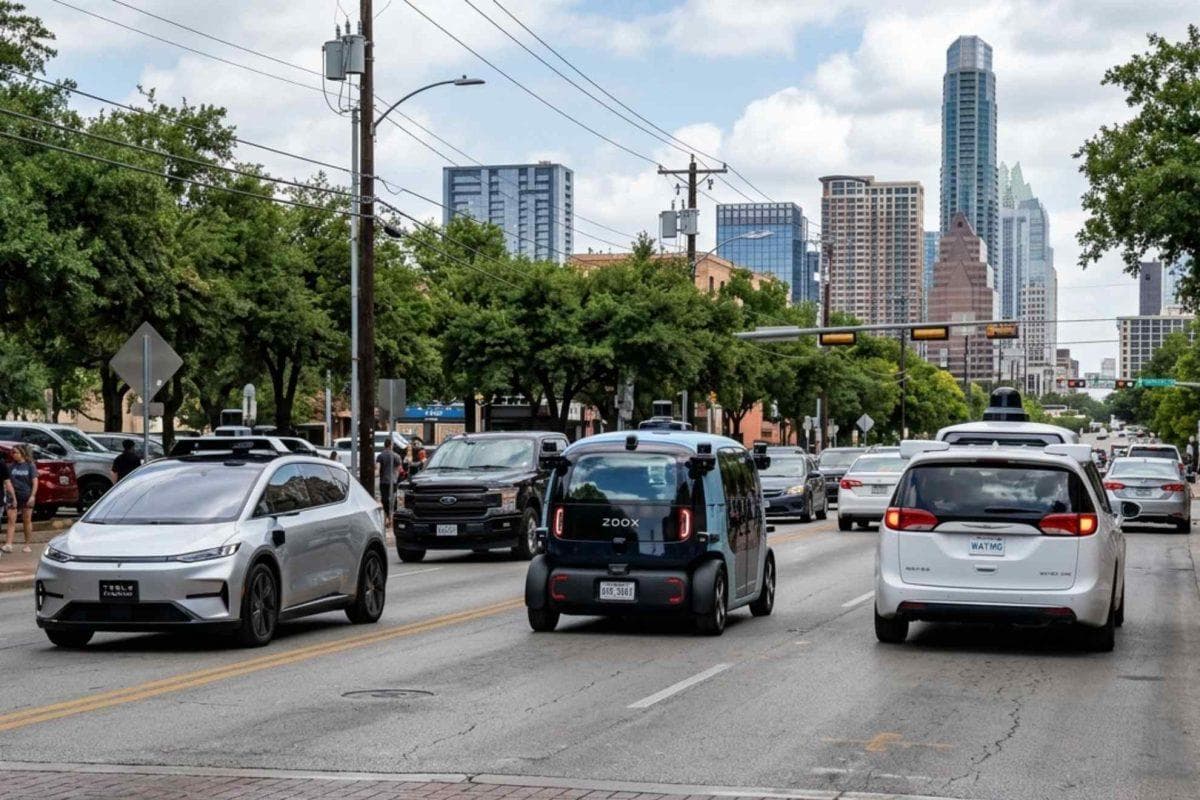
Leading autonomous robotaxi fleets gathered simultaneously across busy urban corridors in Austin, Texas.
-
The direct coexistence of Tesla Cybercab, Zoox and Waymo highlights the intense commercial race for driverless dominance.
-
Industry observers closely track the distinct engineering and sensor approaches operating in real world traffic.
The Lone Star State has rapidly evolved into the primary testing ground for the future of urban transit following a remarkable convergence of rival driverless vehicle fleets. In a scene capturing the current frontier of artificial intelligence and robotics, units from Tesla Cybercab, Zoox and Waymo were spotted operating within the same metropolitan zones in Austin, providing a vivid demonstration of the fierce technological rivalry unfolding across modern American cityscapes to establish supremacy in autonomous mobility.
Austin, TX (OCT.25.2026)-
We knew the day would come.
Zoox vs Waymo vs Cybercab#SunsetProject https://t.co/G6MiUD5Sp2
— No Safe Words (@Cyber_Trailer) October 25, 2026
The rapid expansion of competing robotaxi ecosystems in urban centers
The simultaneous deployment of these distinct autonomous concepts underscores the aggressive scaling strategies currently pursued by leading developers in the automated transportation sector. As sleek camera focused pods navigate complex intersections alongside traditional motorists and pedestrian traffic, urban environments serve as the ultimate proving ground for evaluating how these robotic systems handle unpredictable real world obstacles and dynamic road conditions.
Engineering philosophies and sensor suite variations on display
Each platform represents a fundamentally divergent approach to achieving full level four autonomy. While visual neural networks dictate the operational logic of certain fleets, rival competitors continue to rely on redundant multisensor arrays incorporating LiDAR and specialized radar technology, turning everyday encounters on public asphalt into fascinating technical case studies for transportation engineers and technology analysts alike.
Ver esta publicación en Instagram
Commercial transformation and municipal adaptation to driverless transit
The visible proliferation of commercial robotaxis across southern metropolitan hubs is reshaping public perceptions regarding shared mobility and municipal infrastructure requirements. As these automated services log millions of unsupervised miles, transportation authorities face mounting pressures to adapt traffic management frameworks to accommodate fleets that operate twenty four hours a day without human intervention.
Paving the way for next generation urban transit infrastructure
Encounters between competing autonomous networks foreshadow a near future where human driven vehicles share thoroughfares with automated logistics and passenger pods as standard background traffic. The ongoing deployment milestones achieved in regional hubs like Austin will ultimately dictate the speed and scale of broader nationwide expansions in the years ahead.
