

WATCH NOW
Watch on the app












The world has nearly 3800 billionaires but just 29 control more than a quarter of their wealth
-
Global mega-rich populations expand their massive fortunes significantly as financial markets adapt to evolving digital technologies and private equity growth.
-
International institutions evaluate economic concentration to measure how elite individuals accumulate unprecedented capital.
-
Financial markets reflect a record concentration of wealth among the planet’s most influential tech moguls during the latest fiscal period.
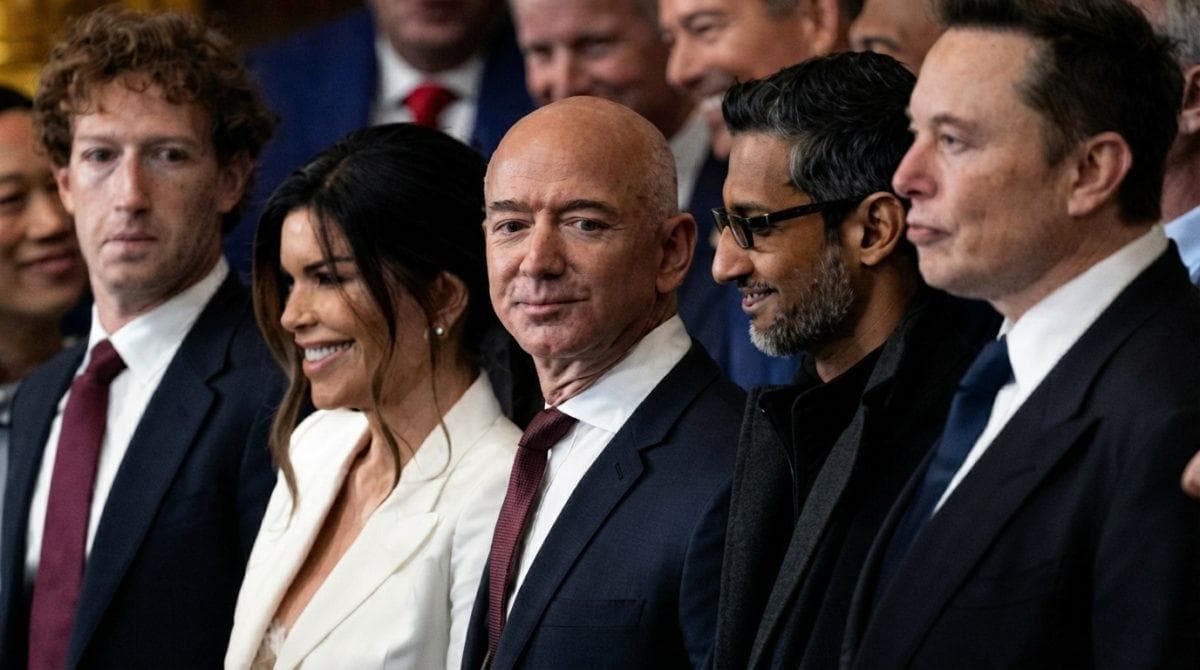
World’s richest billionaires dominate an unprecedented share of global capital, since Altrata published its 2026 Billionaire Census confirming that 29 individuals hold a staggering $4.1 trillion across international markets, while this exclusive group represents a tiny fraction of the 3,795 ultra-wealthy individuals worldwide who reached a combined net worth record of $15.1 trillion during the recent fiscal cycle, demonstrating how key figures like Elon Musk, Jeff Bezos and Larry Page drive extreme financial inequality across modern economies through their technology enterprises.
Meanwhile, financial analysts emphasize that artificial intelligence investments accelerate market gains exponentially, as experts track how technological innovation benefits major shareholders and corporate founders directly across North America and the United States, keeping New York firmly positioned as the premier global hub for ultra-high-net-worth residents by housing 164 individuals, thereby illustrating the powerful convergence of private equity, family offices, and luxury real estate assets.
The rise of elite fortunes and the concentration of world’s richest billionaires
Market researchers explain that net worth figures reflect estimated asset values rather than immediate liquid cash reserves, meaning public and private stock holdings dictate the fluctuating fortunes of these global titans, while industry reports reveal that 73% of the average billionaire portfolio consists of corporate stock and private equity investments, remaining highly sensitive to market shifts and technological hype cycles.
Furthermore, economic analysts point out that the top 29 individuals holding over $50 billion represent barely 0.76% of the global billionaire population yet control over a quarter of total elite wealth, prompting institutional data to highlight a widening internal gap within the upper echelon of society, where top founders outpace traditional investors by leveraging advanced artificial intelligence sectors.
Market volatility and investment risks for retail participants
-
Major financial institutions report that companies heavily investing in artificial intelligence outperformed standard market growth by 23% during recent fiscal periods.
-
Retail investors managing retirement accounts or index funds must evaluate underlying asset exposure rather than chasing short-term technological trends.
-
Maya Imberg, head of thought leadership and analysis at Altrata, warns that fortunes amassed by the world’s richest billionaires will experience constant fluctuations driven by the prevailing artificial intelligence narrative.
-
Extreme market concentration within a single sector introduces significant vulnerability to sudden and unexpected equity corrections.
-
Financial advisors recommend comparing management fees, risk tolerance and investment horizons rigorously before modifying retirement savings.
-
The United States housed 1,265 billionaires following an 11.5% increase, consolidating North America with $6.8 trillion in accumulated wealth.
Evaluating structural inequality and modern economic landscapes
Cultural commentators observe that extraordinary wealth accumulation generates intense public debate regarding fair taxation, corporate governance and the long-term stability of global financial systems, while policy experts emphasize that sustainable economic growth requires robust regulatory frameworks to prevent monopolistic practices among dominant technology conglomerates operating across international borders.
Conversely, specialized financial analysts review how cross-border capital flows and digital transformation redefine wealth generation models for future generations, prompting everyday savers to embrace diversified financial planning as an essential lifeline against the volatility inherent in market cycles shaped by the world’s richest billionaires.
