

WATCH NOW
Watch on the app












Pennsylvania’s 50-year-old murder mystery takes a turn after DNA points to a suspect who is already dead
-
Families of Susan Rush and Brenda Ritter receive answers half a century later thanks to advanced genetic testing applied to open case files in Washington County, while the investigation points toward a suspect who is already dead.
-
Pennsylvania State Police investigators discover that a local truck driver who passed away in 2023 perpetrated the crimes committed between 1976 and 1977.
-
Authorities analyze potential connections with similar cold cases while a suspect who is already dead evades earthly criminal justice.
The Pennsylvania State Police reveal that DNA evidence revolutionizes an investigation stalled for decades and forensic experts link the homicides of two young women to an assailant who died of natural causes, while this Pennsylvania murder mystery case shocks the American public after confirming the identity of the culprit through advanced genetic profiles that matched evidence from scenes separated by a few months.
Furthermore, local authorities detail that victims Susan Rush and Brenda Ritter suffered identical assaults in Washington County between late 1976 and mid 1977, whereas specialized prosecutors pushed for the review of material evidence with new federal funds from the Bureau of Justice Assistance, successfully establishing a criminal pattern pointing directly toward James Richard Clark Sr., a local resident who operated as a long haul trucker during the era of the attacks, representing a clear example of a suspect who is already dead within modern jurisprudence.

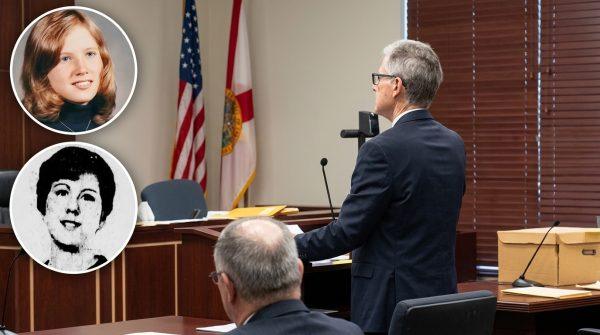
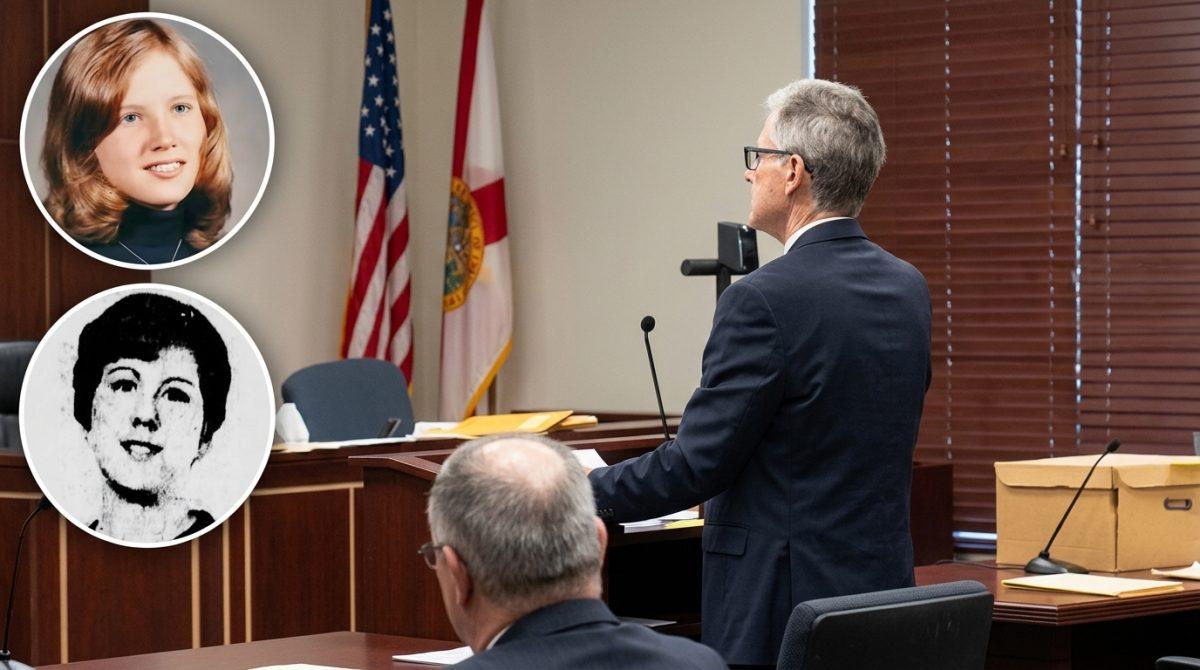
Archive photographs of victims Susan Rush and Brenda Ritter displayed during a legal presentation detailing the forensic review and criminal pattern connecting the Washington County cold cases to truck driver James Richard Clark Sr.
Forensic revelations and the impact of genetic technology in a suspect who is already dead
The Troop B criminal investigation unit collaborated closely with specialized laboratories to exhume truths hidden for fifty years and tests confirmed that genetic material matched completely across both analyzed crime scenes, while the examination of this criminal profile involves a suspect who is already dead which prevents an ordinary criminal trial from taking place in standard courtrooms. Likewise, experts explained that advances applied to original samples surpassed the technical limitations of the seventies, allowing specialists to isolate biological traces that remained intact inside victims vehicles, whereas the National Institute of Justice contributed vital financial resources to process neglected files and the death of the primary offender in July 2023 complicates accountability in courtrooms.
Consequently, relatives of the slaughtered young women obtain partial closure after receiving official notifications from state detectives, but doubts regarding potential additional crimes persist among police commanders in charge of the case. Equally, authorities examine historical movements of the transporter to rule out or confirm the existence of other victims along secondary routes of the region. In the same manner, the police corporation keeps open channels of public cooperation to gather retrospective testimonies clarifying the modus operandi of the aggressor before his passing.
Chronological details and aftermath of historical attacks
-
Susan Rush disappeared on November 25, 1976 heading to a religious activity, and her lifeless body appeared hours later inside the trunk of her own automobile bearing signs of strangulation, leaving behind a case linked to a suspect who is already dead.
-
Brenda Ritter suffered a similar tragic fate on May 18, 1977 after leaving her boyfriend residence during a severe storm, and she was located in a vacant lot within the South Strabane area.
-
Initial analyses performed in 2008 through FBI databases yielded no positive results due to insufficient traditional methods active during that operational period.
-
State police commanders reiterate that investigations into historical serial homicides remain active, underlining that current DNA technology radically transforms the resolution of cold cases featuring a Pennsylvania murder mystery and a suspect who is already dead.
Loading video...Loading Video
Institutional implications and closing of the criminal investigation
Law enforcement representatives point out that the absence of a criminal trial limits options to interrogate the suspect regarding his actual motivations, although accumulated scientific evidence remains irrefutable for Washington district prosecutors, confirming the posthumous guilt of a suspect who is already dead. Likewise, criminal behavior analysts study the profile of the transporter to determine whether he acted opportunistically during professional routes across the federated state, whereas governmental institutions highlight the importance of maintaining specific budget allocations to process old biological evidence benefiting affected relatives.
Consequently, this file sets a historical precedent in United States jurisprudence regarding crime resolution through posthumous genetic traces, consolidating the value of modern forensic science in complex dossiers. Nevertheless, authorities remind citizens that the memory of victims remains alive within the local community following half a century of institutional uncertainty. Eventually, the outcome of this inquiry demonstrates that technological perseverance redefines the concept of justice for a Pennsylvania murder mystery.
