

WATCH NOW
Watch on the app














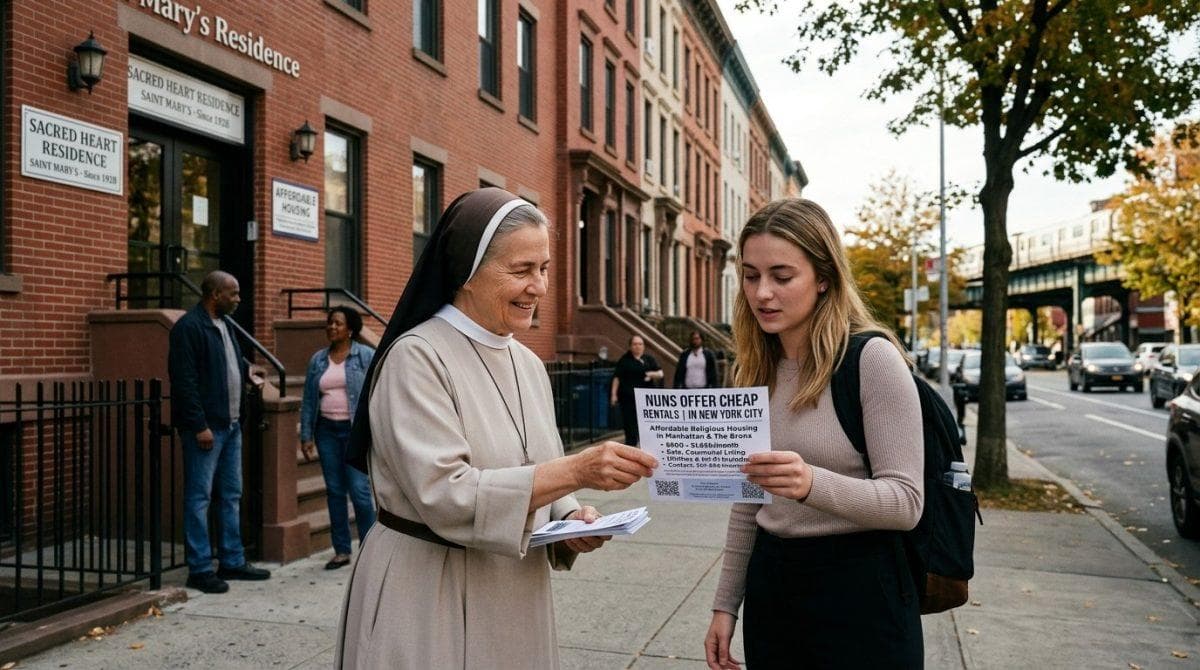
Nuns low cost rents in New York are a real option if you need it
-
The Nuns offer cheap rentals in New York City represent a strategic housing solution for young professionals navigating today’s real estate crisis.
-
This form of Affordable religious housing serves as a secure alternative, typically including utilities, cleaning services and meals at a fraction of market rates.
-
Convent managed residences foster a stable community environment, offering a unique buffer against the record-high costs found in traditional Manhattan rentals.
Nuns offer cheap rentals in various strategic neighborhoods across Manhattan and the Bronx serve as an unexpected lifeline against the 20% surge in New York City real estate prices throughout 2026. Religious organizations operate these residences as a sanctuary from the record-high rents, which according to the latest NYC Housing and Vacancy Survey, reached a historic low vacancy rate, forcing many to seek non-traditional housing solutions ranging from $800 to $1,650 per month.
Furthermore, the accommodation model managed by religious communities attracts those prioritizing safety and communal living, as these institutions provide a controlled environment with consistent maintenance and meal services in many cases. Although lifestyle rules differ from conventional apartments, demand grows steadily due to the necessity of achieving financial balance through Affordable religious housing in a metropolis where living expenses significantly exceed the levels recorded before the pandemic, as noted by U.S. Bureau of Labor Statistics cost-of-living reports for the area.
Benefits and testimonials of affordable religious housing
It is essential to highlight that institutions such as the Sacred Heart Residence or St. Mary’s offer stability, where residents like Katie Rettig value the trust and order provided by the sisters over the uncertainty of traditional online marketplaces. Accessing these options allows young professionals to remain in the city, avoiding lengthy commutes or unforeseen expenses that destabilize personal finances during the early stages of their professional projects in New York.
Likewise, the management of these properties includes utilities, high-speed Wi-Fi, and constant upkeep, factors that drastically reduce costs associated with independent living in New York apartments, as the majority of these houses accept residents regardless of religious affiliation, effectively transforming the traditional convent concept into a modern hospitality center for those seeking a secure roof at competitive rates.
Also, the diversity of options spans from the Upper West Side to the Bronx, where centers like Centro Maria maintain active supervision, ensuring that every tenant returns to a protected environment each evening, a system of communal living that fosters a sense of unity rarely found in the city, where daily support replaces the cold, transactional nature of landlord-tenant relationships typical of commercial real estate buildings.
Rules and dynamics in hospitality spaces
-
Some residences implement evening curfews to guarantee the security of all individuals residing within the building premises.
-
Common areas receive daily cleaning by religious staff, maintaining hygiene standards that frequently exceed market averages for shared housing.
-
Restrictions on alcohol consumption and male visitors in residential bedrooms are strictly enforced to ensure absolute tranquility for all inhabitants.
-
Communication regarding arrival times is managed via lobby whiteboards, facilitating logistical monitoring by the sisters on duty.
-
Different locations allow for more flexible and open stays, such as Kolping House, where men and women coexist in separate quarters.
-
The current offer responds to a historical need for safe lodging, effectively adapting to the demands of today’s urban workforce.
The future of the nuns offer cheap rentals
However, the real estate landscape faces significant challenges due to the closure of multiple boarding houses during the global health crisis, and rising operational costs further complicate the sector, while the decline in active religious sisters limits available spots, creating extensive waiting lists for new applicants seeking rooms in these highly sought-after locations.
On the other hand, the continued operation of residences like Menno House demonstrates that affordable religious housing remains a fundamental pillar in Manhattan, bridging social needs with viable architectural solutions, as maintaining these institutions ensures that the city preserves a support network for essential workers and students who require assistance during their initial years of residency in this highly competitive market.
The search for economical options in New York consolidates the importance of these residences, confirming that nuns offer cheap rentals are a viable alternative against galloping real estate inflation, since the combination of human values, safety and fair pricing positions these centers as an indispensable piece of the housing reality, allowing nuns offer cheap rentals to keep the metropolis accessible for those working toward their future.
