

WATCH NOW
Watch on the app














New York offers free cool roofs to beat the heat and lower energy use, here’s how to apply
-
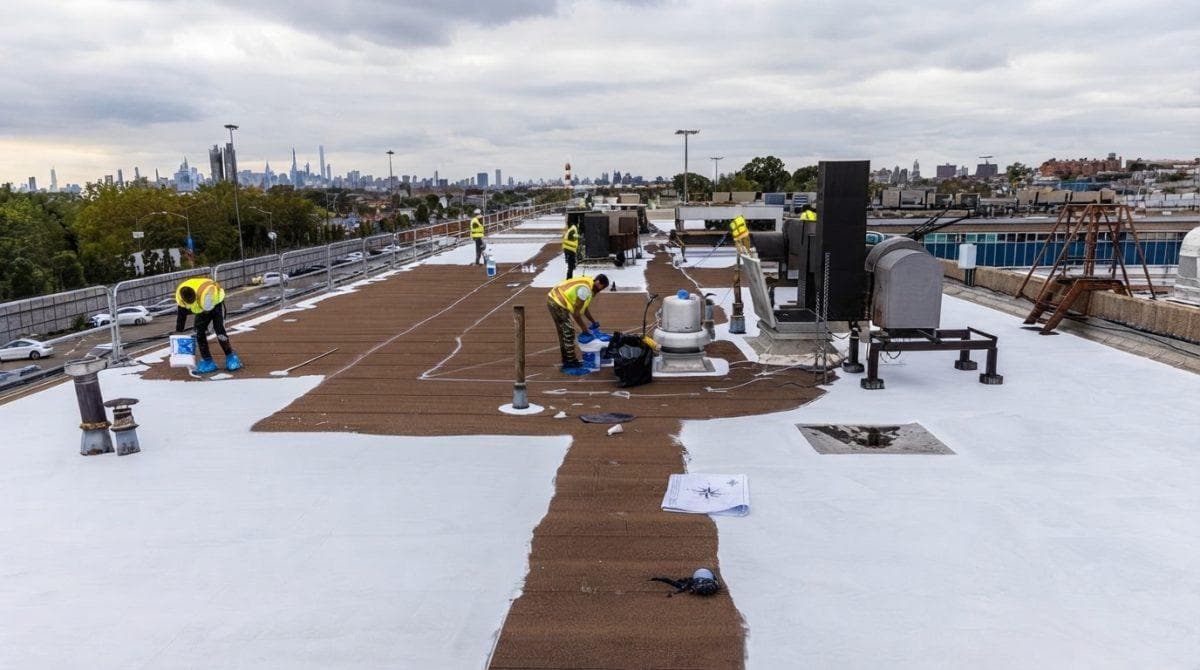
The NYC cooling rooftops initiative has quickly established itself as a vital alternative across New York to combat summer heat through reflective white coatings.
-
During the warm season, local authorities actively drive the reduction of energy consumption and pollutant emissions through this far-reaching municipal program.
-
New York institutions clearly outline eligibility requirements and official contact channels so interested property owners can quickly submit their buildings for consideration.
New York City keeps a municipal initiative running strong through coordination between the NYC Department of Small Business Services, the Mayor’s Office of Climate and Environmental Justice, and The HOPE Program to transform urban surfaces via NYC cooling rooftops; moreover, official reports show that dark asphalt roofs reach temperatures up to 190 °F on a typical summer day, contributing drastically to dangerous heat accumulation inside buildings. On the other hand, experts point out that this governmental program covers all five boroughs by applying specialized reflective layers designed specifically to cut down thermal absorption and reduce the energy needed for air conditioning systems; likewise, statistics prove that these specialized structures successfully drop interior building temperatures by up to 30%.
Since 2015, 344 participants have passed through NYC CoolRoofs. We are proud to support local workers and amplify their voices as they advocate for a better future for their communities. pic.twitter.com/4vpAtPfnaq
— The HOPE Program (@TheHOPEProgram) November 1, 2021
Property managers and community organizations carefully analyze the selection criteria established by local authorities to submit their properties and secure program benefits; however, current regulations specify that the free service operates primarily for non profit facilities, affordable housing complexes, schools, hospitals, community centers and cultural institutions; additionally, private buildings that do not qualify for total free service can access a low cost alternative where the owner pays a reduced rate for coating materials while the program provides free labor and technical assistance; therefore, this positive environmental impact pushes toward the goal of coating 1M sq ft of rooftops every year to sharply cut down massive greenhouse gas emissions.
Ver esta publicación en Instagram
Technical requirements for NYC cooling rooftops
Flat surfaces in optimal condition with minimal cracks guarantee the safe installation of reflective paint as structural evaluation engineers explain; furthermore, architectural support requires a proper parapet standing 3 ft 8 in tall to protect workers during coating operations. Specialists note that the base material composition within NYC cooling rooftops projects must consist of granulated sheets, asphalt, modified bitumen or standard bitumen.
Direct and secure physical access to upper levels forms the operational guideline for specialized workers across high structures; conversely, locations are immediately ruled out if roofs contain hazardous machinery or require complex hatchways. Municipal administration emphasizes that these physical requirements guarantee the long-term durability of the free cool roofs across all five New York boroughs; meanwhile, technical teams perform detailed inspections to certify that every property complies with safety parameters set by the city government.
Essential official application protocols for free cool roofs
-
Property owners seeking assistance submit their requests directly through the official email address [email protected] to kick off their technical evaluation process.
-
New York City citizen service phone lines handle information inquiries through the short code NYC 311 or the direct line 212-639-9675.
-
Non-profit institutions present proper documentation proving their legal status to qualify for the full material cost waiver.
-
Affordable housing managers coordinate inspection visits with program coordinators to verify the condition of flat roofs linked to NYC cooling rooftops.
-
Community centers and educational facilities actively participate in environmental awareness workshops organized by partner government agencies.
Environmental benefits of the urban initiative
Urban initiatives go far beyond simple thermal mitigation by turning into a fundamental pillar to meet carbon neutrality goals projected for the year 2050 across North America thanks to NYC cooling rooftops; additionally, environmental agency calculations reveal that every 2.5K sq ft of coated surface prevents roughly one ton of CO₂ emissions through the deployment of bright reflective surfaces; on another front, this government strategy integrates a strong social component by offering training opportunities and paid work experience to New Yorkers interested in joining the sustainable construction sector; likewise, worker crews gain advanced technical skills in applying passive cooling technologies driven by NYC cooling rooftops.
Massive concentrations of asphalt and cement trigger the urban heat island effect, hurting residents’ quality of life during summer heatwaves as urban analysts reaffirm; consequently, the reflective transformation of architectural roofs significantly lowers demand on the general power grid. Local authorities insist that community participation remains indispensable to cement a resilient and energy efficient metropolitan development model; in short, every transformed roof builds a cooler urban future thanks to free cool roofs.
Ver esta publicación en Instagram
