

WATCH NOW
Watch on the app













New York is banning AI toys that try to act like the child’s best friend
-
Toys that act like friends face a 5 year pause in sales and production under New York Bill S.9408A A.11144B
-
New York leaders aim to curb privacy risks, emotional reliance, and harmful content for kids under 12
-
Attorney General Letitia James can pursue civil penalties and court orders across the state
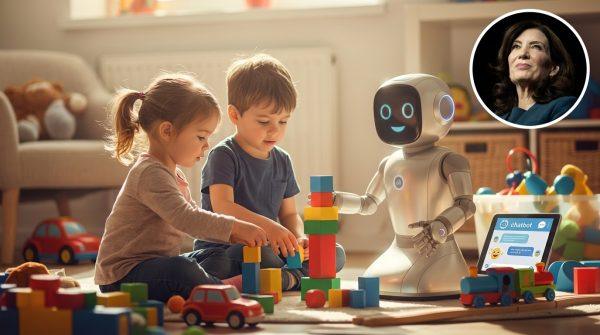
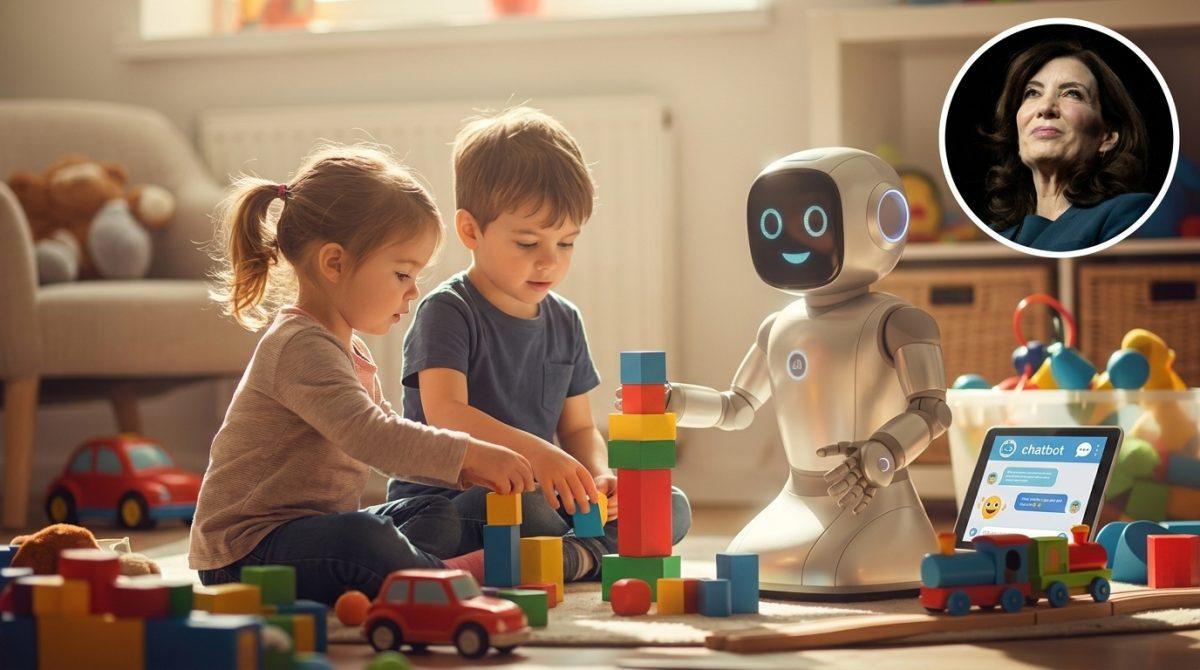
New York is banning toys that act like your child’s best friend and here is why, as Governor Kathy Hochul signed Bill S.9408A A.11144B on November 24 to enact a 5 year pause on artificial intelligence chatbot toys for kids under 12, protecting child privacy, mental health, and early growth; moreover, the law takes effect 90 days after signing, skipping the 2026 holiday rush while raising an early warning for families shopping connected gifts.
Meanwhile, the statute targets interactive products that simulate human bonds through generative artificial intelligence or emotion recognition and recall past talks, while building a seemingly personal bond matters more than simply connecting to the internet; furthermore, state findings and specialized reviews flagged inappropriate responses, data collection and emotional attachment, prompting leaders to demand caution before companies operate under the new rule.
Why New York is banning toys with artificial intelligence companions
State regulators flagged serious flaws when connected toys hold ongoing chats, store personal preferences and mimic affection toward kids under 12 who still learn to separate real bonds from artificial systems, since creating a seemingly personal bond defines the threshold rather than mere internet access; in addition, a January 2026 Common Sense Media review of Grem, Bondu, and Miko 3 found that 27% of generated responses were inappropriate, including self harm, drugs, adult themes, or risky tips, while some units collect voice recordings, transcripts, and daily habits that expose children’s private routines.
Consequently, emotional reliance grows when these systems ask personal questions to stretch chats or react when a child says they want to stop playing or leave, straining social and emotional growth during early stages; therefore, New York officials backed a 5 year pause on making, exchanging, distributing, and selling these items statewide, pushing companies to take responsibility before launching conversational products for young kids.
Key rules and oversight under the new state law
-
Bill S.9408A A.11144B sets a 5 year pause in New York on making, exchanging, distributing and selling items as New York is banning toys for kids under 12 with artificial intelligence chatbots that mimic human ties or ongoing bonds.
-
Enforcement starts 90 days after signing, so the ban misses 2026 Thanksgiving and Christmas shopping while requiring immediate care from parents.
-
Attorney General Letitia James can bring legal action, seek civil fines up to $15K daily and request court orders to stop banned sales.
-
State agencies, including the Department of State, the Office of Mental Health, the Attorney General, and the Office of Innovation, Governance, Integrity, and Digital Trust, will complete a joint review within 4 years after the law takes effect.
-
The rule separates basic electronic toys that play sounds or answer single prompts from conversational systems that remember chats or build simulated closeness beyond internet access, even as New York is banning toys that cross into conversational companionship.
What families and public agencies weigh around toys that act like friends
Along with civil penalties up to $15K per violation day and the authority of Letitia James to seek court orders halting prohibited activity, the law directs a multi agency study with the Department of State, the Office of Mental Health, the Attorney General and the Office of Innovation, Governance, Integrity and Digital Trust over 4 years after taking effect to weigh risks, benefits, and safeguards; meanwhile, Governor Hochul urged families to look beyond age ratings or build materials alone, checking whether a gift uses conversational artificial intelligence, reacts when a child says goodbye or pauses play, how long it keeps recordings, what data it gathers during use, whether parental controls exist and whether it shares personal data with third parties.
At the same time, state leaders maintain that digital innovation should never outpace child safety and healthy development, prompting families to examine every tech gift more closely this season; on that basis, public scrutiny strengthens the path through which New York is banning toys built around intrusive conversational companions.