

WATCH NOW
Watch on the app












Iowa residents fear the worst may come after the military explosion
-
The Iowa military detonation ended after destroying nearly 5 tons of lead azide at an army blast site in Middletown
-
Federal authorities and environmental agencies maintain air, water and soil checks while neighborhood caution persists
-
Schools, businesses and rural producers took preventive steps after 68 barrels exploded simultaneously inside two bunkers
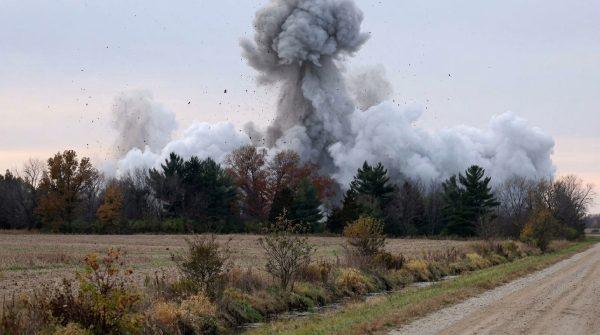
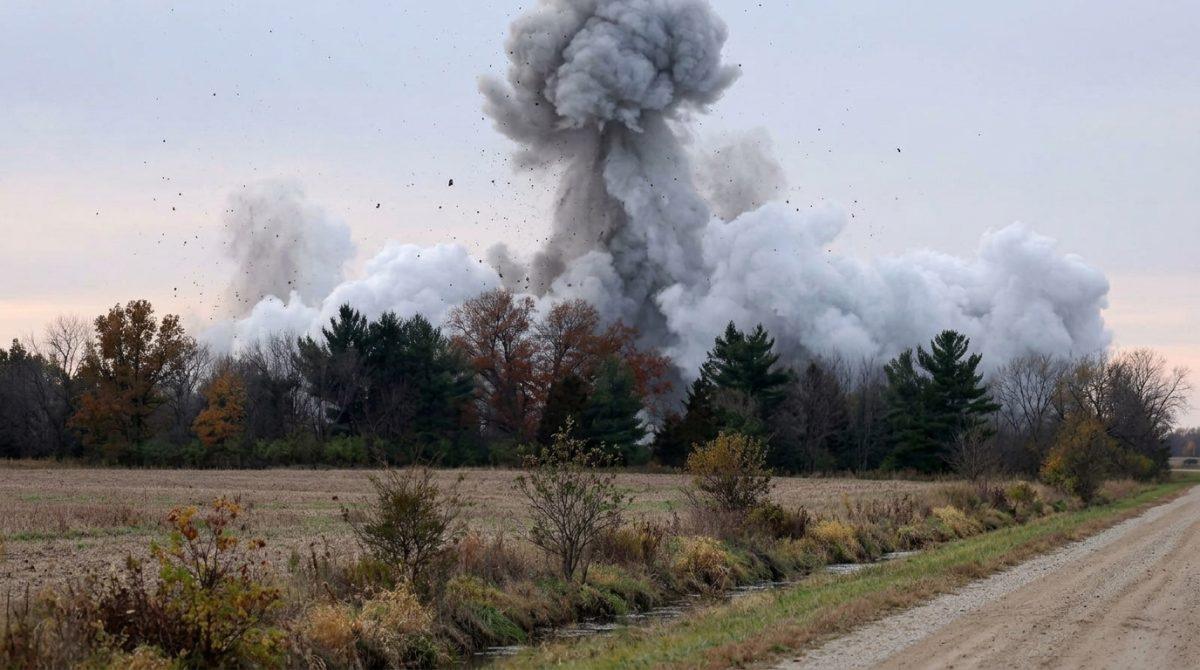
The U.S. Army completed an Iowa military detonation around 9:00 a.m. at the Middletown Ammunition Plant, destroying nearly 5 tons of lead azide stored across 68 barrels inside two bunkers that detonated simultaneously to neutralize an uncontrolled explosion from material degradation and officials also surrounded both structures with concrete and sand barriers roughly two stories high, paired with ballistic gels, foam and a water curtain, to limit lead dust dispersion.
Likewise, initial readings from the Environmental Protection Agency detected no airborne lead after the blast, though water and soil worries remain active in southeastern Iowa and extend around this army blast site.
Containment steps and official reactions at the army blast site
Two white plumes rose from the site and dissipated quickly while Maj. Gen. Eric Shirley, commander of Army Sustainment Command, stated that the operation exceeded expectations and that the munitions used eliminated the threat posed by the material, and Bureau of Alcohol, Tobacco, Firearms and Explosives Director Robert Cekada noted that the layout directed energy underground and lowered atmospheric lead release, while President Donald Trump posted on social media that initial reports showed “the Army’s mitigation efforts have far exceeded expectations.”
On the other hand, the Environmental Protection Agency deployed 300 employees and contractors around the army blast site to collect air, soil and water samples over the coming days and will carry out decontamination measures if test results require them, according to Administrator Lee Zeldin, while the U.S. Department of Agriculture estimated that roughly 350 farms could lie in the projected plume path and urged pressure washing barns, fences, feeders, portable water tanks, trailers and farm gear once particles settle while monitoring livestock with veterinarians.
Evacuations, alerts and local accounts
Official calm still shares space with caution among residents in Middletown and nearby towns, as several schools that had not yet begun their Thanksgiving break canceled classes as a precaution and a nearby gas station closed temporarily until authorities clear it to reopen, while service members walked through neighboring homes to check on residents and the Environmental Protection Agency offered property, soil, or school testing upon request.
Consequently, FEMA sent a mobile alert recommending evacuation up to 5 miles southwest of the plant with temporary lodging through Friday, urged sheltering indoors with closed windows within a 20 mile radius and pledged to announce when returning is safe without setting an estimated time, while Linda Ross told The New York Times that 1 mile from the bunkers she heard two bangs, felt windows rattle and heard her dogs bark before staying inside for 24 hours and later checking her chickens after the Iowa military detonation, and Kiki Hope kept children indoors at her childcare center despite neither hearing nor seeing the blast.
Closer to the water concerns, Gavin Thompson bought two cases of bottled water over the well he shares with his grandfather in Mount Hamil and told that outlet, “That is the only thing we are worried about. If it gets contaminated, what do we do?”, while treatment plants along the Mississippi and Missouri rivers will run periodic lead tests, Sheena Abbott watched the plume clear from the Great River Health System campus in West Burlington with her 11 year old daughter and remarked, “Then it disappeared. So I thought, ‘Well, the good news is that, actually, nothing bad happened'”, and 89 year old moose breeder Henry Bohlen left his herd of roughly 25 animals outdoors before telling CNN, “I thought there would be a big fireball.”
Key environmental checks and alerts around the Iowa military detonation
-
Ongoing monitoring at the army blast site with 300 EPA inspectors collecting air, soil and water samples and applying cleanup steps if needed.
-
Preventive evacuation advised up to 5 miles southwest with FEMA lodging, mobile alerts, and indoor shelter guidance within 20 miles.
-
Veterinary checks and pressure washing recommended across roughly 350 farms in the projected plume path.
-
Periodic testing at Mississippi and Missouri river water plants to rule out lead spikes in public supplies.
-
Voluntary property, soil and school evaluations available to nearby residents following this Iowa military detonation.
Loading video...Loading Video