

WATCH NOW
Watch on the app


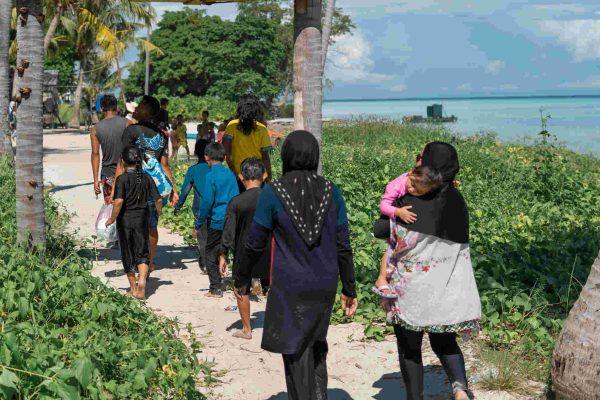








Thousands of people are seeking a way out of a tiny country in danger
- Thousands of people seek a way out of Tuvalu in the visa lottery to Australia, where 3,075 primary registrations represent 11,225 people for just 280 annual spots.
- Sea level rise threatens to flood nearly half of the capital between 2050 and 2060, though Tuvalu also builds elevated ground in Funafuti.
- The Falepili Union treaty opens mobility to Australia and protects Tuvalu’s sovereignty against climate impact.
Why thousands seek a way out of Tuvalu as the ocean advances
News that thousands seek a way out of Tuvalu from the heart of the Pacific Ocean reflects the real urgency facing this archipelago of nine coral island groups sitting under 2 meters in average elevation, where Australia’s government logged 3,075 primary applications, 11,225 people including families, for only 280 annual visas in its second 2026 migration lottery.
On top of that, sea level around Tuvalu climbed roughly 15 centimeters over three decades at nearly 1.5 times the global average pace according to NASA, alongside projections of at least another 15 centimeters over the next thirty years and high tides that could jump from fewer than 5 days a year to an average of 25 days by the 2050s, harming crops and freshwater. In this way, between extreme tides and fears that nearly half the capital will flood regularly between 2050 and 2060, the outlook pushes many families to explore visa options away from home.
Elevated land in Funafuti and the Falepili Union treaty with Australia
Notably, even though thousands seek a way out of Tuvalu through migration programs, authorities in the Pacific Ocean nation combine overseas mobility with coastal engineering works to gain height against sea level, since the Funafuti adaptation project backed by UNDP reinforced nearly 2.9 kilometers of shoreline and added more than 7.3 hectares of raised land, with plans to add another 13.6 hectares using geotextile bags, vegetation and coral nurseries.
At the same time, a Nature Communications study spanning 1971 to 2014 showed that Tuvalu’s total land area grew 2.9%, around 73.5 hectares, across eight of its nine island groups, a finding that reminds us atolls shift shape yet still fail to guarantee enough elevation against future tides. On the other hand, the Falepili Union treaty active since August 2024 grants residency in Australia to all 280 annual spots, 89 primary applicants and 191 secondary applicants in 2025–2026, allows travel between both destinations and affirms in Article 2 that Tuvalu’s statehood and sovereignty continue despite rising seas.
What lies ahead for Tuvalu between relocation and defending territory
Now, on the immediate horizon, the reality that thousands seek a way out of Tuvalu coexists with the country’s push to sustain its legal and physical identity as the Pacific Ocean presses against every corner of its 26 square kilometers. Likewise, while the Falepili Union treaty with Australia offers a concrete path to study, work, and access services abroad without severing ties to home, ongoing works in Funafuti aim to give breathing room to residents who want to stay close to their land. In this way, Tuvalu’s story shows how a tiny nation confronts a massive challenge without giving up on its future.