

WATCH NOW
Watch on the app


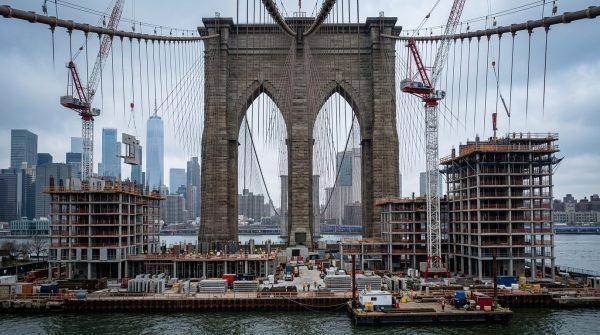









Why aren’t new buildings in New York being built with more than 100 apartments?
-
The New York housing shortage takes a sharp strategic turn as developers discover a financial advantage in building fewer units amid the NYC residential crisis.
-
Builders leverage property tax exemptions from the state 485x program through residential developments capped at 99 apartments across multiple boroughs.
-
This real estate shift reshapes affordable rental inventory while city officials project hundreds of thousands of needed homes over the next decade.
The New York housing shortage enters a new strategic phase across the five boroughs because real estate developers unlock a clear financial advantage by constructing fewer apartments per building to sidestep strict regulatory and labor mandates during the NYC residential crisis; between July 2024 and September 2026, industry records show 172 new or planned projects under 100 units, a figure contrasting sharply with just 13 buildings of that size erected between 2008 and 2023, since this approach grants access to property tax exemptions under the state 485x program, formally known as Affordable Neighborhoods for New Yorkers, while carrying lighter affordable housing obligations and bypassing specific construction wage requirements.
Furthermore, this urban planning pivot raises critical questions for thousands of renting families, given that New York City estimates a need for nearly 700k new homes over the next decade to close its persistent housing gap; while smaller developments accelerate construction on compact lots, they simultaneously shrink the share of apartments reserved for lower income households, even though municipal leaders plan to build and preserve 200k affordable units alongside stabilizing another 200k existing apartments against a historically low vacancy rate squeezing family budgets.
How the 99 apartment threshold reshapes the NYC residential crisis
Small scale residential complexes surge directly from the technical guidelines of the 485x incentive, where the Real Estate Board of New York reports that Brooklyn captured 65 developments under 100 units between July 2024 and September 2026, while Queens recorded 58 and Manhattan added 17 projects under this framework; for buildings containing between 6 and 99 apartments, state rules require developers to reserve at least 20% of units as affordable at an average income equal to 80% of the area median income, thereby avoiding the $40 hourly minimum construction wage subject to annual adjustments that governs larger structures.
Conversely, Basha Gerhards, executive vice president of public policy at REBNY, argues that municipal leaders must encourage larger scale developments and ensure every neighborhood actively helps resolve the NYC residential crisis because a 99 unit building yields roughly 20 affordable apartments compared to the 38 units a 150 apartment project reserves in eligible zones under the 25% mandate and a far more accessible 60% area median income threshold; simultaneously, regulations mandate that affordable apartments share entrances and common amenities with market rate units while remaining under rent stabilization throughout the designated compliance period.
Architectural splitting tactics and essential factors for prospective renters
-
Several developers keep complexes below the 100 unit ceiling through legally separate structures, exemplified by The Eastline on the Upper East Side, a 23 story tower split into two 99 apartment buildings at 1655 First Avenue and 355 East 86th Street that share a courtyard and terrace while operating independently.
-
The Fleet in downtown Brooklyn replicates this legal engineering by distributing 450 rental residences across five distinct addresses without any single structure exceeding 99 units, demonstrating how tax incentives shape both architectural design and corporate structuring amid the NYC residential crisis.
-
Basha Gerhards warns that New York cannot satisfy its massive housing demand solely through small scale construction, prompting her call for public policies driving higher residential density in transit rich neighborhoods confronting the New York housing shortage.
-
Prospective tenants eyeing these new developments should ask whether a building participates in the 485x program, verify the exact percentage of reserved affordable apartments, check income eligibility limits for housing lotteries published by the New York City Department of Housing Preservation and Development, and review rent caps carefully because units priced at 80% of the area median income often remain out of reach for low income households.
Long term effects on urban planning and the rental market
Sub 100 apartment buildings rapidly transform real estate investment dynamics across city boroughs, because builders prioritize financial structures that trim immediate operating expenses over massive developments carrying heavier regulatory burdens; nevertheless, community organizations and urban analysts evaluate this trend cautiously, noting that project fragmentation restricts deeply affordable housing for essential workers and lower middle class families navigating the NYC residential crisis.
Meanwhile, debates over tax exemption effectiveness gain momentum among lawmakers and neighborhood advocates working to balance private construction incentives with genuine affordability, ensuring that evolving housing policies determine whether future developments sustainably ease the New York housing shortage.