

WATCH NOW
Watch on the app






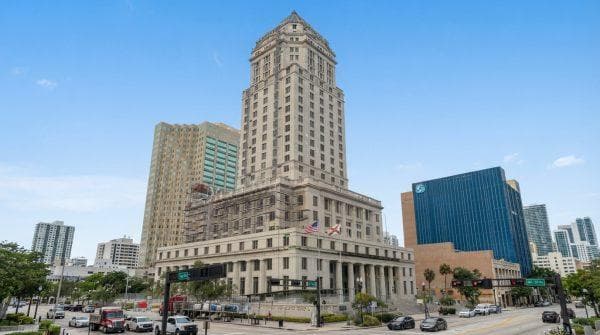








Miami’s historic courthouse could get an awkward new neighbor
-
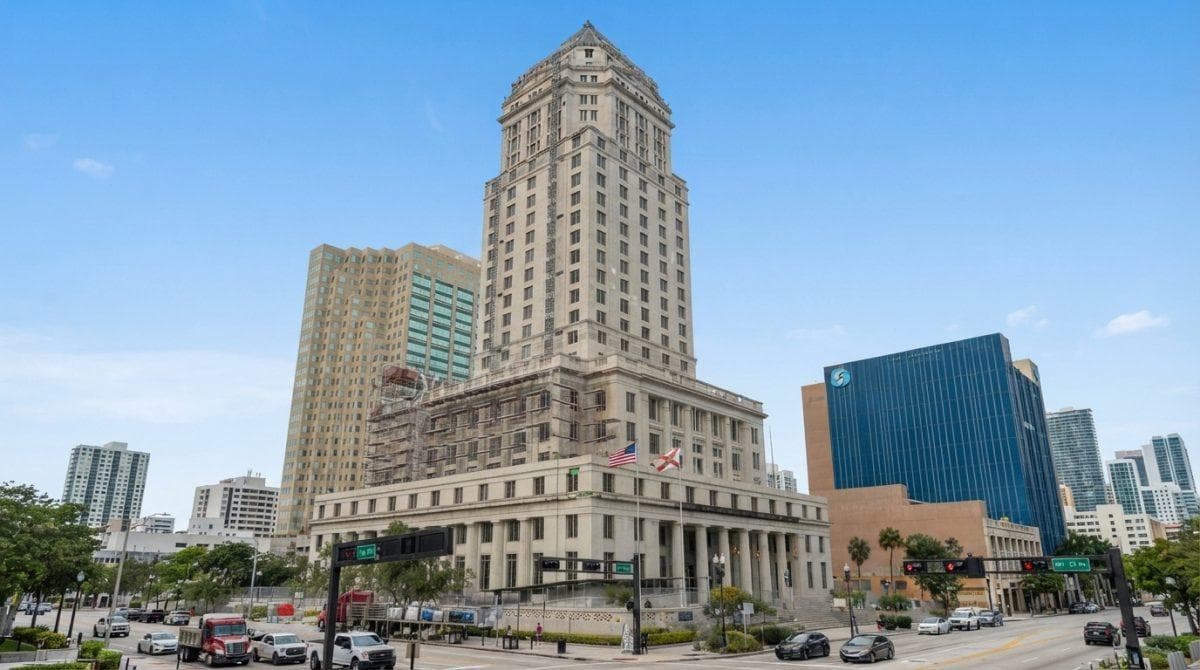
The historic courthouse faces an ambitious real estate plan that seeks its rescue through the construction of a residential tower.
-
Developer Russell Galbut proposes a 70 story structure right next to the historic tribunal.
-
Authorities evaluate financial alternatives following the failure of the recent public county auction.
Miami courthouse faces an unexpected turn after a failed real estate auction failed to attract bidders, prompting businessman Russell Galbut to propose an innovative architectural preservation alternative, moreover, this ambitious initiative aims to transform Flagler Street through the arrival of new residents and the opening of commercial venues on the ground floor of the original building where the notorious Al Capone was once tried.
For 7 decades, the structure built in 1928 has lacked economic viability on its own, motivating the search for private financing schemes to prevent its progressive deterioration, meanwhile, the project intends to allocate most of the taxes generated by the new residential tower to the perpetual maintenance of a historic landmark renowned for its illuminated pyramid at the summit and its traditional nickname of “Cielito Lindo”, while also studying the condition of the historic courthouse.
Context of the Miami courthouse auction and preservation proposal
-
Following multiple extensions that pushed the deadline to October 25, Daniella Levine Cava’s administration still receives no formal bids on the county digital platform regarding the Miami courthouse.
-
Additionally, developer Moishe Mana submitted an alternative offer for $5,000,000 throughFortuna Group Enterprises to convert the historic courthouse into art galleries and cultural spaces without erecting new buildings.
-
However, the option led by Galbut stands out by promising a massive private investment capable of covering the high structural conservation costs that the local government cannot shoulder.
-
Likewise, real estate experts analyze the urban impact that the 70-story structure will generate over the emblematic steps and the northern facade of the ancient edifice.
Urban development and project financing
“It links to an economically viable building to preserve the historic building forever.”
Russell Galbut
Ver esta publicación en Instagram
Official documents reveal that the architectural design features a slender tower measuring 70 feet wide located right next to the judicial venue, incorporating hotel rooms, offices and an exclusive speakeasy at the apex, subsequently, the core of the proposal lies in a fiscal incentive where property taxes from the new skyscraper will exclusively fund the restoration of the historic landmark detailed in the daily financial report while standard city and school board taxes remain completely untouched.
Additionally, the urban intervention aims to revitalize a downtown zone surrounding the Miami courthouse that usually turns deserted after 5:00 PM, attracting steady pedestrian flow toward restaurants and shops integrated into the ground floor, concurrently, the Miami-Dade County Commission retains the responsibility to negotiate terms directly before approving any definitive agreement.
Ver esta publicación en Instagram
Legal implications and the historic courthouse future
Local authorities study every clause of the contract submitted by GFO Acquisitions thoroughly to prevent potential public questioning regarding transparency in the adjudication of state assets, meanwhile, preservation organizations monitor the development of negotiations closely while noting how even renting spaces within the unused 28-story tower would fail to cover ongoing maintenance expenses at the historic courthouse.
This bold real estate precedent sets a fundamental milestone in managing historical properties unable to sustain themselves through public funds, establishing a replicable model across major American cities, thus, the ultimate future of the Miami courthouse opens a new operational chapter under strict supervision standards, as reviewed further in the county development analysis.
