

WATCH NOW
Watch on the app



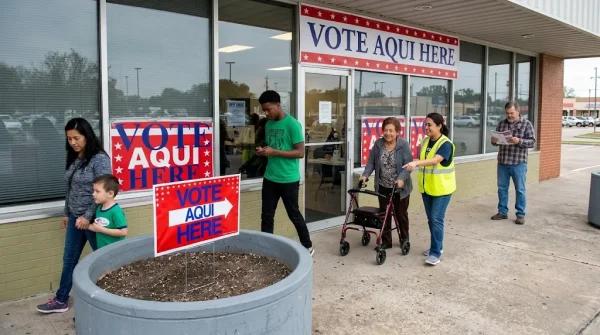










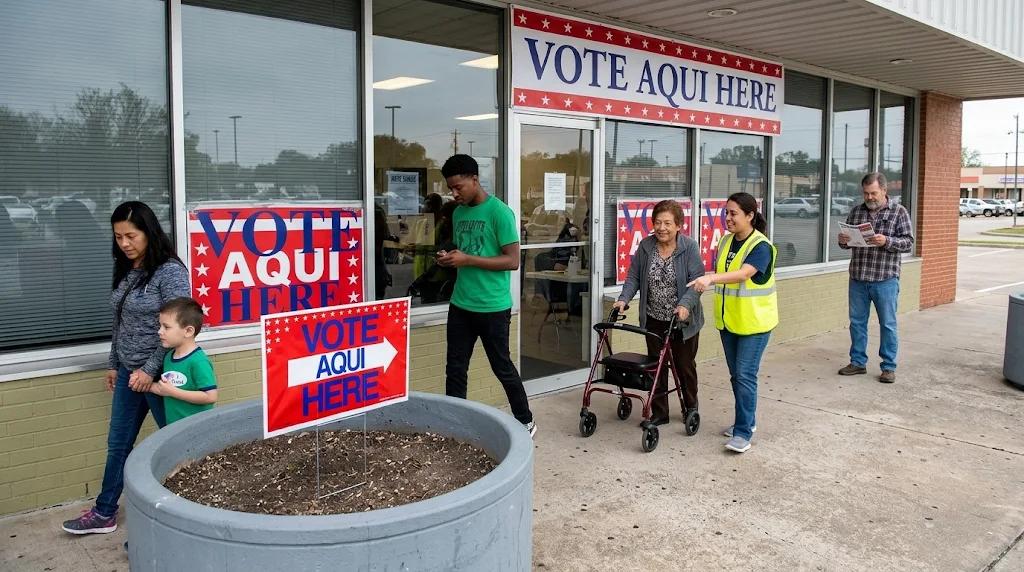
Latino families react to election results as uncertainty over ICE continues to shape their lives
-
Changes at the polls impact voter turnout amid new uncertainty, marking a pivotal moment across communities nationwide.
-
Federal election analysts confirm that shifting demographics redefine legislative balances, signaling an electoral phase that directly influences civic participation.
-
Civic specialists emphasize that ongoing political transformations require careful adaptation across vulnerable regions, particularly as community mobilization increases significantly.
Latino immigrants experience profound shifts as recent midterms reshape the political landscape, maintaining active discussions across federal agencies because civic participation numbers surpassed previous records while changes at the polls redefine legislative priorities; furthermore, community organizers explain that this electoral behavior directly alters representation dynamics across major states, modifying dominant governance structures and large-scale voter engagement without any isolated intermediate stops.
Additionally, demographic research projects an impressive civic footprint as young voters drive unprecedented mobilization during the recent electoral cycle, compelling authorities to analyze participation trends closely and likewise, Pew Research Center reviews indicate that these shifting dynamics overlap with broader social expectations, configuring a complex political outlook for the upcoming legislative sessions.
Evolving civic engagement influenced by changes at the polls
Extensive social movements modify the fundamental dynamics of political participation when urban centers record higher-than-average turnout for several consecutive weeks, establishing environments where Latino immigrants adapt to legislative variations, while traditional voting barriers that typically restrict minority access gradually lose strength, allowing 67M67 text{M} latinos to shape national discussions across suburban districts.
Civic organizations navigate complex institutional frameworks as this dynamic reduces historical apathy observed among younger generations, diminishing political isolation and strengthening grassroots representation; however, the analytical community emphasizes that changes at the polls present specific demographic particularities, avoiding the automatic attribution of all electoral shifts exclusively to statewide campaigns while tracking 250250 seats in the U.S. House of Representatives, proving how policy directions evolve.
Legislative impacts and future expectations
Political forecasting models indicate that the expansion of diverse voter bases displaces conventional partisan strategies, creating new legislative priorities across multiple jurisdictions, and specialized analysts anticipate a higher probability of progressive policy debates during the upcoming legislative sessions, providing unexpected organizational opportunities for Latino immigrants.
Residential areas populated by diverse families face unique governance challenges, demanding proactive civic education programs, while educational and nonprofit sectors continuously analyze electoral updates to mitigate potential administrative hurdles derived from these governance shifts, ensuring that community resources remain fully operational while changes at the polls persist under federal enforcement protocols.
Essential monitoring and operational strategies
Institutional protocols require civic organizations to coordinate advanced observation methodologies for analyzing voter behavior without interference from partisan friction, establishing reliable baselines across participating regions.
-
The use of comprehensive electoral metrics allows researchers to isolate precise participation signals in urban centers without interference from accumulated historical trends while changes at the polls unfold.
-
Community committees establish emergency support protocols facing the forecasted increase in civic participation across continental territory, monitoring how Latino immigrants adapt during periods of political uncertainty.
-
Research centers weekly update demographic data to evaluate the exact evolution of voter turnout, maintaining an 84%84% youth support metric for annual electoral projections.
-
Local authorities promote informative campaigns designed to prepare communities against administrative fluctuations, successfully securing long-term civic stability alongside changes at the polls.
