

WATCH NOW
Watch on the app














NYC garbage truck starts burning as residents’ irresponsibility is discovered inside the trash
-
Careless handling of household waste triggers major fires in city collection vehicles across local neighborhoods.
-
Sanitation officials urge residents to improve trash disposal in NY to prevent dangerous lithium battery blazes.
-
New York authorities expand special drop off sites to prevent explosive thermal runaway events in urban districts.
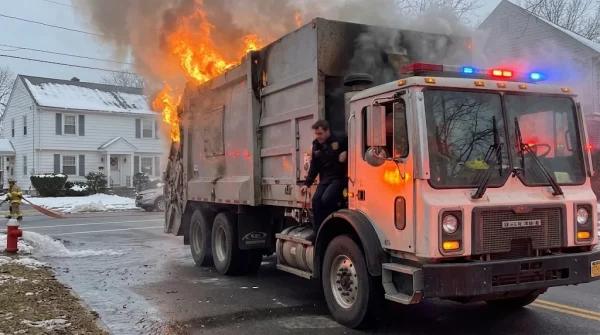
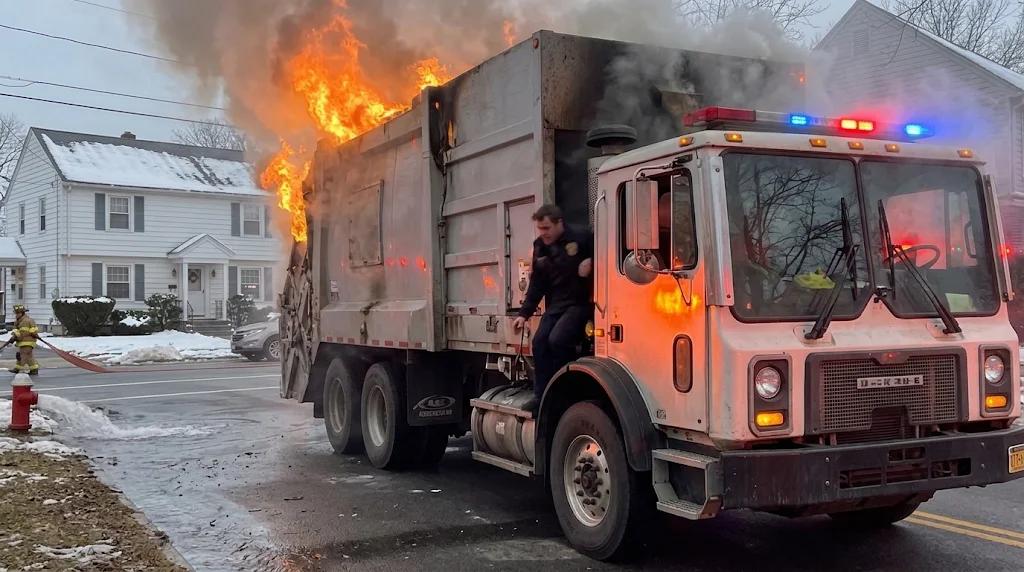
During recent sanitation inspections near Midland Avenue and Patterson Avenue in Staten Island on November 1, 2026, a Garbage truck caught fire after sanitation workers discovered residents’ reckless waste habits inside the hopper; furthermore, the New York City Department of Sanitation and the New York City Fire Department recorded 4 similar vehicle blazes across the borough during 2026, demonstrating that reckless disposal triggers major emergencies.
Additionally, New York State Attorney General Letitia James confirmed that authorities recorded 401 lithium battery blazes through October 28, 2026, leaving 74 people injured and 6 dead; meanwhile, officials warn that mechanical compaction inside collection vehicles crushes rechargeable cells from smartphones, laptops, power tools, button batteries and car batteries, triggering thermal runaways with flammable gases that threaten waste treatment plants and local communities, proving that proper waste separation saves lives.
Critical fire risks inside the modern garbage truck
Sanitation crews face constant hazards on city streets because reckless household habits introduce volatile electronics into standard collection trucks:
-
Thermal runaway hazards: Compaction mechanisms inside every Garbage truck easily crush hidden lithium ion batteries buried within everyday household trash; consequently, physical impacts rupture rechargeable cells and transfer extreme heat to surrounding materials, demonstrating that mechanical compression accelerates fire risks.
-
Strict prohibition protocols: Furthermore, the DSNY strictly bans residents from dumping lithium, nickel cadmium, or e-bike batteries into regular trash bins or household recycling containers; therefore, individuals must wrap battery terminals with clear tape or bag units separately before visiting designated collection sites, proving that responsible device handling protects workers.
Authorized programs for trash disposal in NY
New York residents across all 5 boroughs can access free municipal drop off sites from Tuesday through Saturday between 9 AM and 3 PM by showing proof of residency:
-
Manhattan special waste site: Located at 74 Pike Slip directly beneath Manhattan Bridge between Cherry Street and South Street.
-
Brooklyn special waste site: Situated at 459 North Henry Street in Greenpoint with main vehicle access via Kingsland Avenue.
-
Queens special waste site: Stationed on 30th avenue between 120th and 122nd Street in College Point.
-
The Bronx special waste site: Positioned at farragut street and the east river next to fulton fish market via food center drive.
-
Staten Island special waste site: Situated within fresh kills via muldoon avenue exit off west shore expressway.
Public safety regulations and hazardous waste guidelines
State environmental laws and municipal residential initiatives establish clear guidelines for handling home appliances while safeguarding personal data:
-
Special waste and digital security steps: The New York State Department of Environmental Conservation forces electronic retailers and hardware stores to accept used rechargeable batteries without charge, while municipal staff may request identification or proof of residency at drop-off sites where SAFE Disposal Events also manage household chemical products and hazardous materials; moreover, residential buildings with over 10 units coordinate free computer drop offs through ecycleNYC utilizing special containers or safe temporary storage areas, proving that digital safety measures protect personal data.
-
Disposal criteria for home appliances: Concurrently, single use alkaline batteries like AA, AAA, C, and D units can go into regular trash while covering 9V terminals with tape to prevent short circuits, but small appliances without batteries like toasters, coffee makers, and microwaves undergo metal and plastic rigid recycling, refrigerators and air conditioners require special handling due to refrigerant components, and electric bike batteries demand high capacity mobility recyclers, confirming that strict regulations safeguard urban infrastructure.
Emergency protocols require immediate distance and a quick call to 911 whenever batteries exhibit swelling, smoke, sparks, or abnormal heating; consequently, the City Council scheduled an oversight hearing for November 20 to address battery storage risks and prevent another burning Garbage truck on municipal roads.
