

WATCH NOW
Watch on the app





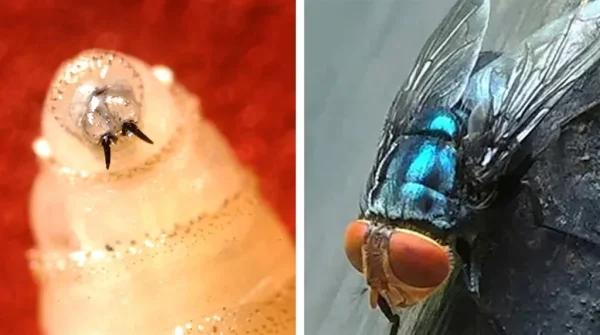









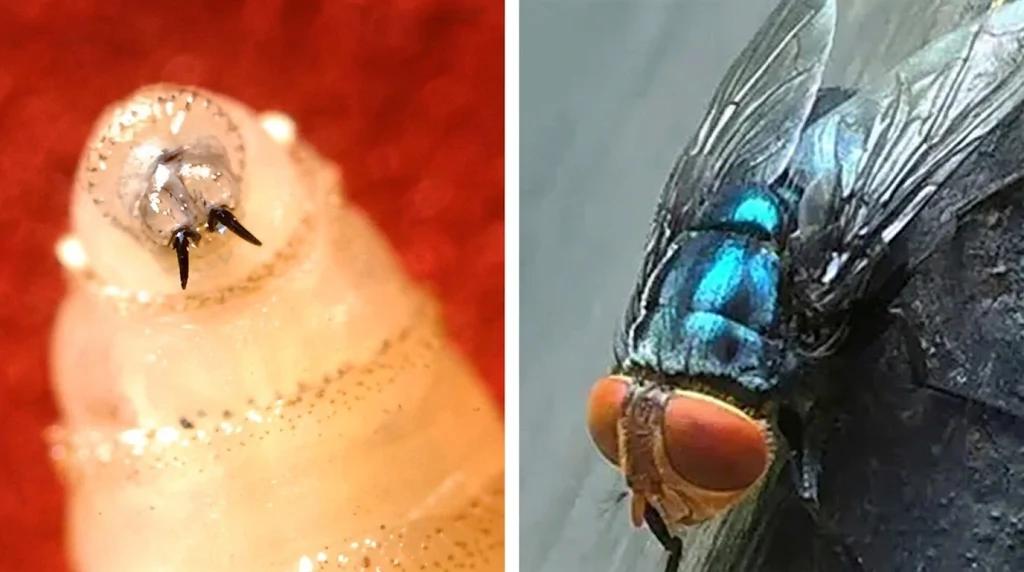
U.S. had three years to prepare for a flesh-eating parasite but a critical defense is still missing
-
Critical defense missing options emerge as regional authorities struggle to contain the ongoing outbreak after years of delayed infrastructure planning.
-
Federal health reports indicate that livestock and regional agricultural sectors face severe economic threats due to border closures and supply shortages.
-
International experts emphasize that immediate biosecurity investments remain essential to protect vulnerable domestic markets from further biological exposure.
Three years after the New World screwworm broke the containment barrier in Panama, the United States faces a severe health and livestock crisis that federal officials acknowledge as the direct result of sluggish responses, messy political transitions and a biological supply chain producing merely a fraction of the sterile flies required to combat the flesh-eating parasite; furthermore, government authorities implement urgent measures to mitigate the impact on national livestock, proving that preventative healthcare demands immediate resources.
Additionally, federal agencies confirmed the first domestic case on June 3, 2026, revealing a significant operational vulnerability because the country lacked any domestic production facility for sterile insects; likewise, industry experts note that current facilities in Panama and Metapa generate roughly 150M weekly flies, falling far short of the 500M minimum threshold required to halt the parasite’s advance, matching the exact volume needed during the historic 1960s campaign that successfully eradicated the pest from American territory and contained a Florida outbreak in 2017, confirming that supply shortages limit containment.
Three years to prepare for a flesh-eating parasite
Panamanian officials registered nearly 800 parasite cases in the Darien Gap during late February 2023, marking the onset of a crisis that alerted international bodies regarding the collapse of North America’s final natural defensive line; subsequently, the Panama United States Commission for the Erradication and Prevention of the Screwworm decided in April of that year to elevate weekly production from 20M to 100M specimens while Panama declared a health emergency in July 2023 and intensified livestock transit controls, showing how a critical defense missing impacted the initial response and demonstrating that bureaucracy delays health responses.
Meanwhile, the former administration announced nearly $110M in additional funding during December 2023 to reinforce foreign detection and sterile fly manufacturing, but the funds arrived as the screwworm advanced steadily northward; consequently, the United States Department of Agriculture delayed serious discussions regarding a domestic facility until November 2024, confirming that delayed planning exposes livestock sectors.
U.S. infrastructure and emergency response protocols
Federal authorities deploy multiple infrastructure actions and border controls to curb the parasite’s expansion across southern livestock regions:
-
Texas production facility and critical defense missing impact: The presidential administration ordered a border closure in May 2025 spanning over 15 months and impacting bilateral trade valued in billions of dollars; furthermore, a $610M contract awarded to M.A. Mortenson in March 2026 accelerated construction on the Moore Air Base facility in Edinburg, Texas, advancing its opening to April 1, 2027, backed by an extra $250M investment supported by Defense Secretary Pete Hegseth, reflecting how planning delays postponed the project and confirming that military funding accelerates critical works.
-
Binational supply deficit and technical realities: Current operations rely exclusively on Panama and Metapa plants whose combined deliveries remain insufficient against a demand where a single fly deposits up to 3,000 eggs; likewise, Texas A&M University entomologist Sonja Swiger warned that adequate sterile insects remain unavailable, recalling that the method relies on mating with wild females to prevent egg hatching, demonstrating that external dependence prolongs vulnerability.
Public health safeguards and critical defense missing challenges
The Centers for Disease Control and Prevention recorded over 209.4K animal cases and more than 2.8K human infections across Mexico and Central America, including an August 2025 confirmed case involving a citizen contracting the condition after traveling to El Salvador; subsequently, USDA spokesperson Nancy McNiff maintained that the agency acted with urgency, while experts urge citizens to apply repellents and keep wounds covered when visiting endemic zones, revealing that a critical defense missing persists in current guidelines and remembering that personal protection prevents accidental infections.
Ultimately, agricultural authorities continue supervising livestock imports following the 2026 border reopening, accumulating 120 official animal records nationwide; meanwhile, specialists calculate that definitive containment requires a decade of continuous aerial releases, proving that border vigilance protects national livestock against the ongoing threat posed by the flesh-eating parasite.
