

WATCH NOW
Watch on the app















How to say Bro in Latin American countries
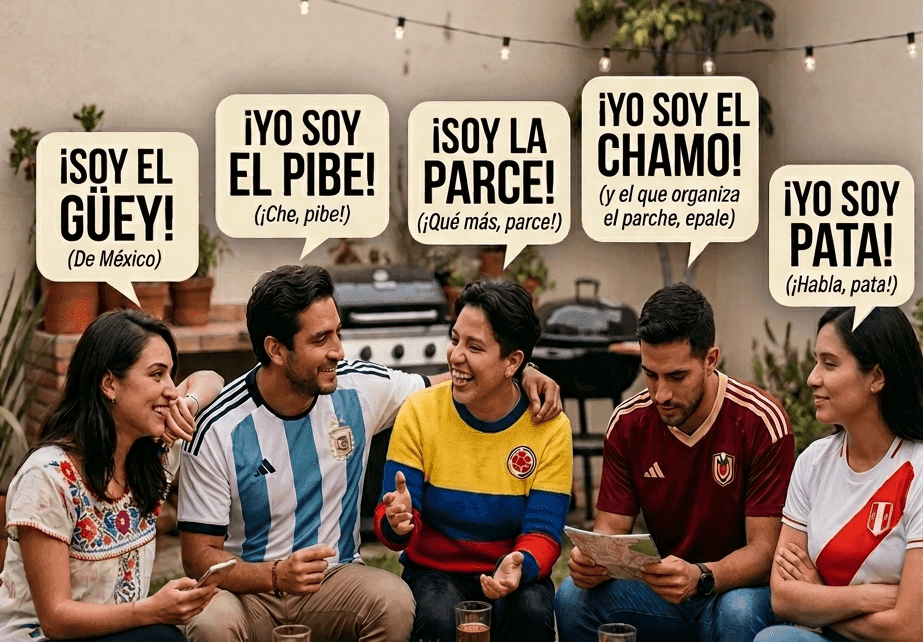
- Discover the fascinating linguistic map on how to say Bro in Latin America to communicate without barriers with the Latino community in the United States.
- Concede the most popular idioms of the Iberian Peninsula and the American continent that are transforming the digital communication of the new generations.
- Master the street vocabulary of your neighboring countries to strengthen cultural ties and demonstrate an authentic respect for their roots.
The Latino community redefines communication codes in the main metropolises of the United States, therefore, learning how to say Bro in Latin America results in an indispensable task to achieve community integration.
This sociolinguistic phenomenon consolidates through the daily coexistence of immigrants on digital platforms, so that deciphering the different local variants avoids misunderstandings and unifies the diverse cultural identities of the region.
How to say Bro in Latin America and sound like a native
It is necessary to highlight that slangs function as a unique identity stamp among Latinos, consequently, its mastery ensures fluid communication.
From the European roots to North America
When starting this transatlantic journey, the Iberian Peninsula marks the way with the traditional terms of tío or colega, which cross the ocean to integrate into the North American metropolises.
Immediately after, the Mexican territory imposes its vast cultural heritage through words of high recall like güey, carnal or the classic compa.
The Central American linguistic path
Following the Central American course, young people in Guatemala communicate with confidence by using popular expressions like cerote or traído to strengthen daily bonds.
In the same way, the coastal environment of Honduras adopts the term alero as the ideal synonym of loyalty, while Costa Rica prevents formalities utilizing the word mae constantly.
Advancing through the same region, the streets of El Salvador vibrate with unique words like bicho or chero to identify immediately the members of the closest group.
Slang across the Caribbean islands and the Isthmus
Meanwhile, the Caribbean ignites the rhythm of the conversation when Puerto Ricans greet with a cheerful broki or an affectionate pana.
Along that line, Dominicans transform language into pure camaraderie by using loco or manín in their chats, while in Cuba a friend is called with the emblematic asere.
Crossing toward the isthmus, the identity of Panama manifests with strength thanks to highly popular urban idioms like fren or pasiero.
Digital impact
The expansion of these expressions on digital platforms demonstrates that local idioms know no geographical borders in the era of globalization.
Ultimately, this journey demonstrates the immense cultural wealth of a bicultural community that, according to official reports by the Instituto Cervantes, already exceeds 60 million Spanish speakers in the United States, consolidating the learning about how to say Bro in Latin America.
