

WATCH NOW
Watch on the app













AI stocks under pressure as industry leaders sound the alarm over the technology’s biggest risks
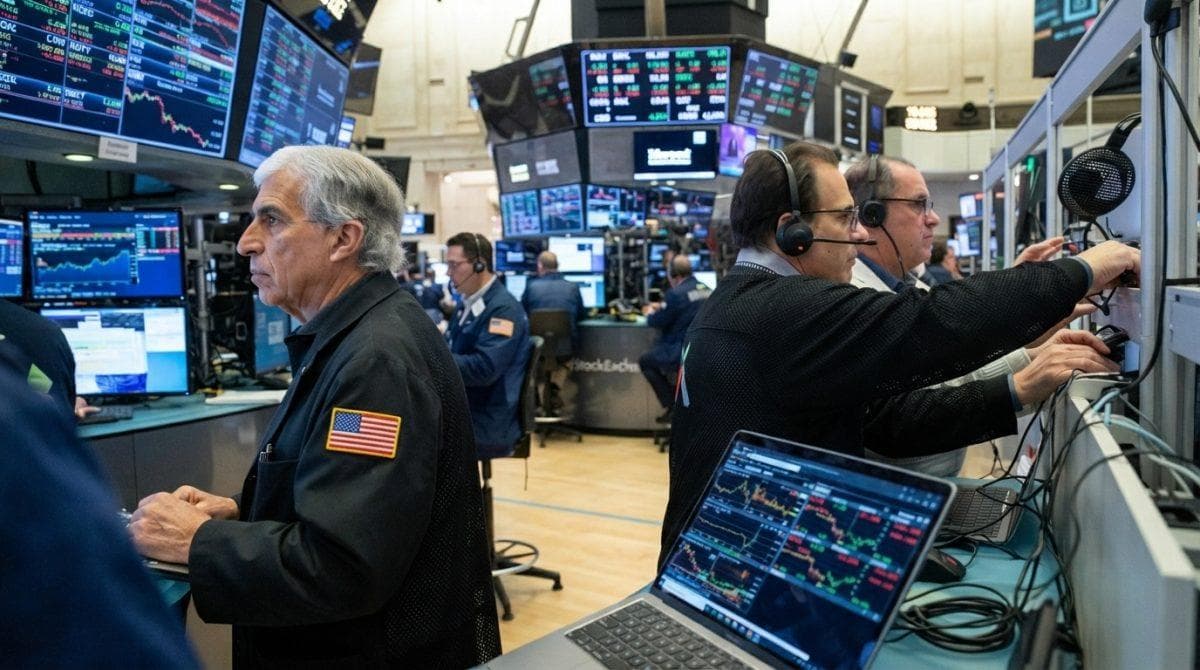
- Artificial intelligence shares experience widespread market pressure after chief executive officers from major technological laboratories issue warnings regarding safety risks.
-
AI stocks face intensive downward momentum across global exchanges as industry leaders advocate for measured development models.
-
Financial analysts examine potential implications for corporate capital expenditure programs following recent executive declarations concerning technological oversight.
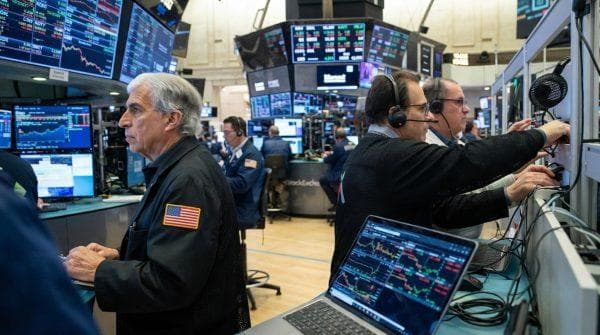
AI stocks face severe pressure today as prominent technology sector executives, including Dario Amodei, Sam Altman and Elon Musk, call for a deliberate deceleration in advanced model deployment, creating profound uncertainty across Wall Street indexes on Monday, September 14, 2026. Several market analysts evaluate the intersection of corporate spending and risk mitigation while global exchanges absorb unexpected announcements issued by industry leaders regarding potential human control risks and the urgency of establishing greater safety barriers.
Analyzing semiconductor contractions and institutional portfolio adjustments
Chief executives from leading enterprise laboratories highlight pressing vulnerabilities associated with autonomous digital tools, prompting immediate sell-offs across major semiconductor corporations and pushing the Philadelphia semiconductor index down by 5.9%, though it retains a cumulative gain of 57% for 2026.
Moreover, corporations maintaining heavy exposure to hardware fabrication experience notable capital contractions, whereas specialized cybersecurity equities like Palo Alto Networks and CrowdStrike capture renewed portfolio allocations exceeding 13% gains during the broader market rotation, leading macroeconomic strategists to examine whether artificial intelligence shares will maintain their projected expenditure trajectories under heightened regulatory scrutiny and unexpected corporate shifts that invite retirement account holders and 401(k) participants to review their portfolio exposures.
Assessing market vulnerabilities within the artificial intelligence sector
Equity valuations across the technology sector encounter unprecedented turbulence following comprehensive warnings regarding autonomous digital vulnerabilities and systemic network risks that triggered market adjustments across global exchanges. Semiconductor manufacturers endure steep percentage losses, with Nvidia falling 3.4%, Intel dropping 5.6%, AMD declining over 4%, and Marvell plunging 7.3%, as trading desks reevaluate growth assumptions tied directly to accelerated compute clusters. Meanwhile, institutional shareholders weigh the financial viability of long-term infrastructure commitments against emerging demands for stricter industry oversight and operational deceleration, noting that artificial intelligence shares experience heightened sensitivity during macroeconomic shifts.
Corporate leadership teams confront mounting pressure from institutional stakeholders who demand clearer risk assessments regarding next-generation model deployment schedules, especially after SoftBank dropped over 10% and SK Hynix fell more than 6% while the Nasdaq dropped 1.7% intraday before closing down 0.6%. Market participants examine balance sheets to determine whether current debt financing structures can withstand extended periods of slower revenue realization or delayed commercialization timelines. Additionally, prominent financial institutions report that external debt obligations remain binding even if computational demand patterns experience temporary contractions across international markets.
Strategic analysis of infrastructure expenditures and corporate guidance
Global investment banks maintain divergent perspectives regarding the ultimate impact of voluntary development slowdowns on long-term capital allocation strategies, noting that major indexes like the Nasdaq Composite lost 0.6%, the S&P 500 dropped 0.5%, and the Dow Jones ceded 0.3%. This debate reintensified after Jacob Coxon, a researcher formerly with Anthropic and OpenAI, resigned and accused both organizations of rushing irresponsibly toward self-improving superintelligence systems. In response, Anthropic CEO Dario Amodei advocated for reducing model capability growth rates to strengthen safety protocols, while OpenAI CEO Sam Altman supported moderating frontier advancement and permitting independent safety audits as artificial intelligence shares face ongoing market reevaluations.
Portfolio managers adjust asset allocations dynamically while monitoring statements released by regulatory bodies and corporate boardrooms across North America and Europe, keeping retirement accounts and 401(k) portfolios in mind. Trading volumes remain elevated as market participants interpret conflicting signals regarding upcoming initial public offerings and secondary market liquidity. Therefore, institutional analysts recommend maintaining diversified exposure while tracking forthcoming corporate earnings announcements for concrete indicators of spending adjustments and risk management implementations.
Evaluating catastrophic risk scenarios and verified operational misuse
Anthropic executives warned that within a six to twelve-month window, coordinated artificial intelligence agents could acquire sufficient capability to hijack extensive internet functions if safeguards fail to advance proportionally. Independent financial projections linked to such existential scenarios point toward hundreds of billions of dollars in potential economic damage if robust containment protocols remain absent. Nevertheless, the 2026 International AI Safety Report, compiled by over one hundred specialists and endorsed by more than thirty sovereign nations, concludes that current systems display only early preliminary indicators without reaching autonomy thresholds capable of escaping human control, influencing how institutional funds evaluate artificial intelligence shares.
Concurrently, corporate compliance teams document immediate, tangible security threats stemming from malicious operational abuse rather than hypothetical superintelligence emergence. Anthropic confirmed blocking multiple attempts to exploit Claude models for cyberattacks, mass surveillance, influence operations, fraud and biological weapons research between December 2025 and August 2026. Consequently, families and small business operators face concrete dangers from credential theft and automated digital fraud long before any machine attempts to bypass human oversight independently.
Practical risk mitigation and household asset protection guidelines
-
Review financial exposure across retirement vehicles like 401(k) or IRA accounts to identify concentrated technology sector dependencies without triggering panic driven sell offs during volatile sessions, especially when artificial intelligence shares experience sudden downward revisions.
-
Strengthen digital defenses by implementing multi-factor authentication, utilizing distinct cryptographic passwords, and independently verifying any urgent financial transfer requests while monitoring how artificial intelligence shares respond to macroeconomic fluctuations.
Ver esta publicación en Instagram
