

WATCH NOW
Watch on the app










Florida has $10 million to help small businesses recover but there’s a catch
-
Small businesses recover following major natural disasters on the Southeastern coast by navigating critical state guidelines and hidden rules.
-
The Florida Department of Commerce activated a $10M emergency loan fund with 0% interest for small business owners.
-
The program requires full repayment within 12 months and excludes multiple business types, representing the main catch of the relief effort.
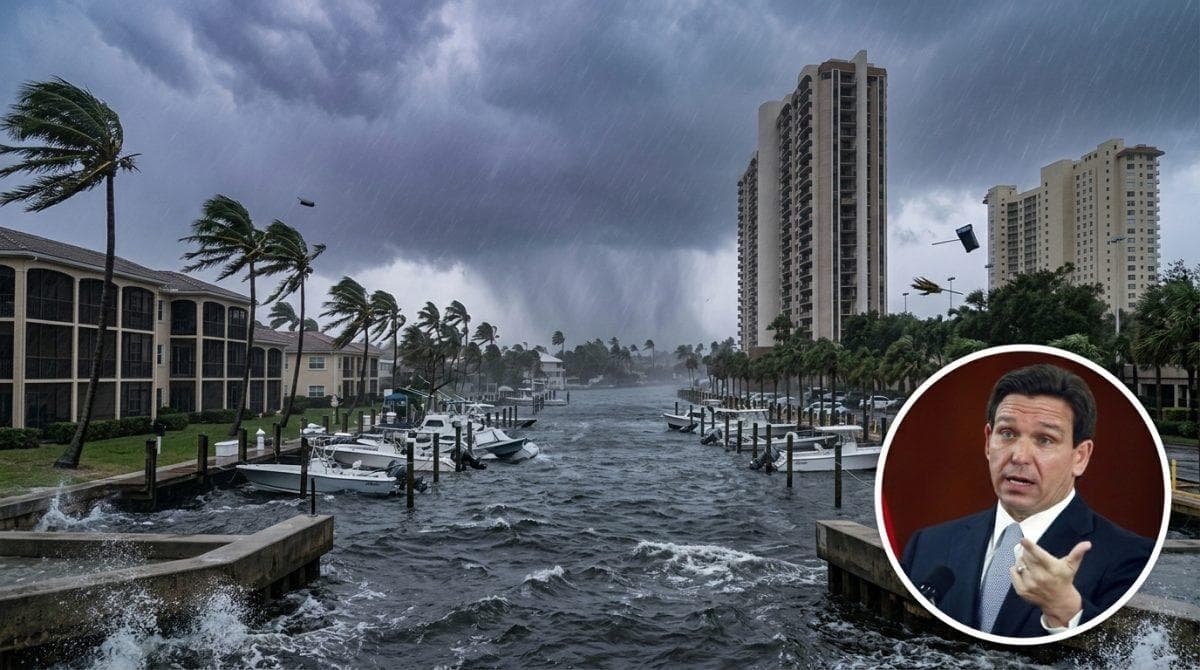
The Florida State Government under Governor Ron DeSantis officially activated the Small Business Emergency Bridge Loan Program on October 11, providing immediate financial relief following Hurricane Isaias under a set of strict conditions that represent the primary catch for business owners across Florida, where officials at FloridaCommerce confirmed that the initiative dispatches a $10M total fund allowing entrepreneurs to cover urgent working capital needs while securing long-term recovery financing.
Beyond the immediate capital availability, fine print rules stipulate that this financing does not constitute a grant or a forgivable subsidy, requiring borrowers to repay every dollar within a strict 12-month period; moreover, according to official guidelines on how small businesses recover after disaster strikes, the program awards up to $100k per eligible business (and up to $150k for agricultural and aquacultural sectors) at a 0% interest rate, operating solely as a short-term liquidity bridge that can overburden slow-recovering enterprises with debt.
Florida emergency bridge loan program and small business relief
To access these resources, applicants must hold a minimum credit score of 600 points, prove at least 51% ownership of the establishment and sign as personal guarantors for the loan on the state platform, while guidelines additionally require the business to have been established prior to the storm and maintain a workforce between 1 and 100 employees, excluding independent freelancers and newly formed startups, which affects how small businesses recover in the local economy.
In terms of documentation management, state regulations mandate that every owner listed on the application must submit all required tax records, financial statements and personal identifications for the file to be processed as complete; taking this into consideration, officials note that borrowers can use long-term disaster loans obtained later from the U.S. Small Business Administration to repay the bridge loan, though owners run the risk of failing to secure those federal funds before the state repayment deadline expires.
Specific commercial and legal exclusions of the program
-
Illegal activities and informal operations barring any establishment that operates outside state or federal regulations in Florida.
-
Lenders and financial intermediaries excluding businesses dedicated to loan preparation, brokering, investments, speculation, or direct money lending in Florida, which limits options for unqualified commercial entities.
-
Short-term rentals and real estate restricting benefits from properties intended for short-term vacation rentals or speculative real estate models.
-
Gambling and multi-level marketing prohibiting participation from casinos, gambling venues, multi-level marketing schemes and associated firms.
-
Owner legal status denying applications if any partner holding at least 51% ownership is currently on probation, restricting options as small businesses recover.
Evaluation criteria and loan conditions in Florida
-
Up to $150k for agricultural businesses suffering physical damages through preferential funding limits in key sectors.
-
Direct financial conditions structured with a 1-year repayment period at 0% interest, demanding full capital repayment without automatic forgiveness.
-
Mechanisms for disaster response pairing temporary state bridge funds with federal disaster relief loans in Florida to assist how small businesses recover.
-
State officials will process applications through the November 25, 2026 deadline or until they exhaust all available program funds.
-
Personal guarantee safeguards requiring all applicant owners to act as direct guarantors for the debt assumed by commercial entities.
Looking closely at financial sustainability, state authorities emphasize that emergency bridge funding operates as an immediate cash flow solution rather than permanent aid, meaning that every business model must demonstrate structural stability to withstand strict terms and on top of that, financial experts advise applicants to review their cash flow projections thoroughly, ensuring that taking on this immediate liability aligns with how small businesses recover without incurring default penalties.
Geographic coverage and eligible counties where small businesses recover
Geographic eligibility encompasses 30 counties across the state, including Baker, Bay, Calhoun, Citrus, Columbia, Dixie, Escambia, Franklin, Gadsden, Gilchrist, Gulf, Hamilton, Hillsborough, Holmes, Jackson, Jefferson, Lafayette, Leon, Levy, Liberty, Madison, Okaloosa, Pasco, Pinellas, Santa Rosa, Suwannee, Taylor, Walton, Wakulla, and Washington; parallel to these territorial rules, administrators warn that incomplete applications lacking required owner paperwork will face immediate rejection before the final portal closure.
Stepping back to analyze the broader financial landscape, the primary warning for commercial operators rests on understanding that this relief measure activated on October 11 functions strictly as an immediate liquidity lifeline, which is why, as the application window closes in late November, local entrepreneurs must carefully calculate their repayment capacity before taking on this state commitment in Florida, determining whether this program provides the right framework through which small businesses recover.
