

WATCH NOW
Watch on the app








Florida executes a prisoner whose deadly plan took nearly two decades to reach its end
- Deadly plan reached end after a prisoner executed a premeditated cellmate murder to escape decades of solitary confinement.
-
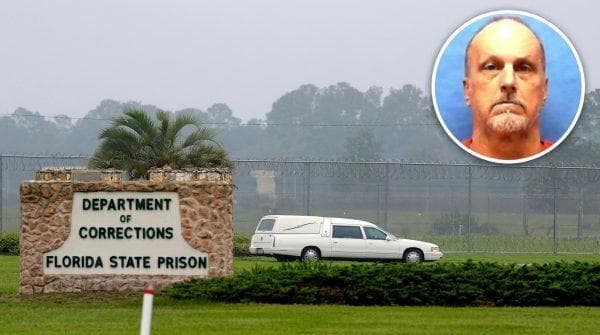
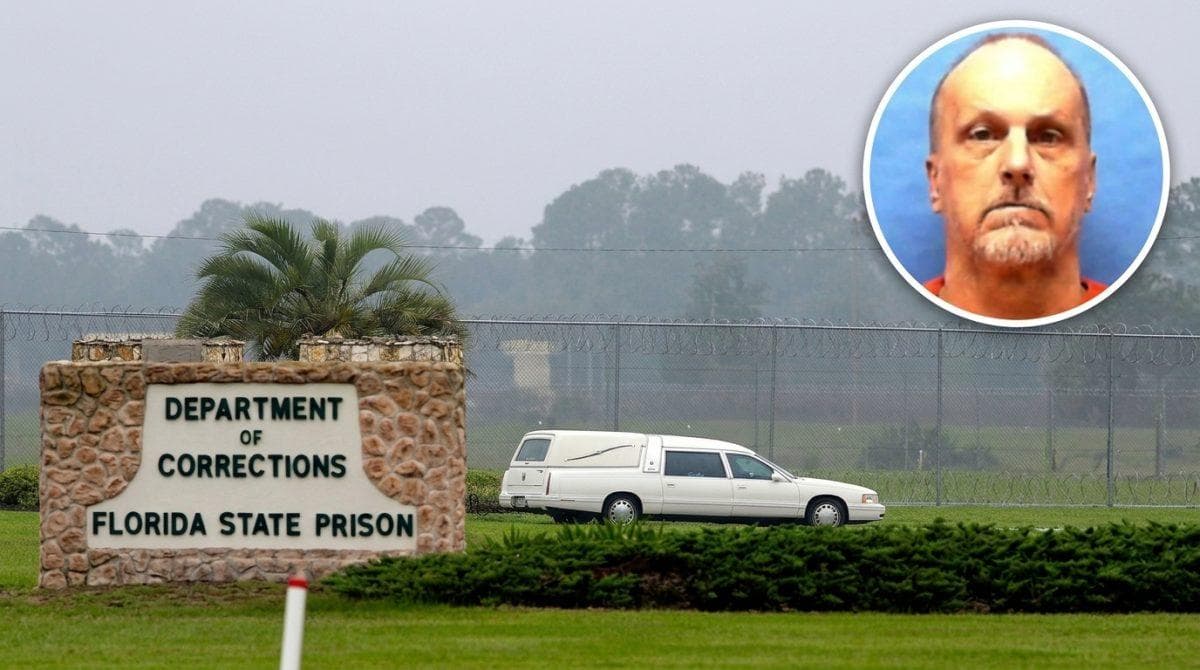
The Florida Department of Corrections carried out the lethal injection of James Robertson at age 62 near Starke.
-
The governor temporarily withdrew a second scheduled execution for a seventy-four year old inmate suffering from dementia.
The Florida State Government officially confirmed that Florida executes a prisoner by lethal injection on Tuesday at noon, completing a capital punishment process where a deadly plan reached end status after nearly two decades at the Florida State Prison near Starke, where department officials finalized the execution following his 2008 conviction for strangling his cellmate at the Charlotte Correctional Institution.
Moving beyond the courtroom gavel, law enforcement archives reveal that the inmate premeditated the attack to escape solitary confinement conditions, clarifying to investigators during interrogations that he acted completely without prior provocation while using several tied socks as a weapon against a sleeping Frank Hart. Meanwhile, when questioners probed his past motivations, the condemned man explained his perspective in detail by declaring in the Netflix documentary I Am a Killer that “they lock you in a cell all day, put you in a small cage, and you lose all motivation,” thereby justifying his decision to seek the death penalty.
Florida executes a prisoner while state halts parallel sentence
State documentation shows that Robertson originally entered prison in 1980 at age 17 for burglary with assault and battery, accumulating additional convictions for escape, assault, and weapon possession during nearly four decades behind bars, while state guidelines highlight his prolonged placement in closed management isolation, a restrictive environment where this deadly plan reached end and he spent 20 years under strict confinement.
In parallel executive maneuvers, Governor Ron DeSantis withdrew the execution warrant for William Lee Thompson on October 8 without offering an official reason, following a temporary suspension of the warrant the previous month to allow for a psychiatric evaluation. Consequently, bearing these medical realities in mind, defense attorneys noted that the seventy-four year old inmate, who faced conviction for the 1976 kidnapping, sexual assault and murder of 23 year old Sally Ivester and previously resisted execution attempts under former Governors Bob Graham and Bob Martinez during the electric chair era, suffers from severe dementia and serious heart conditions, prompting his legal team to demand an urgent transfer to an adequate medical facility.
Ver esta publicación en Instagram
Key details of the capital punishment proceedings
-
Method of execution administered through standard lethal injection protocols near Starke following established state procedures.
-
Premeditated motive acknowledged by the inmate to escape 20 years in closed management isolation within the prison system where this deadly plan reached end.
-
Victim background identifying Frank Hart, who served a sentence for sexual battery since 2003 before the fatal December 2008 attack.
-
Waiver of appeals confirmed when the defendant reiterated to the court in early October that he understood his scheduled execution date and rejected final appeals before the Florida Supreme Court and the United States Supreme Court.
-
Governor executive action marking the first time DeSantis withdrew a signed execution warrant prior to lethal injection, noting that Florida executes a prisoner under strict legal oversight.
Debates on prison conditions and execution rates in Florida
-
Deterrence debate raised by legal advocates like Maria DeLiberato from Floridians for Alternatives to the Death Penalty, who argued in a statement that capital punishment fails as a deterrent when prisoners commit murder precisely to secure their own execution where a deadly plan reached end.
-
Victim family closure expressed through public statements by Hart’s daughter, who noted that after nearly two decades of waiting, the sentence completion brings a sense of resolution while those years on death row served as a constant reminder of her father’s murder.
-
National execution statistics placing Florida above half of all US executions in 2026 under current state leadership.
-
Upcoming execution schedule setting William Reaves for October 20 for the 1986 murder of an officer and Jesse Guardado for November 5 for a 2004 robbery and murder.
-
Executive administration goal defended directly by Governor Ron DeSantis, who stated “my goal is to bring justice to the victims’ families who have waited decades” to witness sentence completions, reflecting why Florida executes a prisoner with such consistent frequency.
Ver esta publicación en Instagram
Anti-death penalty advocates emphasize that capital punishment creates unintended incentives within high security facilities, and on top of that, civil rights organizations point out that the state executed seventeen inmates in 2026 alone following 19 executions in 2025, marking the highest annual total for a Florida governor since the 1976 reinstatement, which notably included a double execution in July that featured an event unseen in nearly a decade.
National context and comparative cases across the nation
The execution of Robertson unfolds within a broader national framework characterized by comparative controversies where this deadly plan reached end, featuring instances such as Christa Pike surviving an execution attempt in Tennessee alongside the Pentagon releasing live broadcast plans for Nidal Malik Hasan’s firing squad. Zooming out to survey the broader correctional landscape, legal analysts observe that this verdict closes a complex judicial journey spanning almost forty total years behind bars, illuminating precisely why Florida executes a prisoner.
