

WATCH NOW
Watch on the app














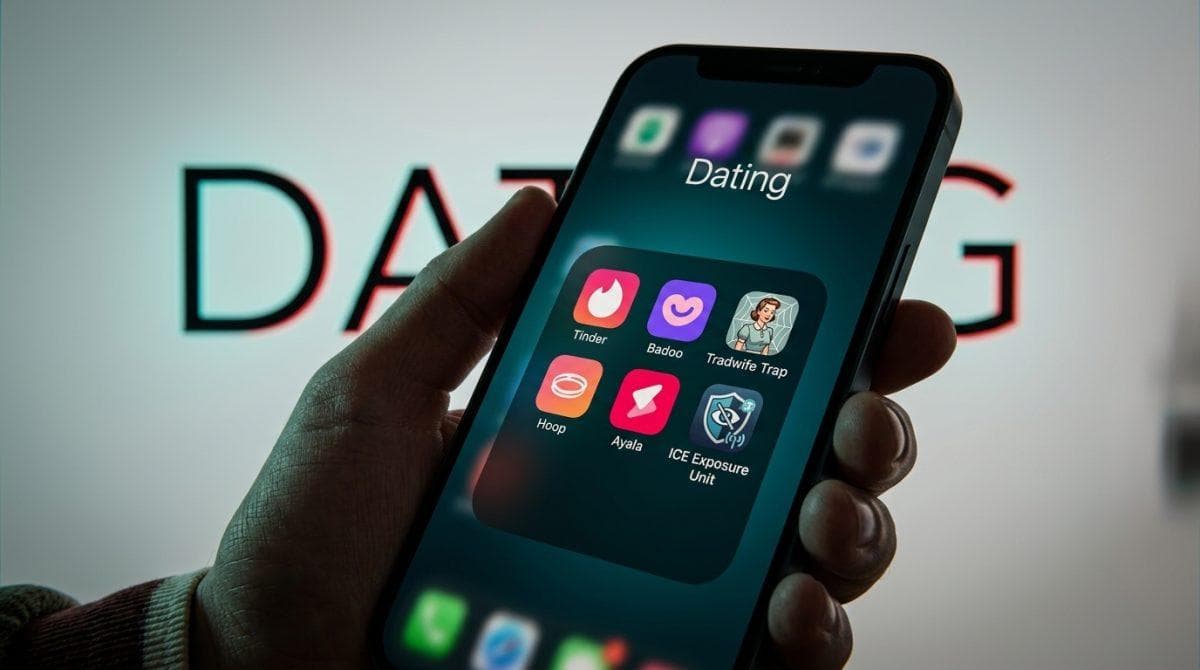
The tradwife dating app trap that allegedly sought to expose ICE agents online
-
An internal FBI intelligence memo warns that a conservative matchmaking platform scheme targeting federal immigration officers has emerged across digital networks
-
Federal authorities flag potential honeytrap operations utilizing traditional aesthetic profiles to lure border enforcement personnel into public exposures
-
Government transparency organizations question the evidentiary basis of law enforcement alerts amid growing debates over activist surveillance tactics
Tradwife dating app operations create high concern within United States law enforcement agencies, especially since a purported strategy aims to attract and publicly expose U.S. Immigration and Customs Enforcement personnel. Specifically, an internal intelligence memorandum distributed by the FBI Chicago field office warns about a group of women creating fictitious online dating accounts with traditional aesthetic themes to target federal agents; consequently, official reports emphasize that the primary objective of these deceptive interactions involves obtaining agent identities, physical locations and personal details for public exposure; certainly, officials issued this internal alert to counter potential cyber blackmail schemes and public embarrassment campaigns directed at border enforcement personnel.
Government transparency debates and doxxing risks
Civic oversight groups and civil liberties advocates, including the American Civil Liberties Union, carefully analyze the evidentiary basis of official alerts issued by federal intelligence analysts; in fact, public transparency organizations obtained internal documents through public records requests to evaluate the actual operational scope of these online exposure campaigns.
Public debate intensifies as commentators balance personal security risks facing law enforcement officers against the constitutional right of citizens to monitor government personnel; similarly, independent intelligence experts reviewing activity linked to a conservative matchmaking platform question whether official threat assessments reflect rigorous investigative findings or merely replicate viral social media trends originating across digital platforms.
Tradwife dating app security risks and digital honeytraps
Federal situational reports outline the specific operational methods where fictitious profiles utilize idealized images of traditional domestic lifestyles to attract target officers; additionally, account creators construct detailed lists of specific interests designed to establish immediate personal rapport with security personnel; furthermore, federal investigators stress that the technique aims to secure in-person meetings or extended digital interactions under the guise of genuine personal interest; ultimately, the process results in the unauthorized publication of personal photographs, vehicle license plates and home addresses on public websites.
Department of Homeland Security officials maintain that frontline officers face an environment of escalating hostility from digital activist groups; similarly, department representatives argue that public disclosures of personal information endanger the physical safety of officers and their immediate family members; however, legal analysts point out that published FBI documentation lacks specific citations or verified victim statements; for this reason, security experts suggest that official alerts might derive from unverified commentary on a conservative matchmaking platform and related social media channels.
Security alerts issued by a conservative matchmaking platform
Intelligence monitoring across federal and local law enforcement networks reflects growing concern regarding digital tools utilized by civilian oversight groups:
-
New York City Police Department intelligence units issued warnings regarding online rhetoric and covert tracking calls targeting federal officers.
-
United States Army threat assessments evaluated alleged criminal network activity seeking personal information on border patrol leadership.
-
Customs and Border Protection officials flagged smart eyewear technology capable of discreetly capturing video on a conservative matchmaking platform.
-
Regional fusion centers across multiple states reported an increased detection of officer personal identification data circulating on public networks.
Federal agencies note that advanced artificial intelligence tools and facial recognition software dramatically increase the accuracy of unauthorized identification campaigns; therefore, combining these digital technologies with targeted profiles on a conservative matchmaking platform elevates cyber vulnerability levels for public employees. Simultaneously, constitutional attorneys emphasize that immigration personnel operate as public servants funded by taxpayers; consequently, the legal boundary between legitimate public oversight and malicious digital harassment remains a subject of ongoing judicial review.
Law enforcement responses and cyber espionage trends
Proactive measures implemented across federal agencies seek to disrupt public embarrassment campaigns directed at operational law enforcement personnel; indeed, institutional cybersecurity protocols monitored by the Cybersecurity and Infrastructure Security Agency require continuous monitoring of employee digital footprints to mitigate potential data leakage risks. Likewise, internal operational directives advise officers to restrict personal information shared across a conservative matchmaking platform and social applications to prevent targeted social engineering attempts; as a result, senior leadership maintains that safeguarding operational identity remains vital to preserving field mission integrity.
Convergence between social interaction portals and civilian counter-surveillance tactics establishes a complex dynamic for law enforcement oversight in the United States; ultimately, the strategic deployment of simulated profiles on a Tradwife dating app demonstrates the expanding impact of digital culture wars on domestic security operations.
