

WATCH NOW
Watch on the app














A scientist’s decades old ‘end of the world’ prediction from 1960 points to a chilling close date
-
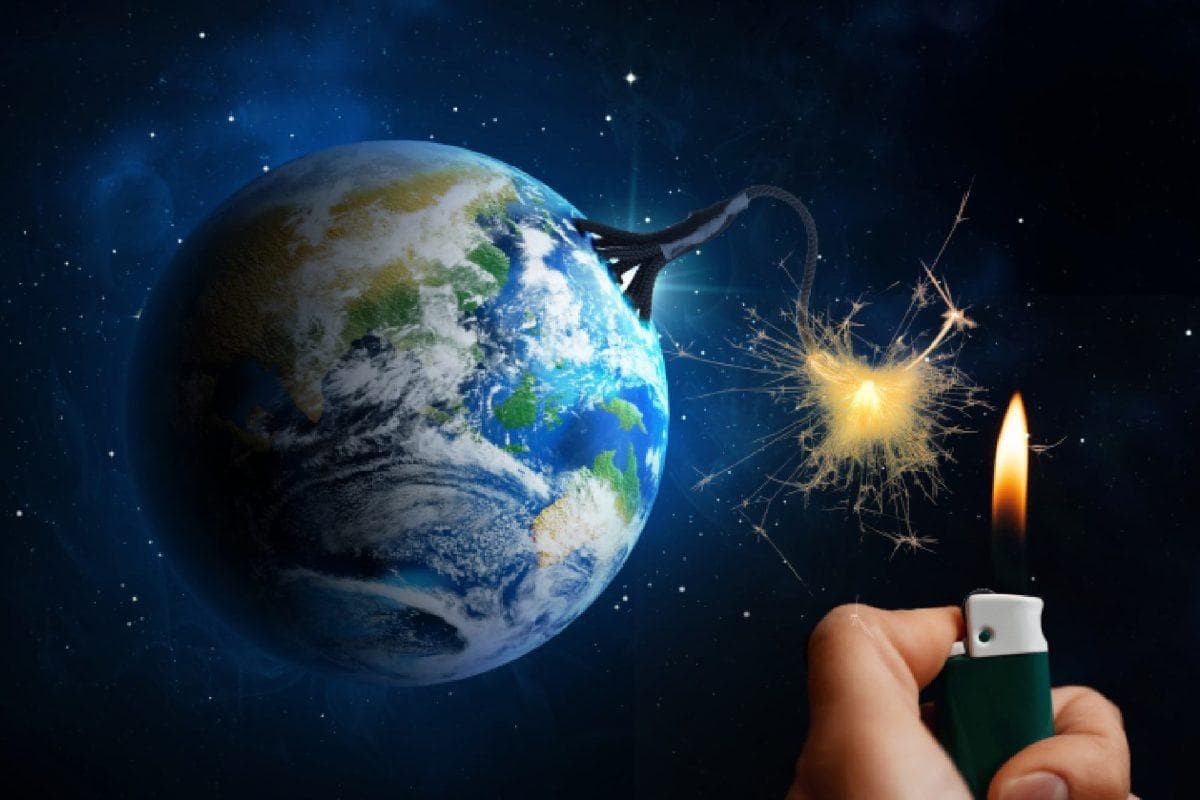
A 1960 study published in Science magazine calculated November 13 2026 as a pivotal threshold for human society.
-
Researcher Heinz von Foerster framed the potential collapse around population growth rather than nuclear warfare.
-
Von Foerster also accurately predicted modern societal risks associated with artificial intelligence decades ago.
A scientific paper published over six decades ago has resurfaced in public discussion as the timeline highlighted by its mathematical models draws near. In November 1960, the journal Science featured a study by Austrian American physicist Heinz von Foerster alongside researchers Patricia M. Mora and Lawrence W. Amiot. The authors argued that exponential population growth would drive human civilization toward a critical mathematical limit on Friday November 13 2026.
Ver esta publicación en Instagram
The demographic model behind the 1960 study
Unlike conventional apocalyptic warnings that rely on ecological disasters or global military conflicts, Von Foerster’s thesis relied strictly on population statistics and growth trends. At the time of publication, the global human population was roughly 3 billion, compared to more than 8.3 billion today. The study calculated that human numbers would accelerate to a point where social and technological systems could no longer support the density of the global population under the existing parameters of the era.
Von Foerster insights on artificial intelligence
Public fascination with the study has been reinforced by Von Foerster’s track record as a forward thinking scientist who foresaw major technological shifts. In the mid 1990s, the researcher spoke critically about the emerging concept of artificial intelligence, warning that mistaking automated routines for true human cognition was a dangerous misconception. His early analysis regarding human emotional attachment to machine interfaces aligns closely with contemporary concerns over conversational AI systems.
Ver esta publicación en Instagram
Modern demographic estimates versus historical models
While the 1960 paper continues to generate curiosity due to its specific target date, current global demographic models present a different long term trajectory. Present day projections from international institutions indicate that the global population is likely to peak in the 2080s at around 10.3 billion before beginning a gradual decline. Von Foerster’s work remains an influential historical example of mathematical modeling applied to human demographics, joining a tradition of resource studies that stretches back to Thomas Malthus in the late eighteenth century.
Ver esta publicación en Instagram
