

WATCH NOW
Watch on the app













New York’s $47.3 million dinosaur may disappear into a billionaire’s private collection
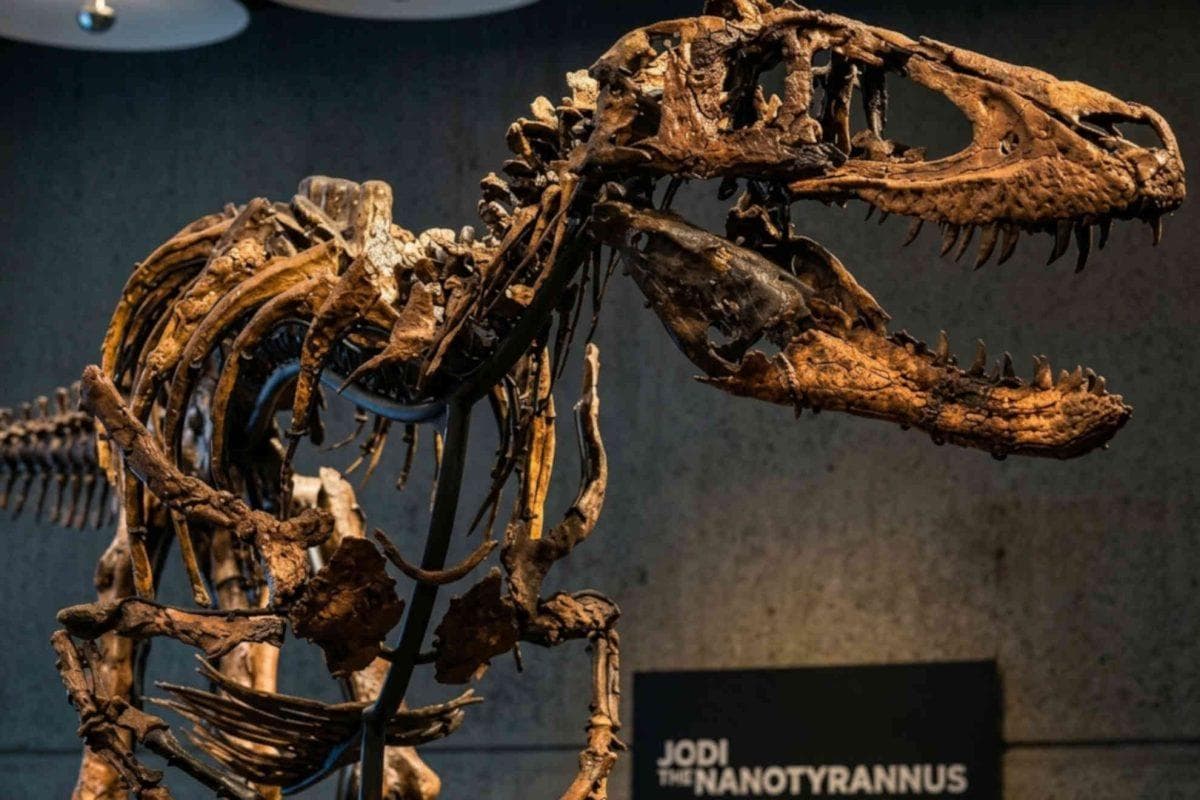
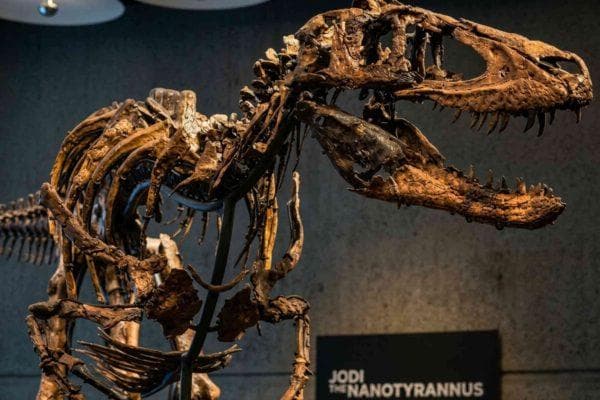
- The impressive dinosaur skeleton of the Nanotyrannus species nicknamed “Jodi” reached an astronomical figure during a twelve-minute bidding battle at Sotheby’s auction.
- The scientific community warns with deep concern that this unique specimen could remain completely out of reach for the public and academic research to stay relegated to a private collection.
- Discovered in Montana within the mythical Hell Creek Formation, this adult specimen represents the second most expensive fossil ever sold in auction history across The United States.
A multimillion-dollar transaction igniting alarms in global paleontology
Causing a resounding stir within the scientific community and art market after selling for an astronomical $47.3 million at the prestigious Sotheby’s auction house in New York, the dinosaur skeleton known as “Jodi” passed into the hands of an anonymous buyer. Furthermore, this coveted fossil of Nanotyrannus, a carnivorous late Cretaceous species that lived 67 million years ago and whose independent existence against Tyrannosaurus rex researchers confirmed just in October 2025, immediately became the second most expensive specimen in history as six telephone and digital bidders fiercely contested it during a dizzying auction lasting a mere twelve minutes.
However, the astronomical sale of this majestic dinosaur skeleton triggered an intense wave of harsh criticism from renowned international researchers and the scientific community, who openly lament that a biological piece so crucial to understanding the evolution of large prehistoric predators will end up confined and hidden in a magnate’s mansion or vault as part of a private collection instead of being displayed in a museum open to all society.
The discovery of a prehistoric gem and the value of field work
In this sense, away from the topic of the Sotheby’s auction in New York, it remains noteworthy that rancher Jodi Pierson originally unearthed the specimen in 2019 on her property within the Hell Creek Formation in Montana, where commercial paleontologist Clayton Phipps meticulously extracted it, while the dinosaur skeleton stands out for maintaining an exceptionally complete state of preservation featuring over 191 bone elements and an almost intact skull. Likewise, standing at an imposing 5.9 meters long and nearly three meters tall, the morphological characteristics of the creature named “Jodi” show a graceful adult individual with leaf-shaped teeth designed to slice meat, positioning it as one of only three substantial Nanotyrannus specimens that the scientific community managed to formally document.
Ver esta publicación en Instagram
Nonetheless, defenders of the private fossil trade recall that rescuing, technically preparing and mounting a dinosaur skeleton of this magnitude across The United States demands over a million dollars in investment alongside years of arduous physical labor, leading them to consider it fair for commercial discoverers to receive financial compensation commensurate with the massive risks undertaken in the field.
The crossroads between elite collecting and public scientific heritage
In this manner, facing this situation where private funds seem to surpass the budgetary capabilities of traditional educational institutions and members of the scientific community, the sale of this Nanotyrannus dinosaur skeleton exposes the dramatic gap between a luxury auction market and public science dissemination. While renowned specialists such as Steve Brusatte or Thomas Holtz Jr. describe it as heartbreaking when buyers treat natural wonders as mere wall trophies for a private collection, comparable to hanging the Mona Lisa in a private living room, many iconic museums face severe financial troubles that prevent them from competing in these record-breaking auctions held by specialized houses like Sotheby’s across The United States. Thus, “Jodi’s” uncertain fate reignites the ethical debate on whether international laws should protect paleontological heritage so that every newly discovered dinosaur skeleton continues inspiring future generations of children and scientists around the planet.
