

WATCH NOW
Watch on the app













U.S. drinking water tests may be missing contamination because of how samples are collected
-
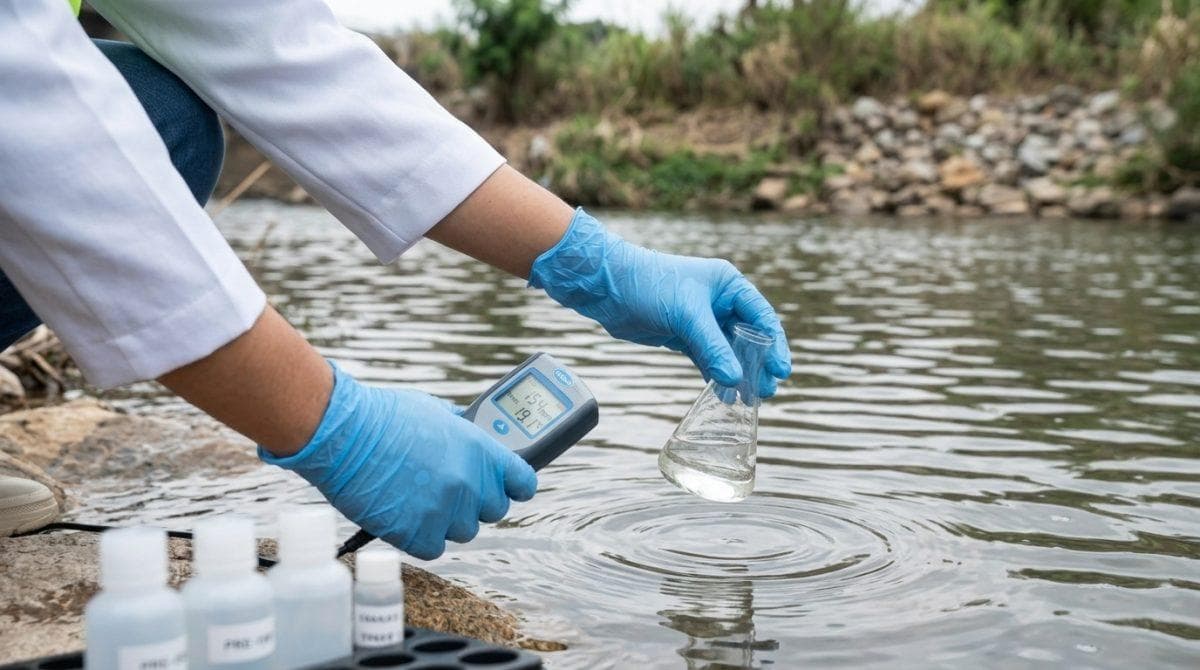
Hidden water risks affect municipal tap supplies as new research reveals federal data methods underestimate chemical presence across public networks.
-
Scientific calculations show current reporting models capture only 44% of estimated toxin concentrations across thousands of water systems.
-
Environmental health experts advocate for stricter testing standards to protect public health against persistent chemical exposure.
Unfiltered municipal tap supplies across the nation contain higher chemical levels than official federal reports show, as a groundbreaking study published in Cell Reports Sustainability reveals that actual US drinking water contamination could double federal monitoring estimates.
These hazardous substances, known as perfluoroalkyl and polyfluoroalkyl substances or PFAS, resist environmental degradation and leach into soil and drinking water from everyday products like cosmetics, cookware and food packaging, exposing families to toxins linked to higher cancer risks, cardiovascular problems and developmental defects.
Environmental assessments uncover US drinking water contamination
Research led by Texas Christian University hydrologist Gehendra Kharel analyzed existing federal records from January rather than collecting new samples, evaluating 1.86M individual PFAS measurements across 9,991 community water systems to assess 25 distinct variants under an Environmental Protection Agency program that monitors 29 total compounds.
Although 98% of these individual test results fall below laboratory detection limits, treating non-detectable readings as zero captures merely 44% of average concentrations, creating hidden water risks that omit over half of the estimated chemical volume from current public health metrics.
Ver esta publicación en Instagram
Official protocols and expert perspectives on persistent chemical hazards
In an official statement, federal representatives emphasized their ongoing commitment to protecting Americans from toxic exposures while maintaining strict national standards of 4 ppt for PFOA and PFOS chemicals, although agency officials declined to comment on the specific details of the study, prompting researchers to advocate for clearer reporting guidelines and additional high-precision testing across future federal datasets to better manage hidden water risks:
-
Hidden water risks require enforcement of legally binding limits for 6 specific PFAS variants across public distribution systems to reduce toxic exposures and control public supply hazards according to guidelines managed by the Centers for Disease Control and Prevention.
-
Implementation of accurate statistical estimation models to replace zero substitution calculations in federal monitoring databases.
-
Public access to updated municipal testing records through local water authority portals and scientific clearinghouses according to standards enforced by the Environmental Protection Agency (EPA).
-
Direct technical evaluation of water supplies to quantify overall chemical presence without attempting to measure exact personal bodily absorption levels.
-
Development of advanced water purification technologies designed to remove diverse PFAS compounds beyond standard PFOA and PFOS molecules.
Accordingly, independent experts like Bruce Rittmann from Arizona State University, who develops removal technologies, warn that water utilities must address all chemical variations rather than focusing exclusively on legacy compounds while highlighting hidden water risks, agreeing with the study authors that ignoring results below detection thresholds misleads the public regarding overall contamination levels.
Long-term infrastructure solutions to eliminate hidden water risks
Municipalities across affected states are seeking federal support to upgrade treatment facilities and adopt advanced filtration systems capable of capturing microscopic pollutants, providing vital resources to mitigate hidden water risks across public distribution grids.
Similarly, academic researchers like Kharel plan to repeat their analytical models on updated federal datasets, optimizing transparent reporting protocols for local communities while public utilities work to eliminate US drinking water contamination across regional networks.
Ver esta publicación en Instagram
