

WATCH NOW
Watch on the app










Tesla starts building Elon Musk’s humanoid robots in California but what can they actually do?
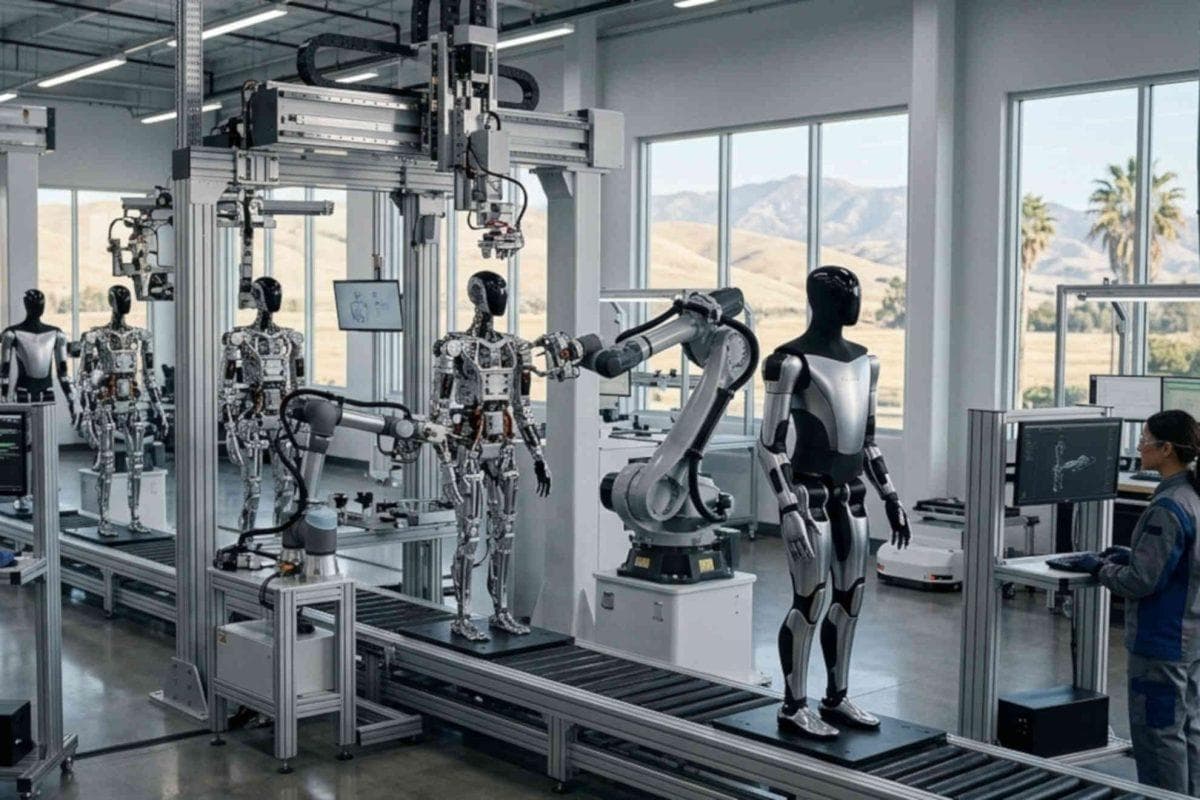
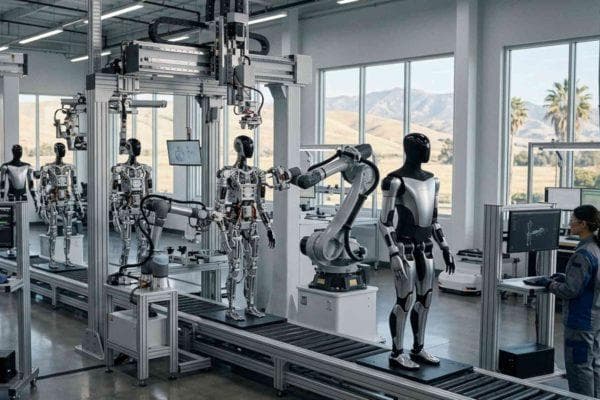
- Tesla’s vanguardist Optimus humanoid robot already began its commercial assembly process at the Fremont plant located in The United States.
- The initial units of the humanoid robot will assume complex and repetitive industrial tasks inside the company’s factories to optimize production.
- Tycoon Elon Musk projects that this artificial intelligence-equipped android manufactured in California will arrive in homes to assume domestic chores toward the end of 2027.
Tesla’s industrial leap with the commercial production of its flagship machine
Setting a definitive milestone within the technological industry of The United States by launching the commercial production line of its anticipated humanoid robot known as Optimus at the historic Fremont plant in California, Elon Musk’s automotive company seeks to fundamentally transform the market of advanced robotics and smart automation.
Officially confirmed during the financial results report for the third quarter of 2026, this technical advancement represents the first batch of units manufactured under strict commercial standards, although the magnate himself dialed back initial euphoria by openly admitting that the mass assembly process will remain progressive, complex and require constant modifications in both physical hardware structure and navigation systems. In this regard, the company’s primary goal targets assembling some 20,000 weekly units after completing at least a full year of adjustments at the facilities, ensuring that this humanoid robot initially serves as an internal workforce capable of revolutionizing assembly lines before venturing into international markets.
From assembly lines to household chores in daily life
Furthermore, conceived in California during an initial stage to operate within highly controlled industrial environments where it can manipulate heavy objects, transport hazardous materials and execute repetitive tasks without suffering physical exhaustion, Tesla’s Optimus humanoid robot promises to drastically increase operational productivity in factories across The United States. Nonetheless, the true challenge for Elon Musk’s company lies in making the great leap toward homes, where conditions turn completely unpredictable and each space presents dynamic obstacles demanding highly adaptive artificial intelligence.
Ver esta publicación en Instagram
Thus, to ensure this machine operates with complete naturalness in a family home, Tesla’s engineering team works tirelessly perfecting extremity precision, guaranteeing that the humanoid robot can manipulate delicate items without breaking them or causing accidents, marking a crucial step before formalizing commercial launches promising to revolutionize coexistence between humans and technology.
Delivery dates, estimated costs and doubts regarding its real deployment
Although expectations to see these machines walking through the streets of California grow by leaps and bounds among innovation enthusiasts, Elon Musk made clear that initial deliveries to external clients will not happen before late 2027. Observers must keep in mind that this delay responds to the imperative need of offering an extremely safe, durable and reliable product showing no mechanical failures shortly after use, while Tesla keeps the official sale price of Optimus under wraps. Consequently, although large-scale manufacturing promises to substantially lower production costs, the question of whether it will constitute an accessible investment for ordinary citizens remains up in the air, while the global community closely analyzes the impact this humanoid robot and its artificial intelligence will exert on both industrial employment and everyday life throughout the coming decade.
