

WATCH NOW
Watch on the app















The answers at US Customs that could cost you your money
-
Carrying cash abroad allows international travelers to manage expenses smoothly, though understanding federal regulations helps families avoid severe financial penalties during trips to the United States.
-
Travelers must navigate complex customs protocols when carrying monetary instruments, protecting their funds from potential confiscation and legal complications.
-
Federal guidelines established by border authorities dictate precise requirements for completing mandatory financial disclosures.
Declaring money US customs requires bringing physical currency across international borders to enable travelers with high sums to understand that federal regulations mandate reporting amounts exceeding $10,000 USD through the FinCEN 105 form, as detailed by the Financial Crimes Enforcement Network; similarly, omitting this legal requirement or providing false information to officials can trigger total asset confiscation, severe fines reaching up to $500,000 USD and potential prison sentences of up to 10 years, even when funds originate from completely lawful sources. The Customs and Border Protection agency enforces these controls rigorously to prevent financial crimes, obligating passengers to maintain absolute transparency regarding their economic resources throughout the journey, according to updates from U.S. Customs and Border Protection.
Travelers frequently misunderstand reportable monetary assets, mistakenly believing regulations apply solely to physical paper currency and metal coins; additionally, the statutory framework encompasses travelers checks, money orders, cashier checks and promissory notes, requiring individuals to calculate the aggregate value of all carried instruments before arrival. Border enforcement agencies enforce these reporting mandates strictly to prevent illicit financial activities, demanding complete transparency from every passenger regarding their total financial holdings during international transit, as outlined by the Transportation Security Administration.
Legal thresholds and mandatory documentation for travelers
-
Transporting physical currency exceeding the $10,000 USD limit requires completing the official FinCEN 105 form, ensuring total compliance with federal disclosure mandates enforced by the Customs and Border Protection agency; additionally, failing to submit this paperwork accurately can lead to immediate asset seizure, regardless of whether individuals earned the money through legitimate business operations, while carrying cash abroad simplifies understanding these strict oversight measures, supported by guidelines from the Department of Homeland Security.
-
Monetary instruments subject to mandatory reporting include traveler checks, postal money orders, bearer checks and negotiable notes, obligating travelers to sum up all financial equivalents prior to inspection; moreover, families traveling together must combine their holdings to determine if the collective total crosses the statutory reporting threshold established by federal law.
-
Financial institutions and border control authorities emphasize that completing the required declaration process protects individuals from unexpected legal complications, providing a transparent record of asset movement; furthermore, proactive compliance eliminates the risk of lengthy interrogations, administrative delays and devastating financial losses during international journeys, backed by resources from the Federal Reserve.
Essential verification protocols and CBP interactions
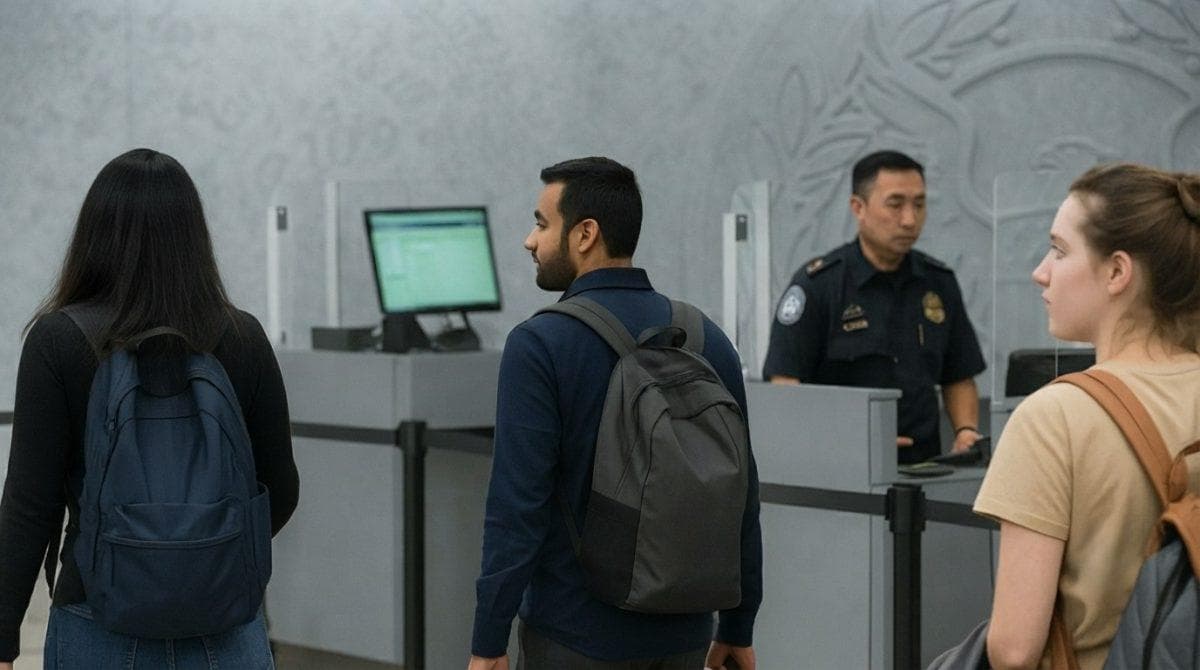
Carrying cash abroad demands absolute honesty and direct answers when border patrol officers inquire about transported funds because attempting to minimize the reported amount out of fear or habit inevitably triggers suspicion; furthermore, discrepancies between verbal declarations and actual physical holdings prompt intensive secondary inspections, frequently resulting in temporary detention and administrative confiscation of the entire cash sum.
Travelers must maintain strict coherence between their stated travel purpose, length of stay, financial backing and the precise amount of reported cash, ensuring that all verbal statements align perfectly with supporting documentation; moreover, immigration and customs personnel cross-reference these details continuously to detect potential inconsistencies, making thorough preparation essential for a smooth border-crossing experience.
Ver esta publicación en Instagram
Requesting an official interpreter immediately upon facing language barriers prevents costly misunderstandings during customs questioning, ensuring that travelers comprehend every inquiry before providing answers or signing legal documents; besides, utilizing professional translation services safeguards individuals from misinterpreting complex regulatory requirements, thereby protecting their rights throughout the administrative inspection process, supported by advice from the American Bar Association.
Strategic guidelines for declaring money US customs
-
Carrying cash abroad requires careful preparation and strict adherence to official reporting standards, helping passengers avoid unexpected financial penalties and administrative seizures during international border crossings; additionally, consulting updated regulatory resources guarantees complete compliance with changing federal statutes.
-
Maintaining meticulous records of income sources, bank withdrawals and commercial receipts helps travelers substantiate the legal origin of transported funds during unexpected secondary audits conducted by border authorities; furthermore, this documentary evidence reassures enforcement personnel regarding the absolute legitimacy of the carried assets, in compliance with standards from the Internal Revenue Service.
-
Securing expert legal counsel or contacting consular offices prior to departure offers vital protection for individuals planning to transport substantial financial assets internationally; ultimately, proactive planning and strict adherence to statutory guidelines safeguard personal wealth while fulfilling every obligation mandated for declaring money US customs.
