

WATCH NOW
Watch on the app














A new tech expansion in Southern California is raising alarms over water shortages and drought risks
- Necessary improvements to California’s water infrastructure to meet data center water consumption from high-tech hubs could cost up to $800 million.
- A projected data center with a $10 billion investment in the Imperial Valley would consume approximately 2,840,000 liters of water daily by 2028.
- Water needs for these facilities in The United States could reach 5.49 billion liters per day by 2030, a figure comparable to the daily consumption of New York City.
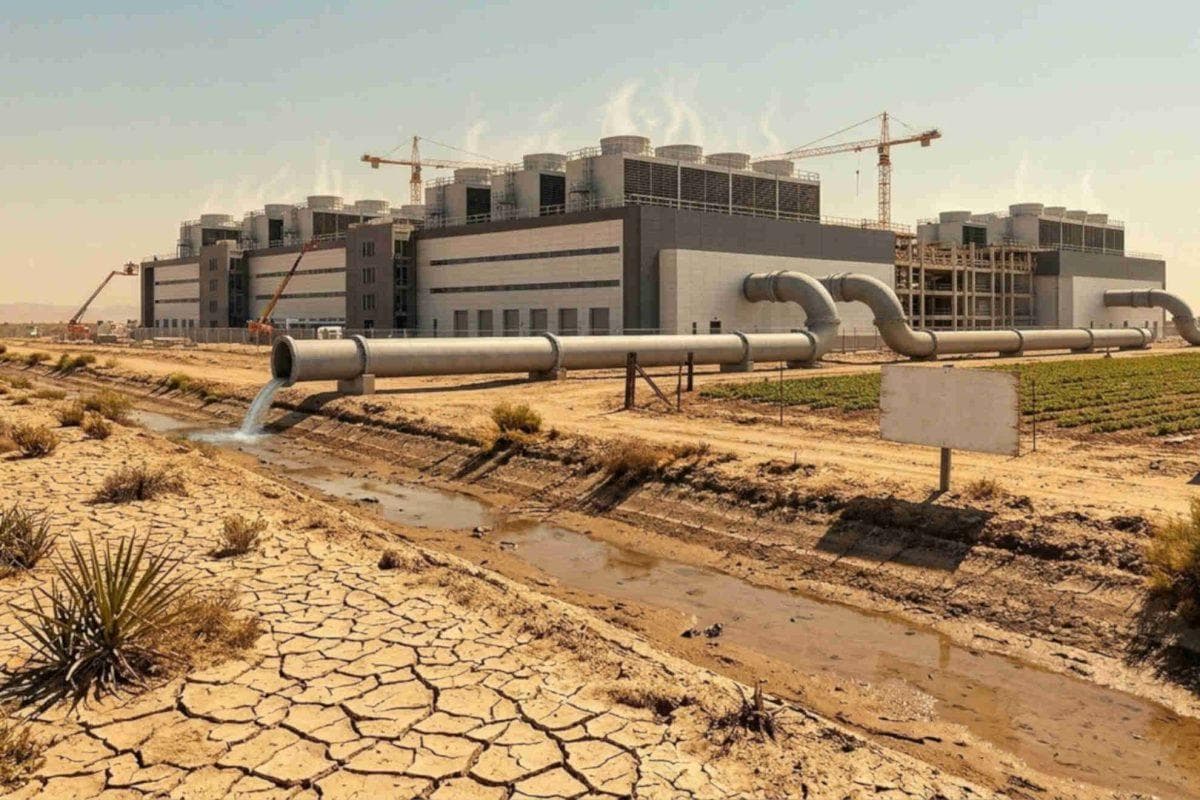
The expansion of digital infrastructure in Southern California is driving an intense debate over resource management in the Southwest of The United States, an area defined by water scarcity. A state of the art data center, which requires 330 megawatts of energy and a surface area larger than 17 soccer fields, is currently seeking approval in the Imperial Valley.
Although the project developer ensures that service costs for residents will not increase, local inhabitants remain skeptical about the actual impact on the Colorado River supply; indeed, this tension highlights the growing conflict between the advancement of artificial intelligence and essential water security in The United States.
Local concerns and environmental standards
Residents whose homes border the projected site for the data center fear that the massive water demand will result in residential restrictions and the devaluation of their properties. Some individuals express concern over noise, dust and the potential loss of their family gardens due to rising utility rates. Currently, the City of Imperial is maintaining a legal dispute, demanding that the project surpass stricter environmental standards under California’s quality laws; for the Latino community and local agricultural workers, this shift toward technological infrastructure represents a significant challenge regarding how local resources are protected and allocated.
Infrastructure costs and national trends
On a large scale, a data center can demand up to 3.8 million liters daily for cooling alone during peak heat periods, which equals the consumption of approximately 10,000 people. In this sense, research from the University of California, Riverside, suggests that these data centers generate very strong episodic pressure on small community water systems. In California, adapting the water network for these technological hubs could require investments of up to $800 million; furthermore, the lack of a centralized permitting authority and the failure of legislative attempts to require consumption reports leave many communities in The United States in a situation of uncertainty regarding the long-term sustainability of their water.
