

WATCH NOW
Watch on the app















Bad Bunny no longer alone: A new band challenges his Super Bowl halftime dominance
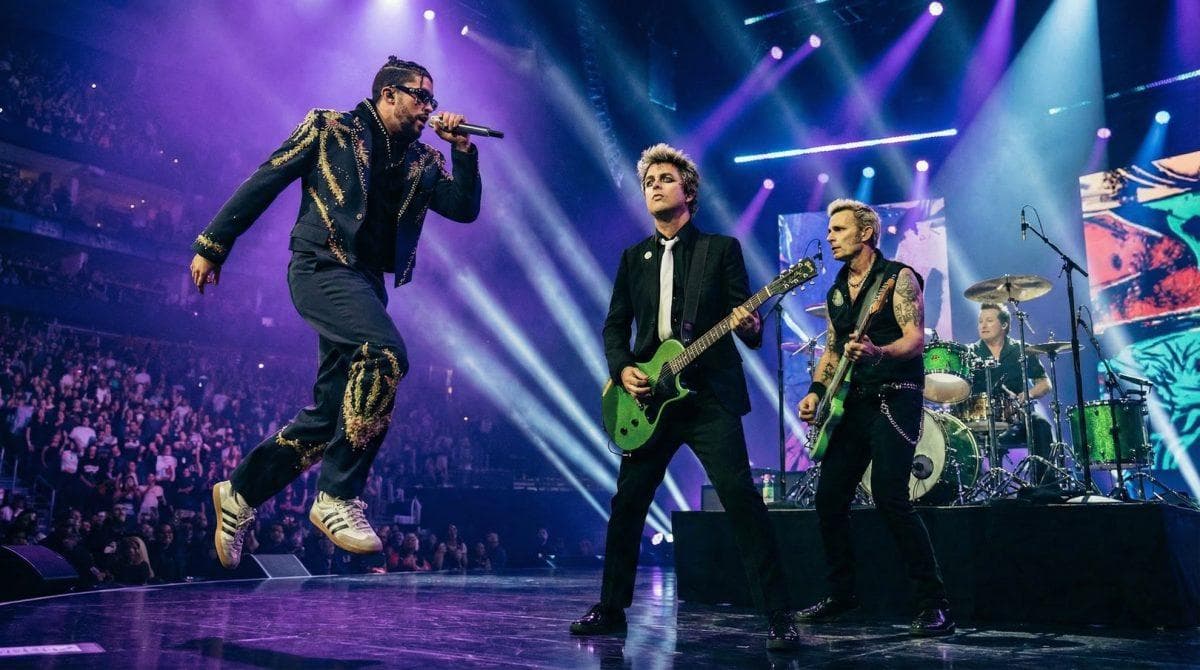
- Super Bowl LX confirms a diverse musical lineup that goes beyond a single headliner.
- Bad Bunny will lead the halftime show, but an iconic band threatens to steal part of the spotlight.
- The multi-artist musical event reflects an unprecedented generational and cultural clash in the NFL.
Super Bowl 2026 promises not only a high-voltage sports showdown but also a musical spectacle that redefines the balance of power on the world’s most-watched stage. Although Bad Bunny officially headlines the halftime show, his symbolic dominance is no longer absolute. Meanwhile, the confirmation of Green Day as the opening act introduces a new artistic tension that reshapes the event’s narrative and expands its cultural reach.
The date is set for February 8 at Levi’s Stadium in Santa Clara, California. There, the NFL, Apple Music and Roc Nation have designed an experience that crosses genres, generations and global audiences, making it clear that the spectacle goes far beyond a single figure.
Bad Bunny, the phenomenon that defined an era
The choice of Bad Bunny as the main halftime artist consolidates Latin music’s place at the heart of American entertainment. With multiple Grammy and Latin Grammy awards, collaborations with top fashion houses and cultural influence that transcends music, the Puerto Rican artist arrives at the Super Bowl as a symbol of a decade dominated by Latin sounds.
His announcement sparked controversy. For example, conservative groups openly criticized him, questioning his social activism and his decision to sing primarily in Spanish. However, rather than weakening his position, the controversy strengthened his image as a disruptive artist. In addition, with an audiovisual teaser and the mantra “The world will dance”, Bad Bunny promises a show that connects with global audiences and sets a new standard for halftime performances.
Green Day shakes up the balance
The biggest surprise of Super Bowl LX is Green Day opening the festivities. The California trio, Grammy winners and absolute rock icons of the ’90s and 2000s, will deliver a special tribute to six decades of Super Bowl history, accompanying the entrance of the event’s most iconic MVPs.
Their inclusion is far from minor. Indeed, Green Day represents a different, loyal, and massive audience, connecting with nostalgia, rebellion, and the rock identity of multiple generations. As a result, their performance creates a symbolic competition for the audience’s attention and shows that Super Bowl 2026 embraces contrast rather than uniformity.
Voices that complete a cultural mosaic
The lineup also includes artists of enormous emotional and symbolic weight. Brandi Carlile will perform “America the Beautiful”, bringing a vocal and narrative depth tied closely to American identity. Additionally, Charlie Puth will take on the National Anthem, promising a special arrangement designed to convince even the skeptics.
Adding to them is Coco Jones, who will sing “Lift Every Voice and Sing” during the pre-show, paying homage to African American history and the NFL’s cultural legacy. Altogether, the selection of these performers reinforces the idea of an event representing multiple voices, stories, and perspectives.
A Super Bowl that reflects the present
More than just a show, this year Super Bowl 2026 reflects the cultural moment in the United States and around the world. Bad Bunny embodies the present and the globalization of Latin music, while Green Day symbolizes the resilience and legacy of rock, and the rest of the lineup adds depth, diversity, and emotion.
Therefore, Bad Bunny is no longer the sole center of conversation. The presence of a legendary band and key voices turns Super Bowl 2026 into a stage for cultural dialogue, where different sounds compete, coexist and amplify each other in front of millions of spectators.
