

WATCH NOW
Watch on the app














America’s 10 richest people revealed and the price of joining the Forbes 400 is staggering
-
The 10 richest Americans command unprecedented attention as the annual publication details historic fortunes; moreover, technological sectors and artificial intelligence breakthroughs drive extreme asset expansions nationwide.
-
Forbes 400 confirm that minimum entry thresholds soar to staggering heights; likewise, billions of dollars accumulate rapidly among elite operators and transform modern markets.
-
Federal Reserve data highlights profound economic contrasts nationwide; conversely, baseline financial indicators contrast sharply against multi billion dollar corporate valuations.
Forbes 400 figures command unprecedented attention as the annual publication details historic fortunes; furthermore, technological sectors and artificial intelligence breakthroughs drive extreme asset expansions nationwide, confirming that minimum entry thresholds soar to staggering heights while billions of dollars accumulate rapidly among elite operators and transform modern markets.
The prestigious publication details recent net worth calculations revealing that artificial intelligence investments and data center equities heavily drive fortunes nationwide; simultaneously, this massive financial bonanza elevates the minimum qualification threshold up to $4.4 billion while aggregate wealth reaches $8 trillion, leaving hundreds of wealthy individuals entirely outside the exclusive compendium, meaning holding $4 billion no longer guarantees a spot on this premier roster, and if technology companies maintain their rapid expansion, the threshold will likely climb higher and concentrate even more capital among the 10 richest Americans.

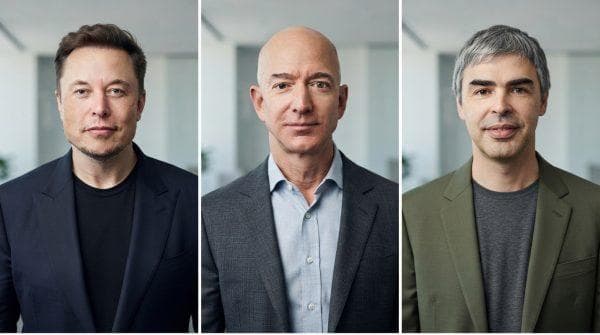
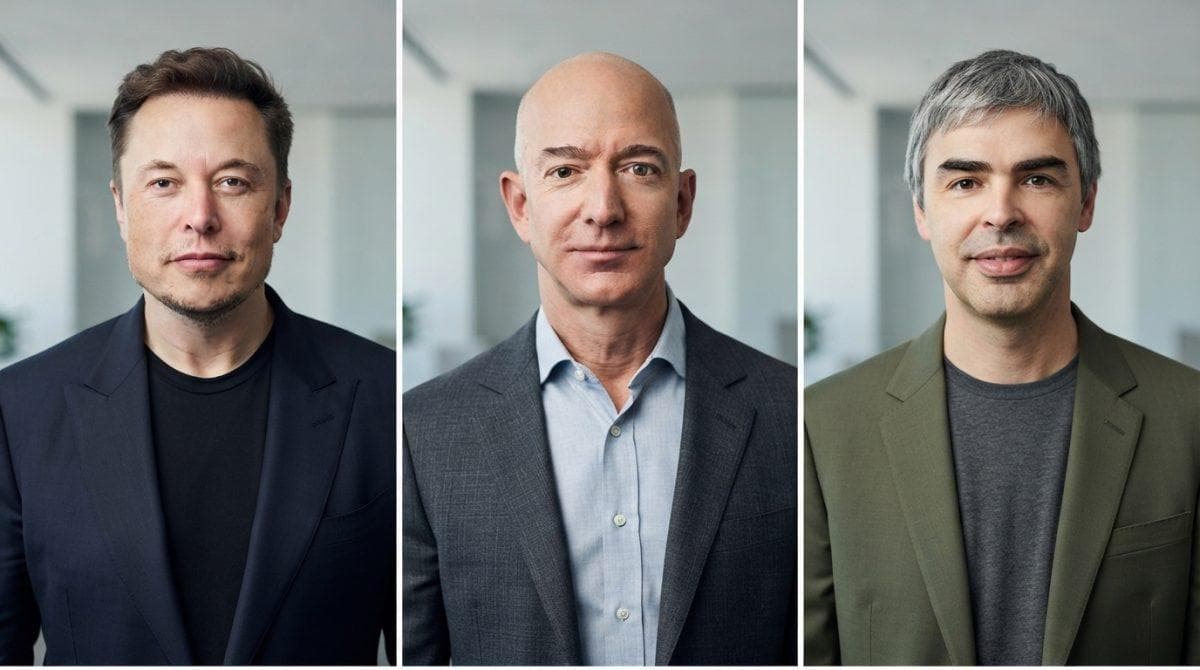
Prominent figures featured on the official Forbes 400 ranking. Courtesy of Forbes
The ten billionaires leading the list of the 10 richest Americans
-
Elon Musk (SpaceX / Tesla / xAI): $908 billion; the technological visionary captures the primary position for the fifth consecutive year, more than doubling his previous estimates as the public offering of SpaceX and asset revaluations boosted his net worth by $480 billion, proving why the 10 richest Americans continue expanding their financial dominance globally.
-
Jeff Bezos (Amazon / Blue Origin): $378 billion; the retail titan solidifies his second-place standing propelled by global e-commerce and private aerospace development, maintaining an unprecedented $530 billion gap behind the leader.
-
Larry Page (Google / Alphabet): $278 billion; the digital co-founder maintains sustained financial growth thanks to continuous optimization within the internet search giant and advanced corporate expansions.
-
Michael Dell (Dell Technologies): $263 billion; the veteran entrepreneur ascends strongly through massive technological infrastructure renewals and enterprise server system enhancements.
-
Sergey Brin (Google / Alphabet): $256 billion; the tech leader manages cutting-edge strategic innovations in applied artificial intelligence across major digital ecosystems.
Ver esta publicación en Instagram
Analysis of digital power and market titans
-
Mark Zuckerberg (Meta): $212 billion; the social platform creator capitalizes on advertising transitions and the massive development of decentralized virtual environments.
-
Larry Ellison (Oracle): $204 billion; the veteran executive maintains undisputed dominance across corporate database management and cloud computing services.
-
Jensen Huang (Nvidia): $199 billion; the tech leader revolutionizes global markets due to soaring demand for specialized artificial intelligence processors.
-
Steve Ballmer (Microsoft): $156 billion; the investor solidifies his historic fortune by managing key equity stakes in mass-market enterprise software development.
-
Warren Buffett (Berkshire Hathaway): $144 billion; the legendary investor maintains his long-term value philosophy backed by diversified industrial and financial conglomerates, demonstrating how the 10 richest Americans secure enduring stability across volatile markets.
The richest woman in the United States is Alice Walton, heir to Walmart, leading with $118 billion. Forbes counted 62 women in the ranking, about 16% of the total.
Integration of artificial intelligence and new market entrants
Emerging digital markets generate thirty-four unprecedented billionaire debuts carrying a combined wealth of $321 billion; meanwhile, Greg Brockman enters as the wealthiest OpenAI co founder with $25.5 billion alongside six Anthropic co-founders estimated at $15.5 billion each, reflecting how industry analysts emphasize that technological innovation accelerates capital accumulation globally and consequently, financial regulatory agencies urge prudence against volatile market speculations while the 10 richest Americans redefine corporate boundaries.
Financial platforms like Investor.gov advise market participants never to risk funds based solely on online recommendations, ensuring individuals verify proper broker registrations before committing capital; meanwhile, standard financial guidelines demand strict portfolio diversification, therefore astute operators avoid concentrating resources within individual speculative assets while closely monitoring macroeconomic shifts alongside the 10 richest Americans.
Notable market drops and tycoons who lost ground
-
Larry Ellison: $204 billion; the executive experienced a $72 billion setback, registering the largest nominal drop within the evaluated period due to sector-wide stock fluctuations.
-
Michael Saylor: $4.6 billion; the entrepreneur descended sharply in his asset valuation after Strategy shares suffered a steep 57% collapse over a single year.
-
Donald Trump: $7.0 billion; the political figure and businessman dropped 44 spots down to position 245 in the general ranking as his fortune retreated by $300 million from real estate and commercial property valuation adjustments, separating them further from the 10 richest Americans.
Forbes 400 cultural impact and socioeconomic wealth disparities
Economic researchers evaluate structural wealth gaps across diverse demographic segments; similarly, baseline Federal Reserve metrics indicate that median household assets remain modest compared to elite corporate portfolios, allowing financial institutions to track these expanding margins continuously while policy experts analyze how concentrated market power influences broader economic mobility. Observers note that technological progress delivers immense rewards to corporate leaders; subsequent market cycles will reveal whether the distance separating working families from the 10 richest Americans continues to widen, sealing the evolving legacy of the Forbes 400.
