WATCH NOW
Watch on the app















Which Trump checks are actually coming? Some payments are underway while others still need approval
-
Stimulus payments announced by the federal administration generate high expectations across the nation, although citizens must understand which deposits already started processing and which remain pending legislative approval in Washington.
-
Government authorities established differentiated schedules for each specific program, benefiting millions of American families seeking financial relief during the upcoming months.
-
Analyzing exact amounts, eligibility restrictions and official requirements allows taxpayers to identify which economic benefits will arrive directly in their bank accounts soon.
Trump checks represent one of the most discussed economic measures of the current presidential term, covering distinct amounts ranging from $90 up to $5,000 depending on the specific assistance program, while official calendar delivery dates operate independently and require detailed review by beneficiaries. The federal administration determined that only some of these payments recently began distribution, whereas other economic proposals continue waiting for formal congressional approval in Washington and American citizens must understand strict criteria established by government agencies to guarantee correct receipt of allocated funds.
This special coverage details the current status of each financial initiative announced by the White House, responding precisely to which checks are actually arriving at households and which remain stuck in the legislative approval process, as economic experts indicate that implementing these funds aims to boost the internal market through direct refunds and government fee reductions. Analyzing the exact situation of each subsidy allows comprehension of the real impact of fiscal policies on citizens’ budgets, consequently prompting the public to examine official announcements issued by the Department of the Treasury regarding definitive deposit dates with intense attention.
Detailed analysis regarding Trump checks and official distribution
Rebates corresponding to federal health coverage began issuing massively to alleviate taxpayer finances, reaching specific population segments complying with established regulations and the federal government channels these resources through direct transfers to expedite administrative procedures and prevent unnecessary delays in beneficiaries’ bank accounts. Each selected individual receives official notices detailing the origin of the money, while supervisory agencies rigorously monitor correct allocation of public resources and experts recall that these extraordinary measures respond to budgetary adjustments approved previously by competent authorities.
The Obamacare medical reimbursement program
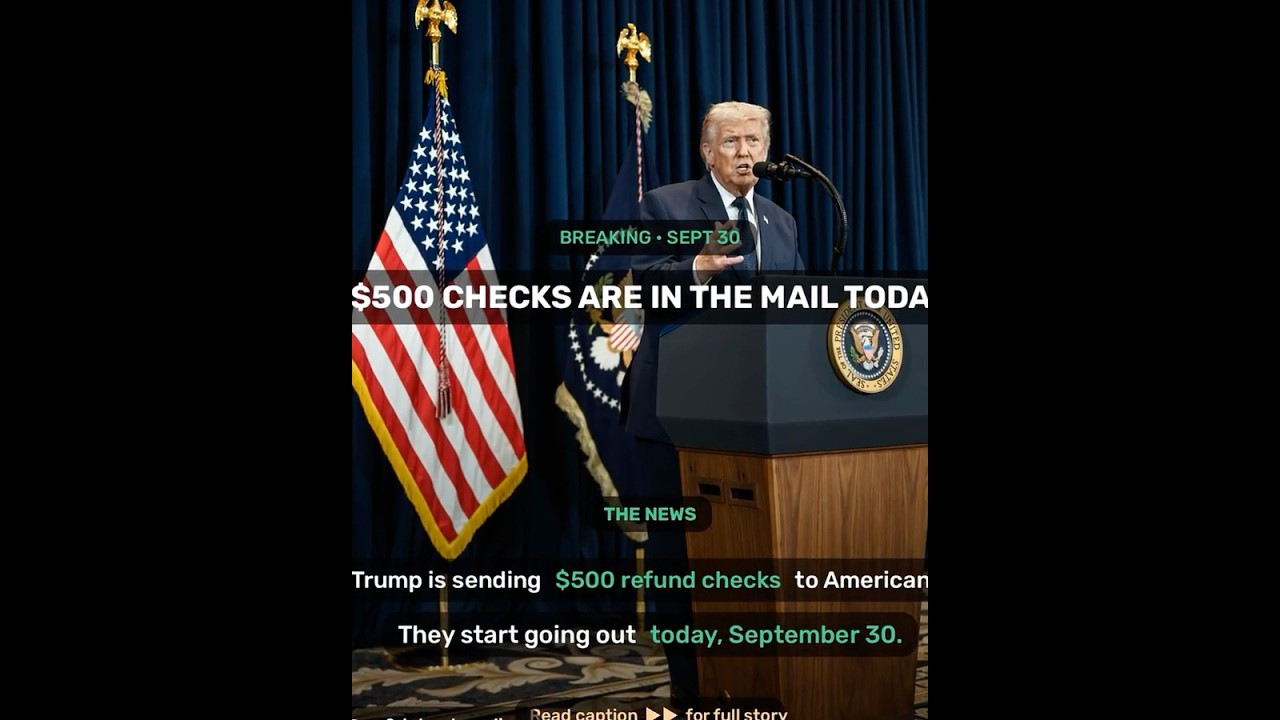
Beneficiaries enrolled in federal marketplace health plans receive specific payments of $500, structured as a direct refund for fees previously charged to users, furthermore, the governmental administration initiated dispatch on September 30, 2026, to more than 950,000 eligible individuals without requiring additional applications from interested parties. This assistance reaches exclusively the 30 states operating under the federal health system via HealthCare.gov, excluding jurisdictions managing their own local health insurance marketplaces, consequently directing payments to those who contracted coverage for 2026 without financial assistance to reduce premiums, while some analysts study how these stimulus payments impact local healthcare affordability.
Ver esta publicación en Instagram
The Medicare Part B financial support
Affiliates of the federal healthcare program for older adults receive a one-time payment of $90 managed directly by the Centers for Medicare & Medicaid Services, additionally, nearly 20.8M beneficiaries of Original Medicare Part B qualify for this economic benefit designed to mitigate costs associated with specialized medical care. Most recipients obtain money via automated direct deposit around October 8, 2026, while remaining cases receive physical checks sent by postal mail during the course of the month, conversely, individuals receiving Medicaid assistance to pay premiums, paying monthly income-related adjustments or enrolled in Medicare Advantage remain excluded from this particular compensation scheme, whose funds stem from the Medicare Improvement Fund alongside broader stimulus payments distribution guidelines.
New economic proposals and commercial tariffs
Fiscal initiatives based on tariff collection project significant deliveries for middle and moderate-income sectors, although definitive execution depends on legislative debates in Congress, likewise, Treasury Secretary Scott Bessent indicated that any program of this magnitude announced since November 2025 requires a solid legal framework approved by federal lawmakers. Citizens interested in receiving these funds await concrete definitions regarding definitive income requirements and execution timelines stipulated by the mandatary’s economic team, consequently leaving the distribution of these specific resources paused until official notice, while independent economists evaluate how future stimulus payments could alter national consumption patterns.
Ver esta publicación en Instagram
The proposed tariff dividend initiative
The government plan contemplates distributing up to $2,000 financed through revenues generated by international import levies, seeking to benefit American workers directly, furthermore, the proposal requires complex legal architecture defining precise wage thresholds necessary to qualify for promised payouts. Congressional representatives analyze budgetary projections presented by the executive branch, evaluating fiscal impact on the national economy over the medium term, therefore financial analysts suggest prudence before incorporating these hypothetical funds into personal household financial planning.
The ambitious Trump Dividend proposal
The initiative announced by the White House on September 10, 2026, contemplates a massive payout of $5,000 for every adult American citizen, subject to a strict political condition: Republicans must win the House of Representatives and the Senate in the November elections. Total cost of the measure vastly surpasses $1.2T, a calculation performed by outlets like CBS News based on approximately 245M citizens over the age of eighteen, generating intense debates among federal lawmakers and independent budget analysts, therefore the viability of this proposal remains subordinated to future political negotiations on Capitol Hill, while families monitor how Trump checks might evolve.
Operational criteria and stimulus payments market perspectives
-
The federal administration established a specific amount of $500 for enrollees in eligible federal health plans across 30 states during this fiscal period, matching prior stimulus payments objectives.
-
Nearly 20.8M older adults affiliated with governmental medical services receive a one-time payment originating from the Medicare Improvement Fund.
-
Economic projections indicate that the massive dividend proposal would require a budget exceeding $1.2T for total execution.
-
Financial experts recommend reviewing official Department of the Treasury communications in detail to avoid confusion with preliminary announcements regarding Trump checks.
-
Consumer associations suggest maintaining prudent financial planning while Congress debates approval of pending legislation.
This video provides additional context regarding the rollout of the official health insurance refund payments processed by the Treasury department, marking a pivotal milestone in tracking the current trajectory of Trump checks.