

WATCH NOW
Watch on the app







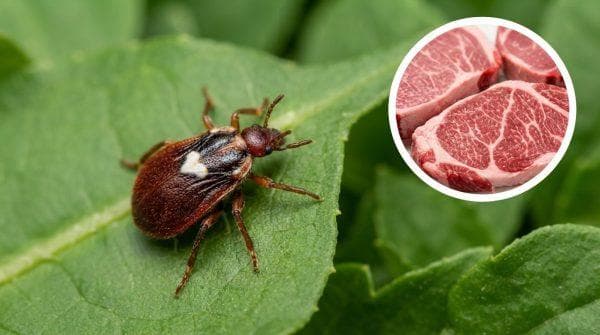







A tick that can make you allergic to meat is spreading across the U.S. and cases are rising
-
Meat allergy tick advocates mobilize nationwide as health officials evaluate an urgent medical crisis, demanding a comprehensive response to an imminent public health epidemic.
-
Tens of thousands of signatures accumulate across digital platforms while legal representatives present crucial evidence regarding clinical safety protections.
-
Animal welfare organizations highlight the vital environmental support provided by wildlife management teams to control the vector population and deer density.
The lone star tick turns Martha’s Vineyard into a primary epicenter for alpha-gal syndrome across the United States, driving local health authorities to race against strict diagnostic deadlines and submit compelling clinical data preventing permanent public health complications. Simultaneously, medical documents detailed by the Los Angeles Times reveal how hospital officials scheduled a comprehensive intervention strategy before October to determine whether teams can contain the vector population, prompting local advocates to organize public health demonstrations demanding immediate awareness for the certified medical condition, whereas this tick meat allergy threatens residents and visitors alike.
Alpha gal syndrome: A severe, tick borne allergic reaction triggered by the lone star tick, which introduces a sugar molecule into the body and causes the immune system to react violently against red meat, dairy, and mammalian products.
Hospital statistics and clinical expansion regarding the tick meat allergy
Hospital administrators issued the emergency health protocol on September 29 in Martha’s Vineyard.
-
692 positive test results for alpha-gal syndrome await clinical resolution at the local medical center up to August 2026.
-
Total figures approach 742 positive results recorded throughout 2025, contrasting sharply with merely 2 cases detected in 2020 according to the Los Angeles Times.
-
Facing this significant surge, the health center opened an outpatient clinic in June dedicated to tick bites, which already attends to nearly 400 patients.
-
In August, the facility launched a specialized research study focused on bites and alpha-gal syndrome, securing close to $2M in its initial funding phase.
-
The condition, identified initially in 2007, still lacks a definitive cure while symptoms emerge hours after eating and weeks or months after the triggering bite, incorporating observations about the meat allergy tick phenomenon.
-
Prolonged diagnostic delays frequently complicate the ability of patients and physicians to connect an allergic reaction with its original biological cause.
Loading video...Loading Video
Scientific transmission mechanisms and biological traits of the tick
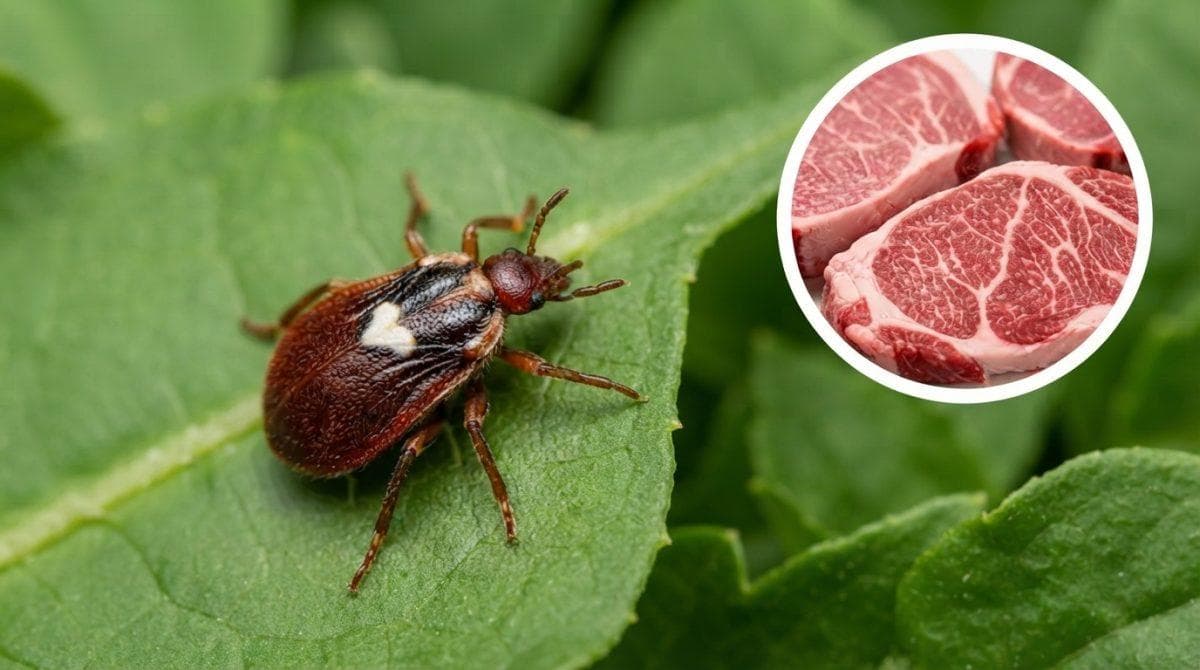
Researchers explain that female specimens display a distinctive white dot on the back while expanding their historical range from the southeast across Maine and Oklahoma, allowing the organism to survive harsh freezing temperatures by producing an antifreeze-like substance mirroring patterns seen in meat allergy tick vectors.
Concurrently, entomology experts emphasize that the resilient vector survives underwater for hours without natural predators, while specialized sensory organs on its eight legs and palps detect body heat and carbon dioxide before the arachnid pierces human skin with long barbed mouthparts to transmit the carbohydrate molecule galactose alpha 1,3-galactose instantly upon biting, contrasting with California Department of Public Health reports identifying at least 76 specimens alongside western black-legged deer ticks carrying treatable tick-borne pathogens.
Ver esta publicación en Instagram
CDC data and prominent individual testimonies on the tick meat allergy
-
A comprehensive study released in July by the Centers for Disease Control and Prevention concluded that actual incidence vastly exceeds the 2022 estimate of 450,000 sensitized Americans.
-
In Arkansas, Kentucky, Missouri, Tennessee and Virginia, one out of every four adults tested displayed positive results for the condition, totaling over 4M individuals while 15% manifest symptoms.
-
Diagnostic delays remain pervasive, as demonstrated by a 2017 North Carolina study showing that over 90% of cases were initially misdiagnosed as food poisoning or other disorders.
-
Jeffrey Wilson, an allergist and immunologist at the University of Virginia School of Medicine, personally treated close to 1,000 patients with alpha-gal, describing the condition as seemingly pulled straight from science fiction.
-
Jean-Marc Dupon, a 61 year old former French chef, abandoned professional kitchens after two anaphylactic hospitalizations caused by accidental cross-contamination with butter instead of oil, reflecting concerns shared by meat allergy tick researchers.
-
Brian Waitzel, a JetBlue pilot with no known prior health problems, passed away on September 3, 2024, marking the first confirmed death linked to alpha gal following a family burger meal.
-
Nancy Slonim Aronie, an island resident writer and artist, reported her allergy before open-heart surgery in Boston, receiving porcine-derived heparin that triggered severe hives despite avoiding valve replacements.
Local island mitigation measures and ecological control strategies
Grassroots public health organizations continue pressuring local authorities through digital campaigns and informational posters carrying warnings outside medical clinics and municipal offices, prompting Claire Seguin, hospital president, to declare that the syndrome became the most urgent emerging health crisis on the territory, aligning with broader discussions on the meat allergy tick crisis.
Amidst these escalating community efforts, supporters maintain active health awareness vigils while local schools incorporate meat-free options, and restaurants across all six municipalities review kitchen utensils alongside chef Charlie Granquist, who separates cutting boards, while local authorities track 4,681 white tailed deer via drone censuses against an ideal target of 1,500 animals, utilizing 458 licensed resident hunters alongside over 600 authorized non resident hunters to abate an annual average of 830 deer while evaluating mass sterilization, specialized sharpshooters and antiparasitic treatments, sealing a race where public survival depends entirely on outsmarting tick meat allergy.
