

WATCH NOW
Watch on the app














Texas hospital finds an extraordinary way to bring a parent’s touch to babies fighting for life
-
Premature babies innovation enables vital skin to skin contact in neonatal intensive care units without disconnecting life-support equipment.
-
Proactive medical team at Children’s Memorial Hermann Hospital implements Skincubator technology to safely secure breathing tubes and monitors.
-
Strategic clinical trials at a Texas hospital show zero hypothermia cases during parental transfers compared to eight moderate hypothermia cases under traditional care.
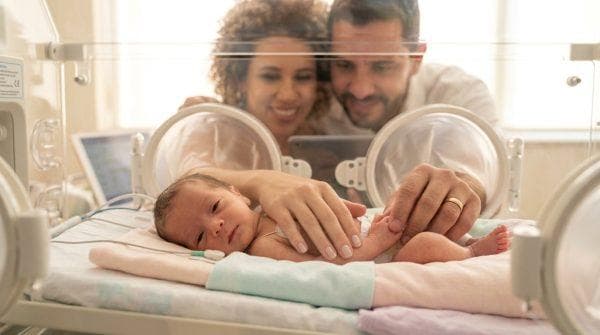
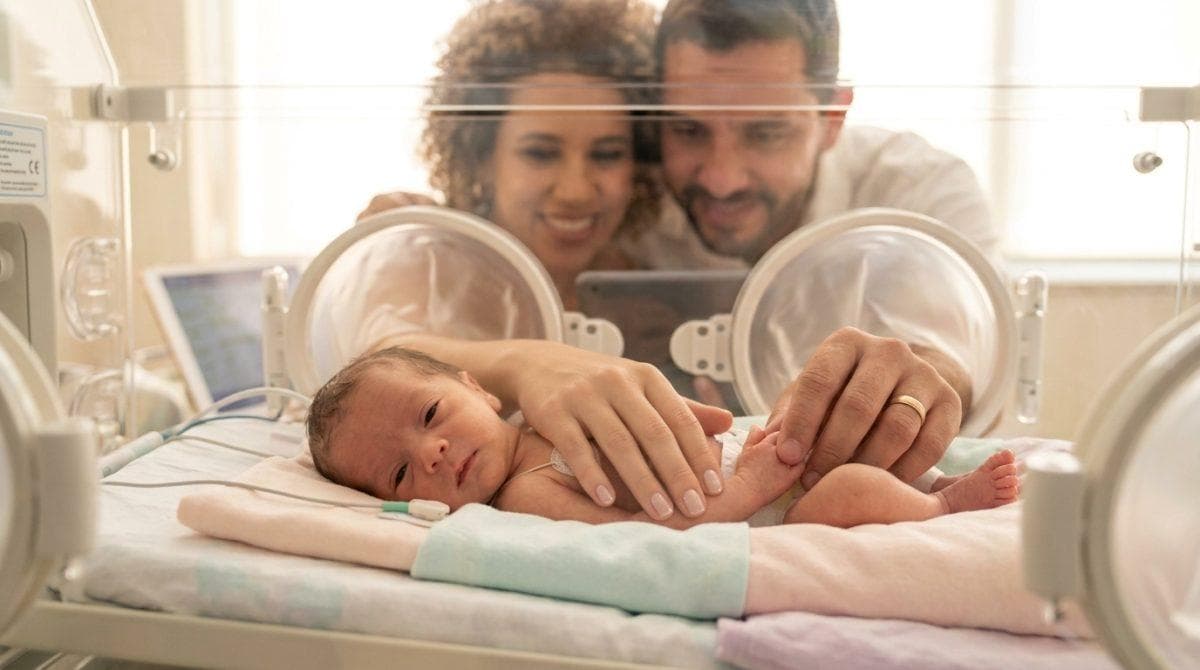
For nearly 2 weeks, Dorian and Tiffany Ojemen peered through acrylic incubator walls, caressing their tiny twins’ hands through narrow openings while listening to constant monitor beeps in the neonatal intensive care unit. Suddenly, a progressive Texas hospital transformed their experience by introducing a wearable incubator harness called the Skincubator. This groundbreaking premature babies innovation allowed the couple to hold their micro-preemies safely without disconnecting complex life-support equipment during critical recovery phases.
Indeed, clinicians at Children’s Memorial Hermann Hospital in Houston integrated this wearable harness into daily protocols; in this manner, healthcare workers eliminate parental anxiety when handling fragile infants surrounded by breathing tubes, intravenous lines, and continuous monitors.
Clinical deployment of the Skincubator and medical benefits at the Texas hospital
-
Premature babies innovation clinical application: Medical staff at Children’s Memorial Hermann Hospital completed 54 paired sessions of this wearable harness, enabling parents to maintain vital skin-to-skin contact for extended periods.
-
Texas hospital neonatal protocol expansion: Continuous clinical trials spanning over 19 premature infants granted doctors total control over thermal stability, reducing infant hypothermia risks during routine parental transfers.
-
Parental kangaroo care stabilization: Formal health evaluations confirm that direct chest contact regulates heart rates, adding a proven non-invasive method to stabilize infant breathing and body temperature.
Remarkably, applying this premature babies innovation within hospital care routines provided newborn specialists with clear empirical proof regarding thermal maintenance. Consequently, nursing teams safely facilitated extended parental bonding without interrupting complex clinical monitoring.
How wonderful it is to see an advanced technology in action!
A few months ago, I shared that the FDA has granted “Skincubator” a so-called Breakthrough Device Designation!
The company developed a wearable device designed to enable immediate, prolonged, skin-to-skin care for the tiniest preterm infants in their first days of life. They have already had two clinical trials, with 20 and 9 preterm neonates, respectively.
Now a family in Texas could hold their premature twins with the device.
I interviewed the company on our Patreon channel: https://t.co/2dv8SmesKf
—–
I track developments like this every week.In The Medical Futurist newsletter, I personally select and comment on the 5 most important developments in digital health and AI, for free!
If you’d like the next issue in your inbox, you can subscribe here: https://t.co/HPGo1u8iPs
— Berci Meskó, MD, PhD (@Berci) October 13, 2026
Impact on the Ojemen family and early critical bonding
Remarkably, twins Silas and Simone arrived on August 7 at just 26 wks of gestation, when Tiffany’s pregnancy barely passed 6 mos. Shortly thereafter, Dorian became the first father in Texas to utilize this specialized harness, securing breathing lines while he cradled his vulnerable newborns upright against his chest.
“I was very nervous because they are so small and I was afraid to do skin-to-skin because I didn’t know how vulnerable they would be… I think it makes the unnatural part of this feel natural again.”
Likewise, as an obstetrician and gynecologist herself, Tiffany recognized how this premature babies innovation transformed their daily bonding routine; consequently, she extended kangaroo care sessions far beyond the traditional 30 mins average, noting that direct physical contact deepened her emotional connection with her infants. Furthermore, medical specialists like Dr. Jaclyn Ruggiero emphasize that the first 7 days of life remain critical for parental physical contact, noting that explaining how the device locks all connections immediately eases family anxiety and prompts parents to eagerly try the technology.
Navigating thermal stability and FDA innovation designation
However, traditional transfers between incubators and parents often cause sudden body temperature drops in critical infants; for this reason, this Texas hospital adopted the device to stabilize heat through conductive thermal reflection. Indeed, clinical data published in the American Journal of Perinatology involving 19 premature infants between 24 and 33 weeks of gestation revealed that infants experienced only a 0.2 °C temperature drop with the harness compared to 0.4 °C during standard transfers. Crucially, zero infants suffered moderate hypothermia while using the device, whereas 8 infants experienced moderate hypothermia during conventional skin-to-skin contact.
On the other hand, while traditional protocols limited physical contact globally, Jerusalem-based developer Skincubator Neocare, founded in 2022 by neonatologist Itamar Nitzan following his research on premature infant cardiac function, advanced this premature babies innovation into international clinical markets. Ciertamente, receiving the Breakthrough Device designation from the U.S. Food and Drug Administration (FDA) in January 2026 accelerated regulatory reviews through a fast-track clinical evaluation program designed to expedite technologies treating life-threatening conditions; meanwhile, health institutions aligned with recommendations from the World Health Organization (WHO) to expand daily skin to skin contact toward 8 hrs.
Future of neonatal care and premature babies innovation led by the medical community
Accordingly, clinical teams at Children’s Memorial Hermann Hospital demonstrate how securing medical lines inside a chest harness builds a natural bridge between technology and affection. Equally, the device locks breathing tubes and monitors in place, allowing parents to focus entirely on emotional connection rather than medical equipment.
Stepping into this bold next chapter of pediatric medicine, health leaders refine neonatal guidelines across major medical centers; simultaneously, they encourage widespread adoption of wearable incubators in critical care units. In this way, public health partnerships shorten the distance between incubators and a parent’s chest, proving how this premature babies innovation protects vulnerable lives and demonstrating why this pioneering Texas hospital.
