

WATCH NOW
Watch on the app












Texas border city braces for major changes as US Mexico trade rules face uncertainty
-
US Mexico trade in Laredo undergoes a profound transformation amid the instability of tariff policies pushed from Washington this year.
-
The U.S. federal administration presses for drastic modifications to the USMCA to restrict the flow of foreign goods.
-
Local authorities and customs brokers watch with caution as temporary freezes hit investments destined for cross-border logistics.
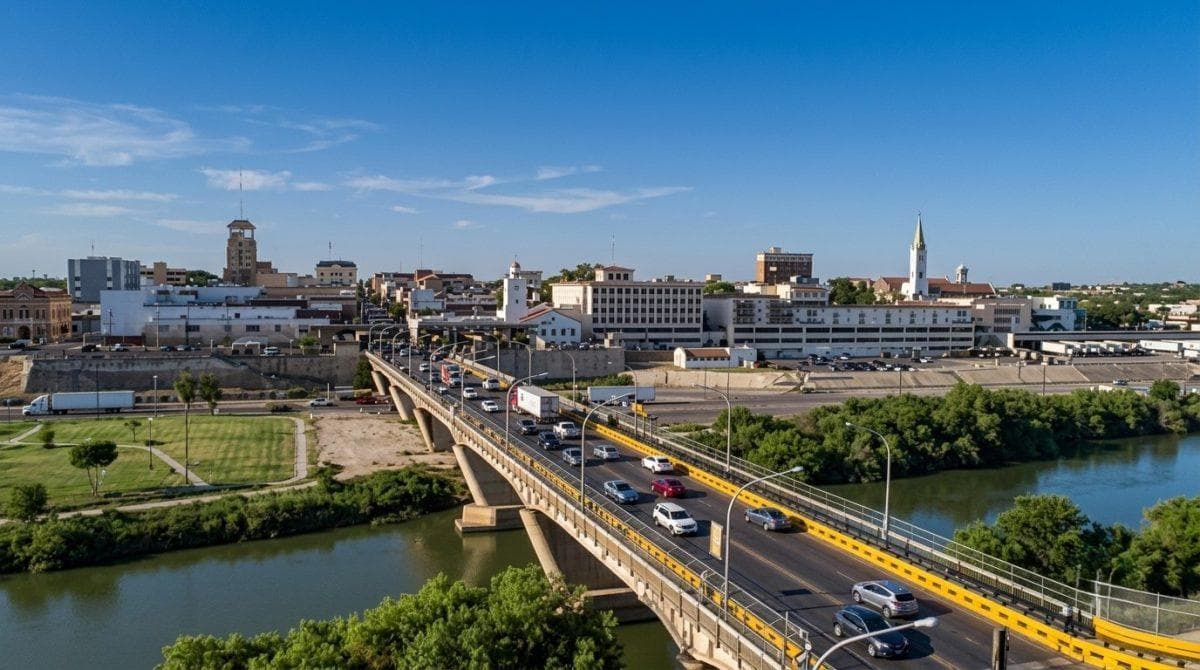
Texas border city anchors the primary land port of entry in the United States by directly connecting Mexican manufacturing plants with Interstate 35, and furthermore, economic authorities from the Department of Commerce report that 40% of total trade between both nations flows through this key region for the local economy; building on this, federal statistical offices document a steady increase in the monetary value of imported goods during recent fiscal periods, which demonstrates the logistical relevance of this North American corridor against current global market challenges.
Previously, international companies relocated their supply chains toward low-cost plants in Mexican territory to bypass prior tariffs applied to other global powers, but presently legal uncertainty halts this momentum; on the other hand, investors question the viability of committing capital to expand logistics centers due to ongoing threats of modifying regional rules of origin and consequently, local chambers of commerce demand clarity from federal lawmakers to avoid a prolonged contraction in private capital flows across the region.
Commercial boom and strategic infrastructure Texas border city
The privileged geographical location drives US Mexico trade daily with the transit of thousands of heavy vehicles loaded with manufactured goods and simultaneously, local chambers of commerce report a historic increase in customs revenue during recent fiscal periods; however, financial analysts warn that this accelerated growth pace faces danger due to the lack of firm bilateral agreements between federal governments, forcing logistics operators to redesign operational strategies to mitigate any financial risk derived from unforeseen shifts in international tariff policies.
International transportation companies constantly optimize land routes to prevent bottlenecks at international crossings and therefore, logistics associations demand greater clarity in current customs regulations; likewise, regional banking institutions note that steady capital flow depends strictly on regulatory stability in the zone, highlighting that technological modernization at international bridges remains indispensable to absorb the massive cargo volume coming from industrial centers in northern Mexico.
Key factors for border trade development US Mexico trade
-
Customs authorities process thousands of commercial operations valued at millions of USD daily through advanced technological platforms certified by the Customs and Border Protection agency.
-
Local distribution centers expand operational capacity to store electronic and automotive components arriving from Monterrey.
-
Transportation associations implement strict protocols to comply with new regulatory demands imposed by the federal government.
-
International trade experts constantly evaluate the economic impact of tariff restrictions on supply chains using data from the International Trade Commission.
-
Business chambers organize informational forums to prepare investors for potential renegotiation scenarios of the trade pact.
-
Government agencies coordinate special operations to streamline vehicular traffic at the busiest international bridges.
Additionally, academic institutions collaborate with economic research centers to measure labor impact in neighboring communities and thus, municipal leaders seek viable alternatives to diversify local employment sources while US Mexico trade faces new regulatory hurdles; nonetheless, the productive sector maintains a direct link to the dynamism defining the northern zone.
Regulatory challenges and the future of the treaty
International negotiators discuss terms for renewing trilateral US Mexico trade under constant pressure and similarly, federal legislators analyze legislative proposals to protect domestic manufacturing industries against foreign competition; consequently, the business climate experiences a temporary pause while economic actors determine the direction of future investments, carefully evaluating risks associated with new regional content requirements that the central administration imposes in the short term.
Chambers of commerce and local economic development organizations promote roundtable discussions to dispel fears among foreign investors and moreover, financial consultancies publish detailed quarterly reports on market projections, supported by macroeconomic updates from the Federal Reserve Bank; therefore, the evolution of this commercial scenario redefines the economic and operational horizon of the Texas border city.
