














California gas prices could finally come down if one major supply change falls into place
-
High fuel costs impact motorists across the western region as state authorities implement urgent measures to stabilize local energy markets.
-
Energy analysts evaluate the ongoing supply chain bottlenecks affecting petroleum refining capacities throughout the Pacific coast.
-
Environmental regulatory boards monitor compliance schedules for specialized fuel blends introduced ahead of seasonal driving shifts.
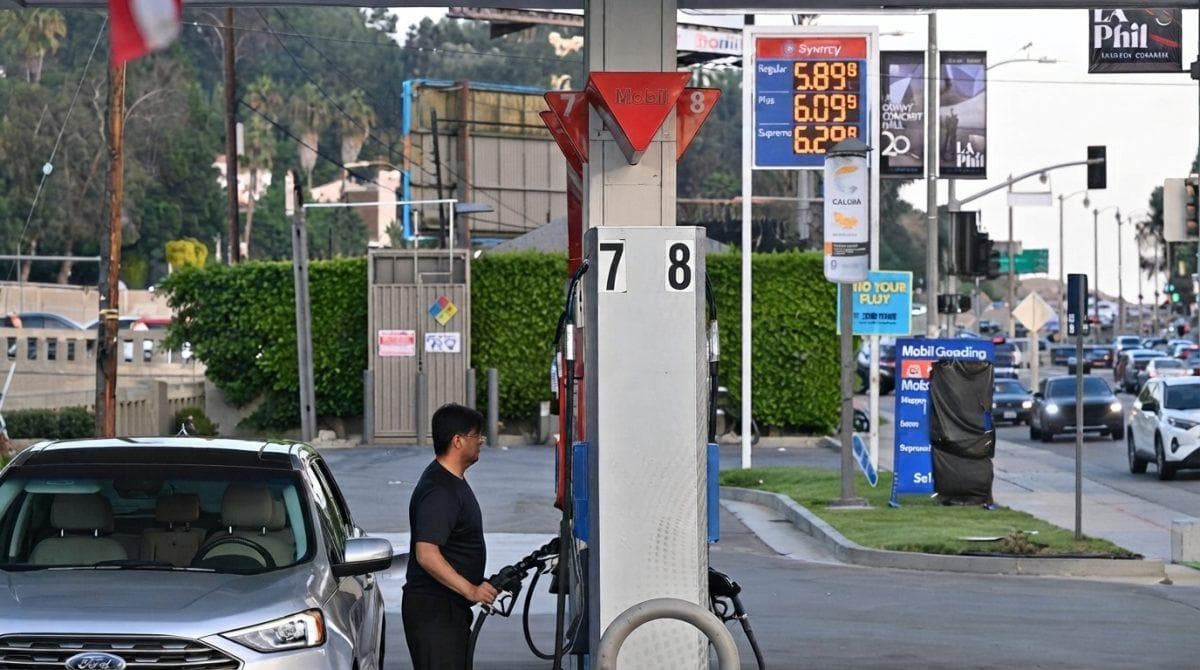
Gas in California reaches unprecedented pricing levels during late September 2026, as Governor Gavin Newsom announces aggressive administrative measures to increase fuel availability and provide deeper market transparency regarding gasoline and diesel prices; additionally, average regular gasoline hits $6.38 per gallon, according to the American Automobile Association (AAA), which significantly surpasses the $4.66 per gallon recorded one year prior, while managing high fuel costs across local communities.
State officials report that retail petroleum outlets experience immediate supply tightening while the local administration implements emergency operational waivers to accelerate the transition toward winter blend fuel; furthermore, market observers emphasize that these executive actions seek to relieve financial pressure on commuters confronting prices far exceeding the national average of $4.46 per gallon, thus mitigating severe high fuel costs for working families.
Understanding gas in California and the seasonal requirement suspension
-
Emergency orders authorize state agencies to permit the immediate manufacturing, importation, distribution and retail sale of winter-blend gasoline several weeks ahead of schedule, helping drivers combat high fuel costs effectively.
-
The governor’s directive instructs the California Air Resources Board (CARB) and the Department of Food and Agriculture to facilitate this change outlined in Senate Bill 237.
-
Usual summer seasonal requirements designed to reduce ozone formation undergo temporary suspension to expand overall supply options.
-
Regulatory agencies and the California Energy Commission periodically publish transparent wholesale market data regarding gasoline and diesel inventories.
-
Drivers review local prices and verify official updates while regional refineries adapt production schedules to match temporary regulatory standards.
Market dynamics and comparisons against national pricing benchmarks
Statewide average regular gasoline prices climb considerably compared to previous weeks, resting at $6.17 per gallon on September 22 and $5.67 per gallon a month prior, placing California nearly $1.92 above the national average tracked by AAA; moreover, retail prices vary significantly across counties and cities, meaning individual motorists face specific costs depending on their precise geographic location as high fuel costs persist.
Authorities explain that recent price surges stem from international petroleum market volatility and the impact of the war between the United States and Iran, a conflict generating over $120B in additional fuel costs for Americans across a seven month span according to official calculations from the U.S. Energy Information Administration; consequently, industry analysts stress that wholesale market transparency remains vital for mitigating economic fallout at the local level.
Economic drivers behind high fuel costs and political accountability factors
Governor Newsom attributes part of the ongoing crisis to federal policies and international disruptions, while energy experts note that strict regional environmental regulations impose heavy operational overhead costs on local refineries; meanwhile, automotive associations confirm that global crude instability keeps retail prices elevated throughout the entire domestic territory amidst persistent high fuel costs.
Legislative leaders continue evaluating additional statutory mechanisms to protect consumers from sudden spikes at service stations while state agencies supervise the distribution of newly authorized inventories; by extension, economic analysts warn that close collaboration between regulators and the petroleum industry proves decisive in stabilizing the market over coming weeks.
Ver esta publicación en Instagram
Future outlook, consumer strategies and the path forward for regional stability
Motorists optimize vehicle efficiency by maintaining proper tire pressure, comparing retail rates across different service stations and planning daily commutes to mitigate transportation expenditures; additionally, state authorities maintain active oversight orders to ensure that fuel supply transitions protect consumer purchasing power.
Economic forecasters anticipate gradual price moderation as winter blend production floods distribution networks and refining operations normalize across the West Coast; subsequently, policymakers monitor ongoing market responses closely to secure a sustainable pricing framework for gas in California.
