

WATCH NOW
Watch on the app












Spanglish: The real Latino dictionary and the words we invented to survive in the U.S.
-
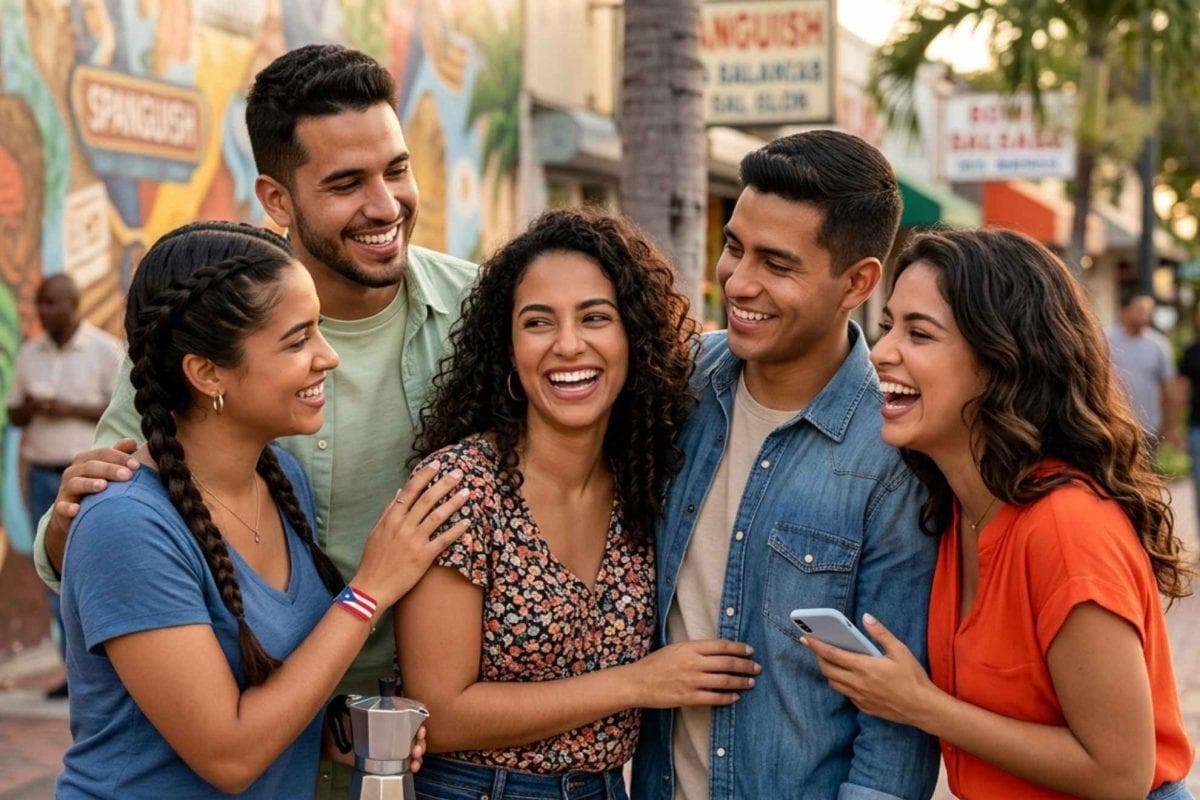
With over 55 million speakers in the U.S., Spanish and English have merged their structures to create a fascinating linguistic hybrid.
-
Terms like “estoquiar,” “hangear” or “escrolear” demonstrate the wild creativity with which Latinos adapt to the Anglo Saxon environment.
-
What began as a survival necessity has transformed into a cultural phenomenon that many consider the language of the future.
The influence of Spanish in the United States is undeniable, establishing itself as the country’s second most influential language; however, this phenomenon is bidirectional, as English is deeply transforming the daily speech of Latino communities. This constant interaction has given life to Spanglish, a hybrid linguistic system that, far from being an error, represents a tool for adaptation and a display of the cultural plasticity of immigrants. The creativity used to coin these new terms is so vast that many linguists suggest that, in the not too distant future, this dialect could achieve formal status due to its widespread use in social media, music, and professional life.
Limitless creativity: From the keyboard to the yard
Spanglish manifests primarily through the “Spanish ization” of English verbs and nouns, creating terms that are unpredictable for those who do not master both languages. For instance, the word “estoquiar” has nothing to do with fencing but adapts the verb stalk to describe social media monitoring, while words like “yarda” or “troca” have become pillars in the vocabulary of millions of households to refer to the yard and the truck. This evolution responds to the economy of language and the need to name new technological realities, as seen with “escrolear” (scroll) or “taipiar” (typing), terms that are already an organic part of digital communication.
Essential Spanglish Glossary
| Term | English Origin | Meaning | Usage Example |
| Hangear | Hanging out | To go out partying or hanging out. | “We hangeamos until dawn.” |
| Marketa | Market | Market or supermarket. | “I’m going to the marketa for bread.” |
| Frizar | Freeze | To freeze or stay motionless. | “My computer frizó again.” |
| Mapiar | Mopping | To mop or clean the floor. | “It’s her turn to mapiar the kitchen.” |
| Wassapiar | To message via the app. | “I’ll wassapio you when I arrive.” | |
| Lonchear | Lunch | To have lunch. | “Let’s lonchear at the cafeteria.” |
A phenomenon breaking borders
Beyond domestic life, Spanglish has permeated entire industries such as urban music, where terms like “parisiar” (party) are common currency in reggaeton lyrics. Similarly, in administrative settings, words like “registración” (registration) or “biliar” (billing) have displaced their correct Spanish equivalents registro and facturación due to constant exposure to English documents. While for some purists this might seem like a degradation of the language, for the 55 million Latinos in the United States, Spanglish is the necessary bridge to connect their two worlds, proving that language is a living entity that transforms to reflect the identity of those who speak it.
