

WATCH NOW
Watch on the app













Shakira and the World Cup formula that changed pop culture forever
-
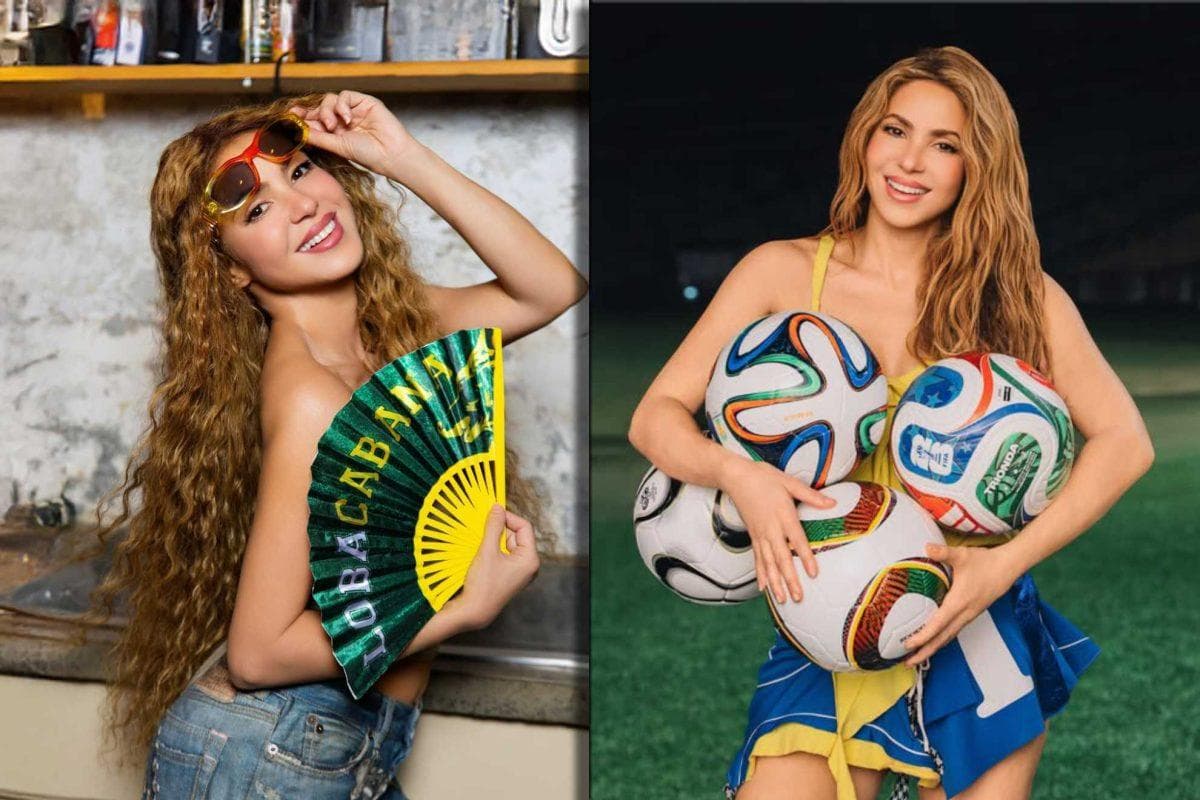
The Colombian superstar cements her status as the undisputed queen of global football by returning with the official song for the 2026 World Cup.
-
Her historic FIFA catalog features global anthems like “Hips Don’t Lie” in 2006, “Waka Waka” in 2010, and “La La La” in 2014.
-
Major Latin music icons such as Ricky Martin and Ozuna have also transformed the tournament into a platform for cultural impact.
Creating a hit song for the FIFA World Cup represents a true creative hat trick that instantly connects artists with a global audience of billions; within this unique space, Colombian superstar Shakira completely rewrote the industry rulebook when she conceived “Waka Waka (This Time for Africa)” while vacationing at her estate in Uruguay. The artist remembers that both the melody and the English lyrics came to her automatically and magically while walking through her property, feeling a deep connection to her Afro Caribbean roots. Thrilled by the result, she immediately contacted record executives to announce that she had just written the ultimate anthem for the 2010 South Africa tournament, sparking a phenomenon that would alter pop culture forever.
Ver esta publicación en Instagram
The perfect success formula and the enduring longevity of “Waka Waka”
The production of “Waka Waka”, led by Shakira and John Hill, acquired a unique cultural identity thanks to a chance meeting in New York with South African fusion group Freshlyground, whose musical contribution directly honored the host nation. In addition to showcasing her signature dance moves and a vibrant sample of the Cameroonian classic “Zamina Mina (Zangaléwa)”, the official music video featured global soccer icons like Lionel Messi and Gerard Piqué. This seamless combination of elements elevated the track into the most successful World Cup song of all time, amassing an astonishing 4.4 billion views on YouTube. Furthermore, the track’s impact proved so durable that the artist performed it a decade later to close out the prestigious Super Bowl LIV halftime show alongside Jennifer Lopez.
Shakira’s unparalleled World Cup legacy and her triumphant 2026 return
The superstar’s deep relationship with the world’s premier football tournament is not limited to a single hit but covers an unprecedented career in music history. Her path began back during the 2006 FIFA World Cup in Germany, where she captivated the entire planet by performing a special rendition of her global smash “Hips Don’t Lie” (Bamboo) alongside Wyclef Jean during the closing ceremony. Years later, for the 2014 World Cup in Brazil, the Colombian artist shook stadium floors once again by releasing “La La La” (Brazil 2014) in collaboration with Brazilian musician Carlinhos Brown, cementing her reputation as FIFA’s ultimate musical charm. Crowning this legendary run, Shakira marks a historic milestone this year by returning at the absolute top of her game with the official song for the 2026 World Cup, an anthem capturing the multicultural identity of the tournament hosted by the US, Canada, and Mexico, proving nobody understands football adrenaline quite like her.
The pioneers of the movement and the legacy of World Cup anthems
Although the tradition of officially recognized anthems began in Chile 1962 with Los Ramblers’ “El Rock del Mundial”, the true commercial explosion of Latin music in this sporting event took place in France 1998. During that edition, Puerto Rican icon Ricky Martin shook the entire planet with “The Cup of Life” (“La Copa de la Vida”), a track fueled by loud horns and Brazilian batucada that not only dominated the Billboard charts but also catalyzed the “Latin explosion” in the United States following a historic performance at the Grammy Awards. In this way, the evolution of FIFA anthems, which recently saw urban stars like Ozuna shine with his hit “Arhbo” in Qatar 2022 has paved the way for Latino music to dominate global platforms, turning every tournament into an indelible cultural showcase.
