

WATCH NOW
Watch on the app















New York rent prices have young people finding unlikely roommates and $800 rooms
-
The affordable housing shortage creates an urgent demand for younger professionals navigating soaring urban expenses; furthermore, record rate spikes force residents to seek options beyond traditional real estate channels.
-
The New York Foundation for Senior Citizens connects space-rich homeowners with individuals searching for accessible shelter; consequently, intergenerational cohabitation emerges as an innovative answer to urban inflation.
-
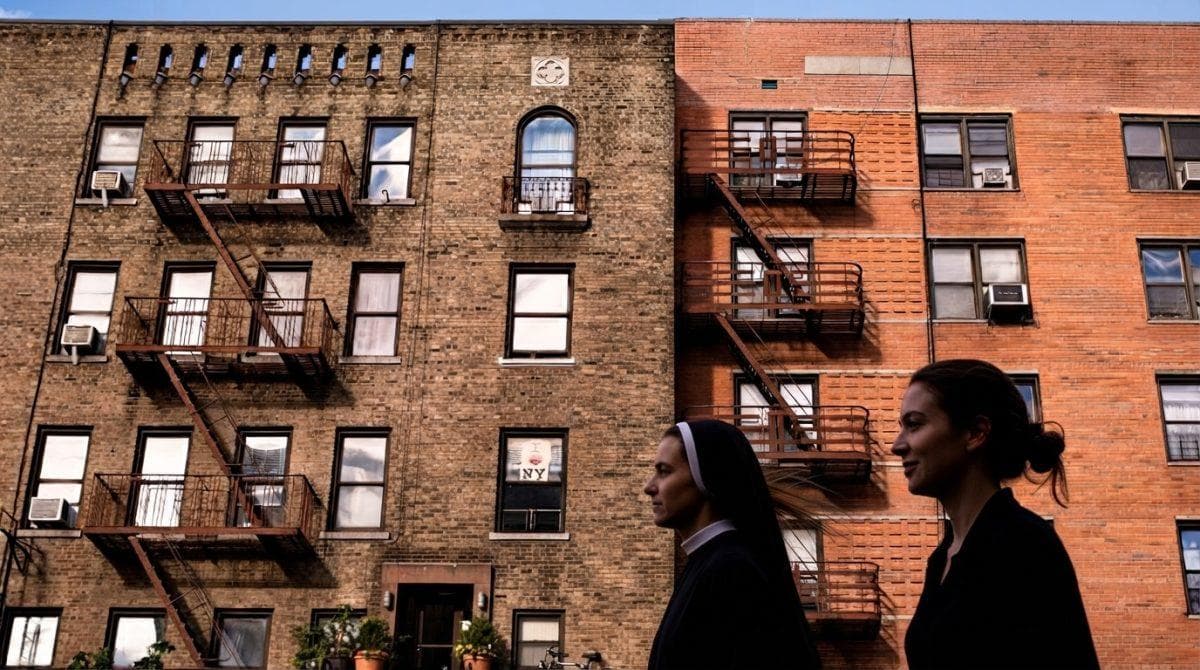
Alternative residential options inside local convents and private homes offer rooms for $800 per month; likewise, this growing movement proves how creative solutions replace inaccessible budgets across the Big Apple.
NYC rent prices have reached unprecedented levels for emerging professionals, compelling a new generation to pursue unconventional housing arrangements like intergenerational home sharing or relocating to religious convents; furthermore, median city rents spiked to $4,200 monthly in July 2026, marking a 30% surge compared to 2019 baseline metrics, while Manhattan rates reached $4,995 against the national average of $1,388 reported by housing market analysts.
The ongoing housing squeeze heavily impacts residents under thirty attempting to settle across the metropolitan area without exhausting their monthly earnings; on the other hand, the financial strain grows so intense that most New Yorkers endure severe rent burdens by allocating over 30% of gross income toward rent and utilities, requiring an annual household income of $199,800 in Manhattan just to remain below that critical threshold.
Ver esta publicación en Instagram
Intergenerational solutions pushing affordable housing forward
The flagship program managed by the New York Foundation for Senior Citizens successfully pairs homeowners aged sixty or older with younger individuals needing shelter; additionally, the initiative recorded a major expansion in interest when matches involving adults under thirty reached 20.4% during the period ending in June 2026, demonstrating that shared living gains strong momentum against aggressive market pricing while generating fresh avenues for affordable housing.
Participants entering these residential arrangements secure drastic reductions in fixed monthly overhead while accessing clean, functional accommodations; similarly, Charles Jones III, a 25-year-old native of Boise, Idaho, secures $800 monthly for the top floor of a Queens home following an internship, proving that alternative models deliver fiscal stability and safe environments without compromising personal independence.
Convents, religious residences and their impact on NYC rent prices
-
Religious alternative: Katie Rettig chose temporary residency inside a local Chelsea convent for $1,500 monthly; meanwhile, this setup included home-cooked evening meals prepared by the sisters alongside a tranquil community setting that fosters urban affordable housing.
-
Living guidelines: monastic residences enforce strict institutional discipline; nevertheless, rigid bylaws fail to diminish the strong appeal these sanctuaries hold for tenants seeking security and savings.
-
Reduced overhead: following her initial experience, Rettig relocated to a dedicated women’s residence on the Upper East Side paying $1,100 monthly; moreover, extended stays of this nature prove that religious institutions alleviate the shortage of low-cost quarters.
-
Secure communities: living under the guidance of religious orders delivers a distinct and enriching perspective on life; hence, renters deeply value the personal growth acquired throughout these extended residential periods.
-
Viral impact: social media documentation regarding unusual housing experiences exposes the sheer scale of the property crisis; concurrently, digital platforms like TikTok spotlight creative workarounds that inspire over 3 million viewers.
-
Unsustainable budgets: widening gaps between starting salaries and urban living costs drive youth toward choices unimaginable years prior; consequently, traditional markets push younger demographics directly into convents and assisted living houses.
Shared narratives circulating across digital networks reveal that thousands of young adults encounter identical dilemmas when seeking decent shelter throughout the metropolis; additionally, cases like William Swanson, who secured a Midtown East bedroom for $1,900 monthly after viralizing videos featuring his landlord Aleyda, demonstrate how civic empathy partially cushions the blow of predatory expenses while expanding access to affordable housing.
The future of across major metropolitan centers
Real estate analysts warn that persistent pressure across rental sectors will continue reshaping residential patterns for younger demographics over coming years; similarly, public institutions and community organizations must rethink urban development strategies to prevent the mass displacement of essential workers toward distant peripheral zones far from employment centers through robust affordable housing initiatives.
Youth adaptation facing this hostile landscape mirrors a remarkable economic resilience that redefines modern concepts of home and neighborhood; consequently, grassroots residential creativity shatters urban asphalt barriers and rewrites city rules against the unrelenting climb of NYC rent prices.
