

WATCH NOW
Watch on the app














Miami skyscrapers are sinking unevenly and their million-dollar views come with a problem below
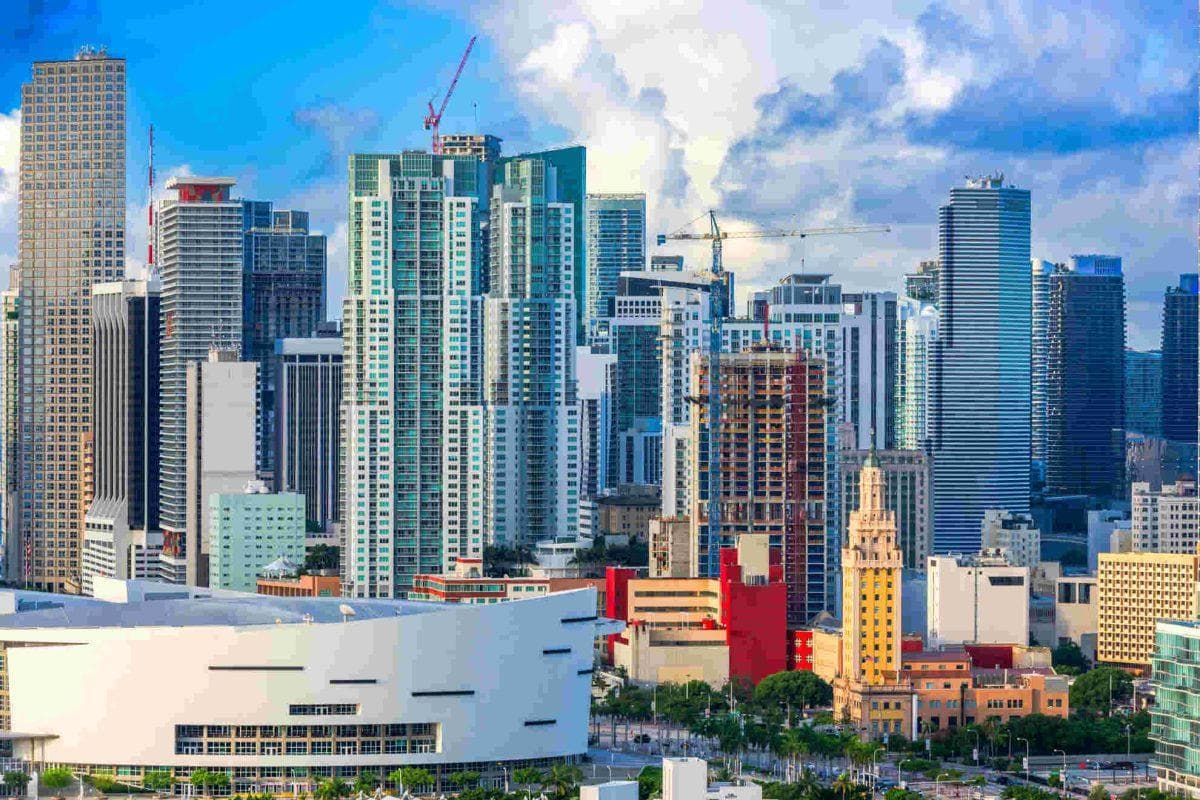
- Satellite records confirm that dozens of luxury towers and Miami skyscrapers descend at different rates over porous Florida soil due to uneven sinking.
- The phenomenon known as differential settlement threatens to cause facade cracks, floor deformations, cracks and expensive architectural repairs.
- Experts propose using wireless monitoring technology and building code revisions to protect properties.
Dazzling barrier island views hide dangerous underground instability
Demonstrating that the real estate boom across Miami-Dade County faces serious structural challenges, alarming research from the University of Miami confirmed that at least thirty-five Miami skyscrapers show uneven sinking over foundations built on sand and porous limestone underground. In this manner, scientists meticulously analyzed satellite data collected between 2016 and 2023, discovering with great surprise that several high-rise towers continue descending years after completing their construction and architecture, exceeding initial settlement margins predicted by engineers.
Consequently, the coveted oceanfront lifestyle attracting thousands of investors shows a troubling hidden side, since this geological phenomenon termed differential settlement causes different sections of a single building to settle at uneven rates, threatening to generate deep fissures and massive damage across luxurious modern engineering structures.
Impact on infrastructure and costly legal disputes between owners and developers
Likewise, the reality of uneven sinking creates growing concern across exclusive areas like Sunny Isles Beach due to costly repairs required in architecture and engineering, while physical effects from this unstable ground manifest in facade cracks, collapsed piping, warped floors and misaligned vehicle entryways for Miami skyscrapers. Furthermore, the combination of increasingly heavy structures alongside intense vibrations caused by nearby excavation work triggers lawsuit claims among homeowners associations, highlighting the case of Millennium Tower, whose owners demanded nearly four million dollars in damages following construction of the neighboring Porsche Design Tower. Additionally, this complex legal situation across Florida worsens because state legislation limits developer liability to seven years for building defects, forcing condo associations to absorb steep bills to repair structural cracks while new projects like the Bentley tower plan foundations exceeding sixty meters in depth to counteract construction weight.
Ver esta publicación en Instagram
Technological monitoring solutions and the urgency to update urban planning standards
On the other hand, driving the adoption of next-generation preventive technologies to safeguard resident safety against this uneven sinking, several iconic properties like Marenas Beach Resort began installing advanced wireless sensor systems valued in thousands of dollars to track any minimal structural variation or cracks in Miami skyscrapers. In the same manner, specialists from Florida International University and former engineering deans suggest implementing temporary moratoria on approving ultra-slender towers, as well as comprehensive building permit reviews requiring long-term continuous geological tracking. Now, the crucial challenge for local authorities will consist of balancing the metropolis’s unstoppable vertical growth with strict regulations that protect multi-million dollar real estate investments, ensuring the dazzling coastal skyline maintains firm, safe foundations underground over the years.
Revelations regarding differential settlement and satellite records
- Scientific evidence through satellites: Measurements collected over seven years proved that thirty-five Miami skyscrapers continuously descend at uneven rates.
- Exceeding tolerable margins: Furthermore, underground ground displacements exceeded standard engineering estimates set between two point five and seven point five centimeters.
- Fragile soil composition: Likewise, the underground combination of sand, peat and porous limestone accelerates instability beneath large structures, causing cracks and more due to uneven sinking.
