

WATCH NOW
Watch on the app





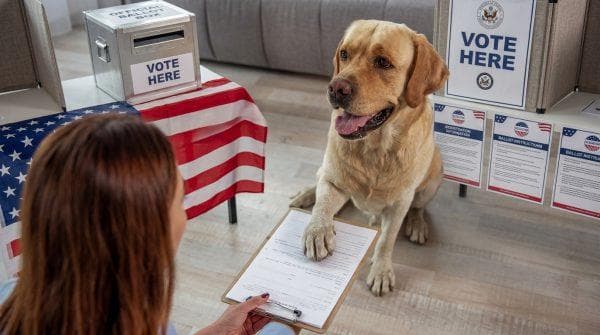









A dog managed to cast a vote in California as election systems face embarrassing mistakes
-
New Jersey voter system glitches and administrative oversights across state voter rolls reignite national debates over election security following the dismissal of a high profile canine registration case in Costa Mesa.
-
A widespread technical glitch within the New Jersey Motor Vehicle Commission inadvertently enrolled thousands of non citizens between 2023 and 2024.
-
Statewide audits in Iowa prove that thorough data cross referencing drastically reduces initial voter irregularity estimates before public claims emerge.
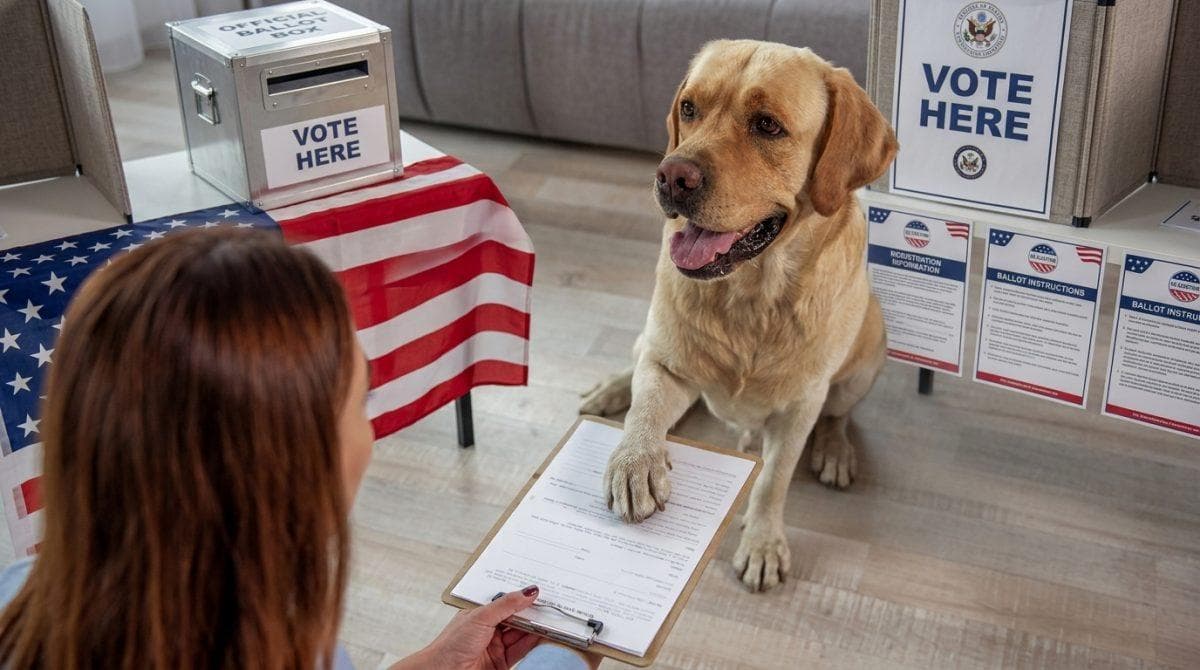
A dog voted in California when local election workers counted an official mail-in ballot sent to Maya Jean, triggering a legal saga that county prosecutors formally concluded following a court settlement in Costa Mesa, Orange County, where resident Laura Lee Yourex deliberately registered her dog to receive mail ballots during the 2021 gubernatorial recall election as well as the 2022 primary elections; subsequently, Yourex pleaded guilty in April 2026 to a misdemeanor charge involving fraudulent enrollment, leading prosecutors to dismiss the case on October 15 after she fulfilled her plea conditions by paying $1.5k to fund 4 anti voter fraud public advertisements featuring Maya Jean’s picture.
Beyond this isolated fraud scheme on the West Coast, institutional software glitches created significant administrative challenges across state lines, where local authorities rejected the 2022 ballot due to missing documentation while county clerks counted the 2021 vote in official totals, shortly before Governor Mikie Sherrill revealed in July 2026 that a software flaw in the New Jersey voter system improperly enrolled roughly 6.6k non citizens through Motor Vehicle Commission transactions between 2023 and 2024.

A split portrait documenting the facts of the story involving Laura Lee Yourex, her dog, and the official ballot, referencing the incident of a dog voted
Systemic software flaws vs. intentional election fraud
The automated motor voter platform, which engineers designed to streamline voter signups during driver license renewals and state identification processing, failed to capture opt-out selections from non citizen applicants, although preliminary state reviews indicated that fewer than 400 individuals from that group actually cast ballots; consequently, Governor Sherrill ordered immediate investigations, corrected affected records and replaced the software vendor through the California Secretary of State and the New Jersey Division of Elections, emphasizing that improper registration does not equal deliberate fraud or unlawful voting.
Key takeaways regarding dog voted in California cases and database errors
-
Electoral management databases require thorough cross-referencing with federal files before analysts label preliminary registration lists as intentional fraud.
-
Incident review of a dog voted in California: Fraudulent pet voter applications led to a $1.5k court agreement funding state voter education campaigns.
-
New Jersey voter system software bug: Interface errors during driver license renewals affected 6.6k registration files over 2 years.
-
Iowa voter roll adjustments: Initial screening flagged 2.18k potential non citizen voters in October 2024, but subsequent SAVE database audits dramatically lowered confirmed totals.
Analyzing these technical glitches helps election directors distinguish isolated human oversights from unverified claims about widespread electoral vulnerabilities.
California woman who registered her dog to vote in elections to expose flaws in California voting, sentenced to pay for billboards with her dog on them warning against voter fraud.
Laura Lee Yourex’s dog’s vote was successfully counted in a 2021 election.
Yourex says she registered her dog, Maya Jean, to vote to “expose flaws in our state voting system, intending to improve it by demonstrating that even a dog can be registered to vote.”
“Ms. Yourex never hid from taking personal responsibility as she self-reported the matter to the Orange County Registrar of Voters, intending to have them investigate and ultimately improve our voting registration system,” her attorney said.
The dog’s vote was successfully counted in the 2021 recall election but was rejected in the 2022 election.
Yourex, who lives in Orange County, was sentenced to pay for four billboards totaling $1,500 along the 55 and 22 freeways.
The billboards feature her dog with an ‘I Voted’ sticker and a ballot, warning people against voter fraud.
Hilarious for multiple reasons.
— Collin Rugg (@CollinRugg) October 18, 2026
Comparative breakdown of recent voter database audits and federal lawsuits
-
Investigation of how a dog voted in California The Costa Mesa case ended after the pet owner contributed $1.5k toward public awareness ads in California.
-
Glitch in the New Jersey voter system A system design error within the automated driver license portal misregistered 6.6k non citizens across municipal voter lists.
-
Comprehensive eligibility audit in Iowa Following an initial review flagging 2.18k files in October 2024, the Secretary of State announced on March 20, 2025, that federal SAVE database checks confirmed only 277 non citizens out of 2.18k preliminary flags; among them, 35 individuals cast counted ballots in 2024, while officials rejected 5 voting attempts through USAGov verification networks.
-
Department of Justice litigation Federal prosecutors sued California on October 15, 2026, aiming to block mail ballots for 20k questioned voters amid ongoing legal battles reported by the Associated Press.
Protecting the integrity and accuracy of voter registration systems
Ensuring electoral transparency requires implementing deep technical fixes without disenfranchising legitimate voters, especially since audits in Iowa demonstrated that many preliminary registration flags reflected records predating naturalization, meaning initial datasets rarely reflected a citizen’s current legal status; moreover, evaluating software performance across state agencies, including the New Jersey voter system, shows how thorough audits strengthen public trust in democratic institutions while preserving voting access.
Understanding voter roll discrepancies requires separating individual intent, government system glitches, and the natural timing of voter citizenship updates. Looking ahead toward upcoming election cycles, enforcing strict multi-factor verification checks across all 50 states prevents widespread election misinformation while protecting constitutional rights after a dog voted in California.
