

WATCH NOW
Watch on the app














California town seems to be cursed as everything keeps going wrong for residents
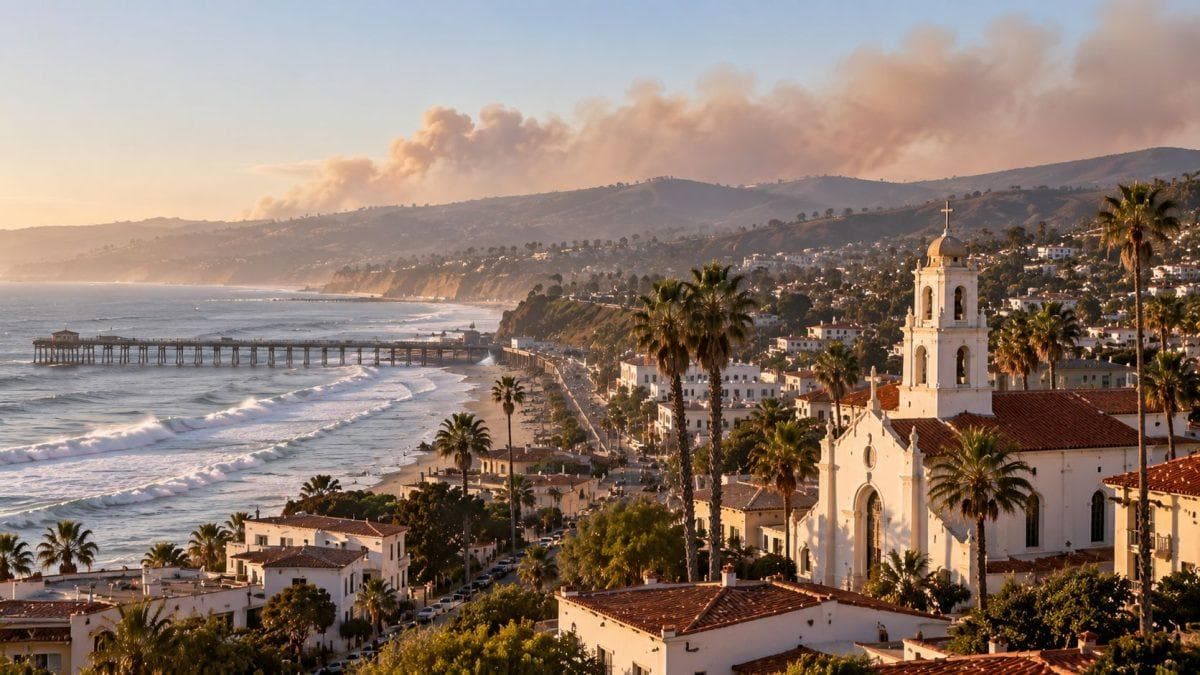
For one California coastal community, paradise is starting to feel like a place where everything that can go wrong eventually does. First came the disappearing beaches. Then powerful waves damaged a beloved landmark, threatening nearby homes and transportation routes. Just when residents thought they had enough problems, a wildfire arrived, forcing families to evacuate and leaving others facing the possibility of losing everything.
The timing has been particularly brutal. While firefighters battled flames on one side of the community, the Pacific Ocean continued eating away at the coastline on the other. A damaged pier, unstable cliffs, threatened railroad tracks and mounting repair bills have turned everyday life into a series of emergencies. And with another potentially powerful El Niño winter approaching, residents fear the worst may still be ahead.
The town is San Clemente, a picturesque Orange County beach community known for its surfing culture, oceanfront neighborhoods and spectacular coastal views. But the same geography that makes it desirable is becoming increasingly difficult to protect. The city is now confronting a combination of wildfire damage, severe coastal erosion, infrastructure failures and financial pressures that no single emergency repair can solve.
Fires, disappearing beaches and a coastline falling apart
The latest blow came on October 16, when the Norte Fire burned approximately 570 acres around San Clemente and neighboring San Juan Capistrano, damaging or destroying at least six homes. Thousands of residents faced evacuation orders, while others dealt with smoke, traffic disruptions and the fear of losing their properties. The fire came barely a month after powerful surf damaged San Clemente’s historic pier, destroying a support piling and at least 17 braces. City officials authorized up to $1 million in emergency funding, with pier repairs alone estimated at $300,000.
The next disaster could already be forming
Now, the prospect of a powerful El Niño is adding another layer of uncertainty. Warmer Pacific waters and elevated sea levels can intensify coastal erosion, while heavy winter rainfall could destabilize already vulnerable hillsides. Officials have declared emergencies and are trying to accelerate the placement of approximately 690,000 cubic yards of sand to protect the shoreline and railroad. For residents, the consequences go beyond damaged scenery: disrupted commutes, threatened homes, restricted beach access, possible new taxes and rising public repair costs. There is no actual curse hanging over San Clemente, but the convergence of fire, ocean damage and expensive infrastructure problems has left this California town facing one emergency after another, with no easy solution in sight.
