

WATCH NOW
Watch on the app






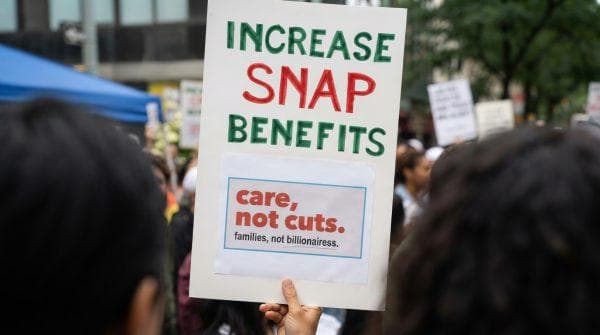








Millions of Americans could lose their SNAP benefits under the new rules: Who is at risk?
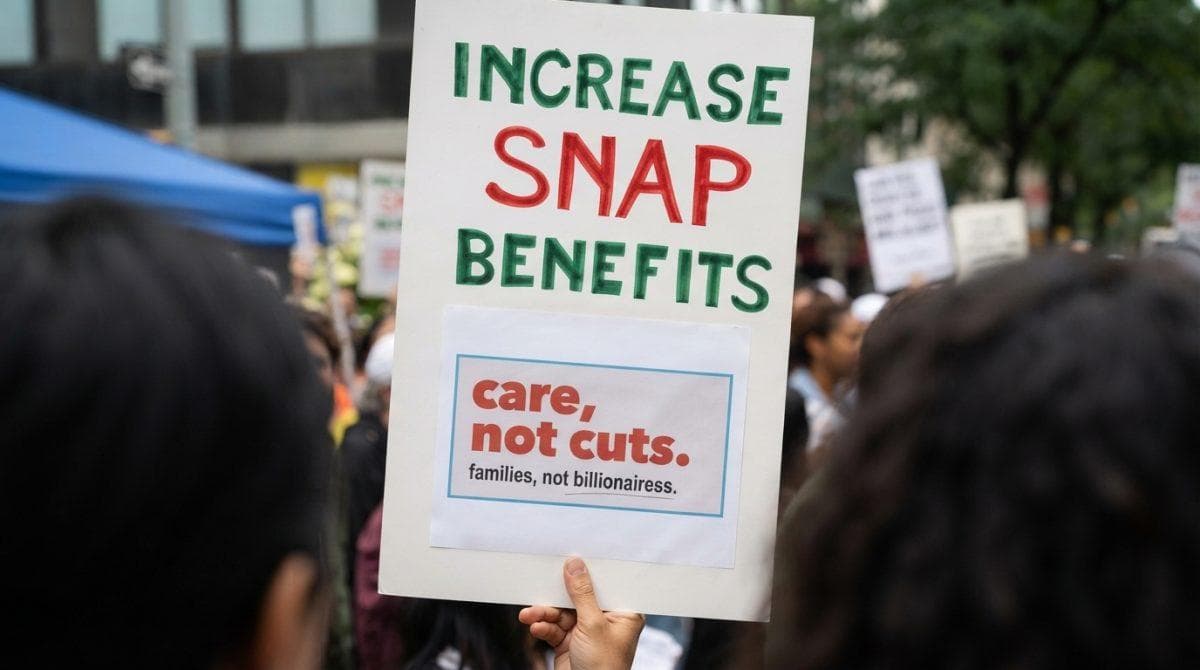
-
Risk food assistance remains a constant reality for families while federal regulations impose severe restrictions that force many citizens to lose SNAP benefits after failing to meet newly established employment mandates, whereas vulnerable households continually navigate ongoing administrative shifts.
-
The nutritional assistance program implements drastic structural modifications that significantly reduce the beneficiary registry across the country.
-
Various social organizations denounce a profound negative impact while state governments face unprecedented administrative challenges.
Lose SNAP benefits remains the harsh reality confronting thousands of unemployed workers nationwide because recent federal modifications implemented by the government administration generate a drastic reduction in food access for millions of people depending on the official program, further compounded by the enactment of the OBBBA signed on July 4, 2025, which substantially modifies mandatory employment requirements for participants and extends the affected age range up to 64 years.
Diverse institutions like the Food Research and Action Center report the departure of more than 5M participants from the public food assistance system, whereas households grapple with an average benefit of $6.25 per day per person that fails to cover a typical meal in approximately 99% of U.S. counties, prompting public policy experts at the Urban Institute to closely analyze the economic repercussions these measures generate for vulnerable families who routinely risk food assistance while state governments experience mounting financial pressures stemming from the federal shift of administrative costs.
Structural modifications, vulnerable groups and who is at risk of losing SNAP benefits
The national socioeconomic landscape undergoes a profound transformation rooted in directives adopted by the federal executive branch and the imposition of stricter criteria completely redefines the scope of current food aid, creating a critical scenario where multiple population sectors face the imminent threat of losing institutional support as legislative changes approved recently elevate age thresholds for mandatory employment and modify family exemption criteria.
Government authorities defend the viability of these reforms by arguing they strengthen the country’s fiscal sustainability, yet social services directors warn about the risk of mass exclusion directly impacting the most unprotected profiles where citizens constantly risk food assistance, leading specific groups to struggle with severe obstacles to retain their food subsidies under the new federal regulations:
-
Older unemployed workers: Citizens between 54 and 64 years old suffer the expansion of the mandatory age range to fulfill 80 monthly hours of employment or volunteering, leaving no safety net for those failing to secure formal job placements in depressed markets.
-
Parents with adolescent children: Families featuring minors between 14 and 17 years old lost previous automatic exemptions protecting households with children under 18, forcing parents to prove strict work hours despite lacking affordable childcare options where many households risk food assistance daily.
-
Patients with chronic illnesses: Individuals battling prolonged medical conditions like Crohn’s disease face deeply complex bureaucratic processes to repeatedly prove labor incapacity via medical exemptions that state agencies delay processing.
-
Low income single parent families: Single mothers and primary caregivers experience drastic cuts in monthly subsidies due to cross-evaluations with other social programs like Medicaid, shrinking daily allocations amid high food inflation.
-
Caregivers of dependent relatives: Older adults supporting their grandchildren and great-grandchildren amid family addiction crises find themselves trapped between caring for relatives at home and government mandates to spend hours outside fulfilling work requirements.
Ver esta publicación en Instagram
Evaluation criteria, state challenges and critical exclusion factors
President Donald Trump’s public statement addressing caseload reductions: “Millions of people have been removed from SNAP due to a stronger economy.”
White House Press Secretary Anna Kelly’s official administrative briefing: “Restores basic work requirements, prioritizes American citizens, and implements sensible cost-sharing measures with states to combat waste, fraud, and abuse.”
Work requirements mandate that participants aged 18 to 64 work or volunteer at least 80 hours monthly and the regulation shifts 75% of administrative costs to local administrations starting October 1, surpassing the previous 50% share, while starting October 2027 states with high error rates in payments must shoulder up to 15% of benefit costs, an expense previously covered entirely by the federal government, even as Republican lawmakers claim these error rates indicate fraud despite anti-hunger advocates pointing out they stem from routine clerical errors like spelling mistakes or missing addresses where families might risk food assistance unexpectedly.
Crystal FitzSimons, president of the Food Research and Action Center, warned about confusion and delays generated across state agencies, labeling the changes as absolutely unprecedented and alerting to a real risk that some states might abandon the program due to financial chaos, while Brandon Hardin told the Alabama Reflector that payment error issues could plunge the state into a $174M debt in extra costs by July, prompting officials into evaluating the option of terminating the program if failing to reduce error rates or lower cost burdens.
Operational repercussions and state institutional responses
State agencies tasked with distributing food resources constantly fight bureaucratic delays spawned by regulatory restructuring and Brett Bezio, spokesperson for the Arizona Department of Economic Security, explained to CBS News that although historical staff shortages and legacy technology systems intensified the impact, they managed to stabilize the program and add 57,000 extra enrollees in August compared to April to avert disastrous financial penalties, asserting in an official statement that rapid process reforms became mandatory because the law implemented the most radical structural changes and strict administrative penalties in a generation, registering a 53% enrollment drop over the past year.
Inflationary crisis and risk food assistance on national security
Community organizations intensify advisory campaigns to mitigate collateral damage among affected populations, recalling the importance of strictly complying with new employment mandates to avoid severe penalties while local food banks experience surging demand driven by a 32% food inflation spike since early 2020 and an energy crisis fueled by the Iran war pushing gasoline prices to $4.46 per gallon, whereas Cyndi Kirkhart, executive director of the Facing Hunger Food Bank in West Virginia, pointed out that the higher age limit impacts seniors raising grandchildren due to the opioid addiction crisis, defining the situation as a pandemic on steroids, and Ailen Arreaza, executive director of ParentsTogether Action, warned that families skip prescriptions or cut down meals due to ongoing policy cuts.
Food insecurity climbed to 14% between January and October of last year compared to 12.5% in 2024 according to a Purdue University study, driven by inflation and cuts, prompting FRAC to demand that Congress restore the USDA annual study suspended in 2025 after being labeled redundant and politicized, transforming the safety net into a battleground that compels thousands of households to navigate unprecedented bureaucratic obstacles to avoid lose SNAP benefits.
Ver esta publicación en Instagram
